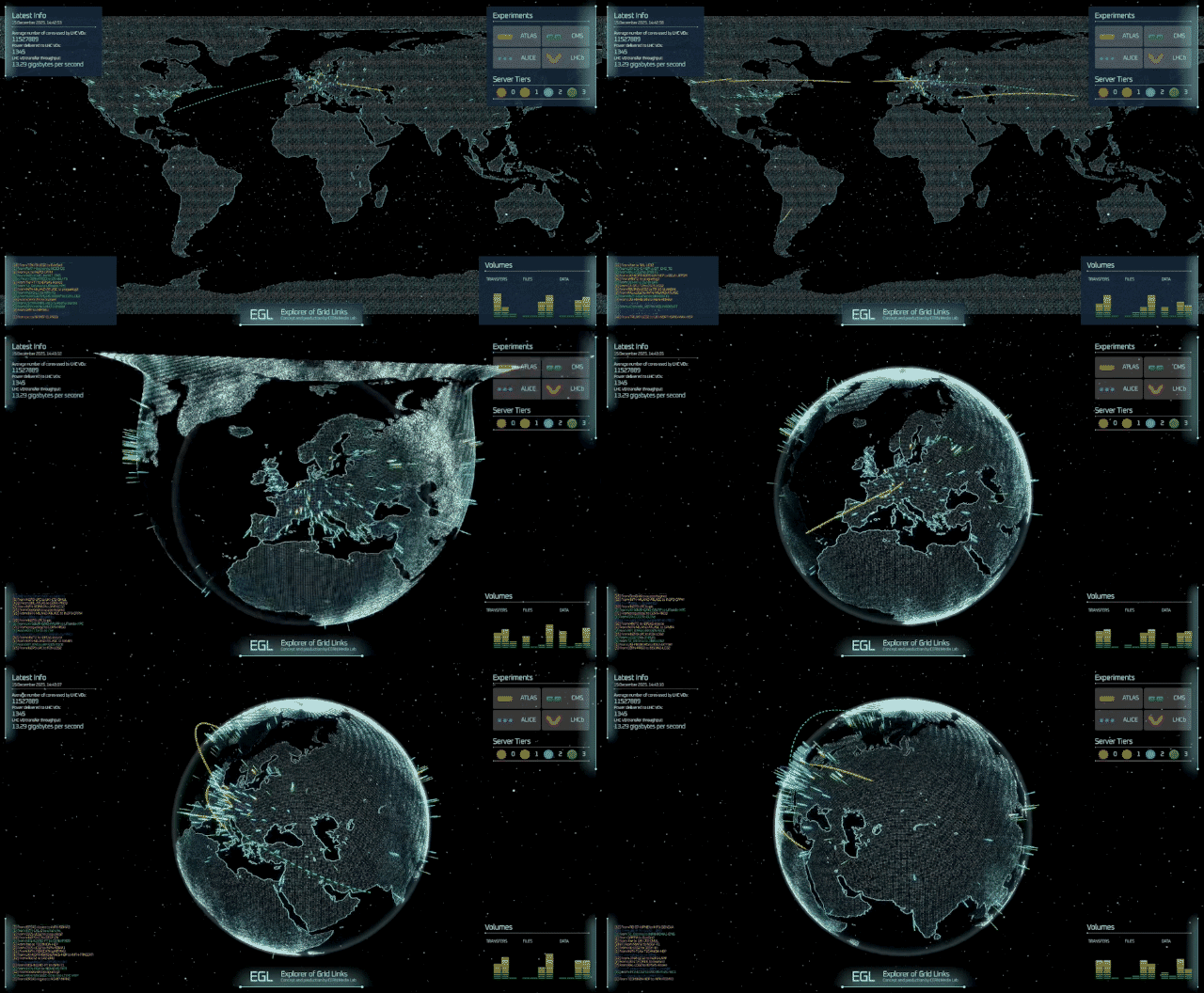
Imagine a planetary computer capable of storing and processing hundreds of petabytes of data for the research needs of a worldwide community of scientists. This is the Worldwide LHC Computing Grid (WLCG), which is celebrating its 20th anniversary.
Originally conceived to handle the unprecedented data volumes of the Large Hadron Collider (LHC), the WLCG has evolved into a global network connecting hundreds of computing centres across more than 40 countries. It enables thousands of scientists worldwide to store, process and analyse massive amounts of data in quasi-real time, supporting discoveries in particle physics.
On 8 December, a special event at the CERN Science Gateway brought together the international community that has turned this ambitious project into one of the largest distributed computing collaborations in the world. Key figures from the project highlighted its history, challenges and future prospects. Les Robertson, whose efforts and leadership were instrumental during the early days of the Grid, reflected on how the idea was born and the challenges of building something that had never been done before. It was an ambitious idea for its time, one that required both technological innovation and unprecedented cooperation across countries. Yet this early confidence proved justified: the Grid rapidly moved from concept to reality, paving the way for a new model of large-scale scientific computing.