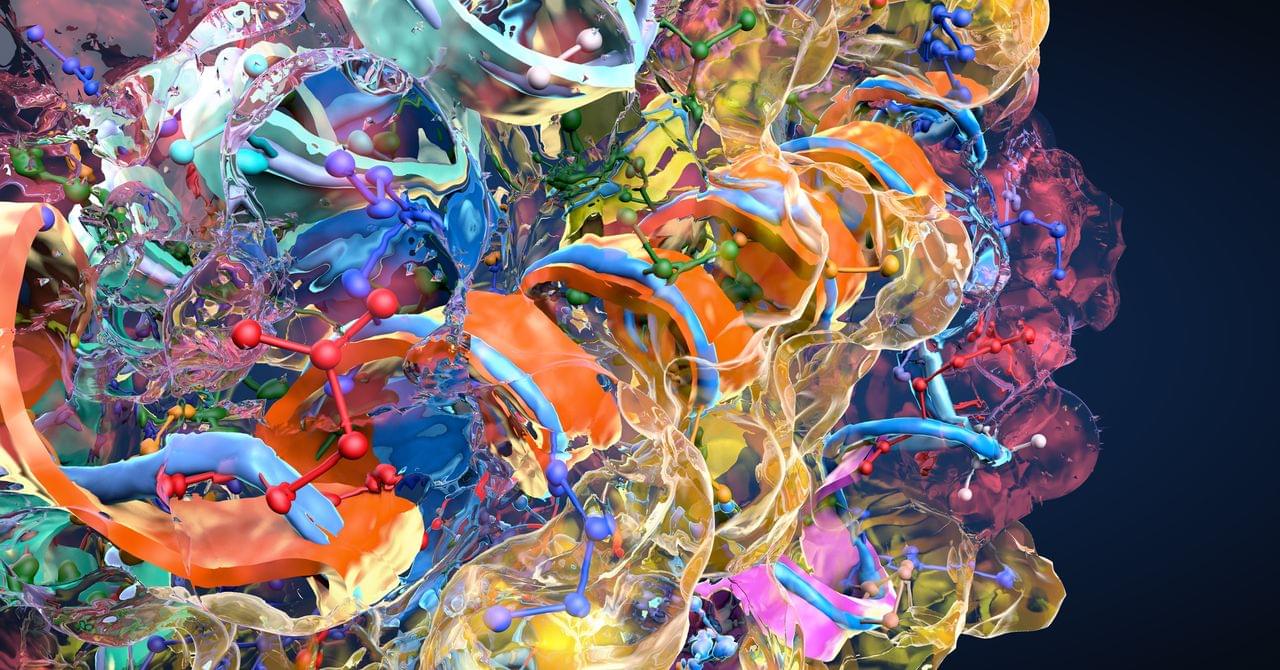
Until AlphaFold’s debut in November 2020, DeepMind had been best known for teaching an artificial intelligence to beat human champions at the ancient game of Go. Then it started playing something more serious, aiming its deep learning algorithms at one of the most difficult problems in modern science: protein folding. The result was AlphaFold2, a system capable of predicting the three-dimensional shape of proteins with atomic accuracy.
Its work culminated in the compilation of a database that now contains over 200 million predicted structures, essentially the entire known protein universe, and is used by nearly 3.5 million researchers in 190 countries around the world. The Nature article published in 2021 describing the algorithm has been cited 40,000 times to date. Last year, AlphaFold 3 arrived, extending the capabilities of artificial intelligence to DNA, RNA, and drugs. That transition is not without challenges—such as “structural hallucinations” in the disordered regions of proteins—but it marks a step toward the future.
To understand what the next five years holds for AlphaFold, WIRED spoke with Pushmeet Kohli, vice president of research at DeepMind and architect of its AI for Science division.