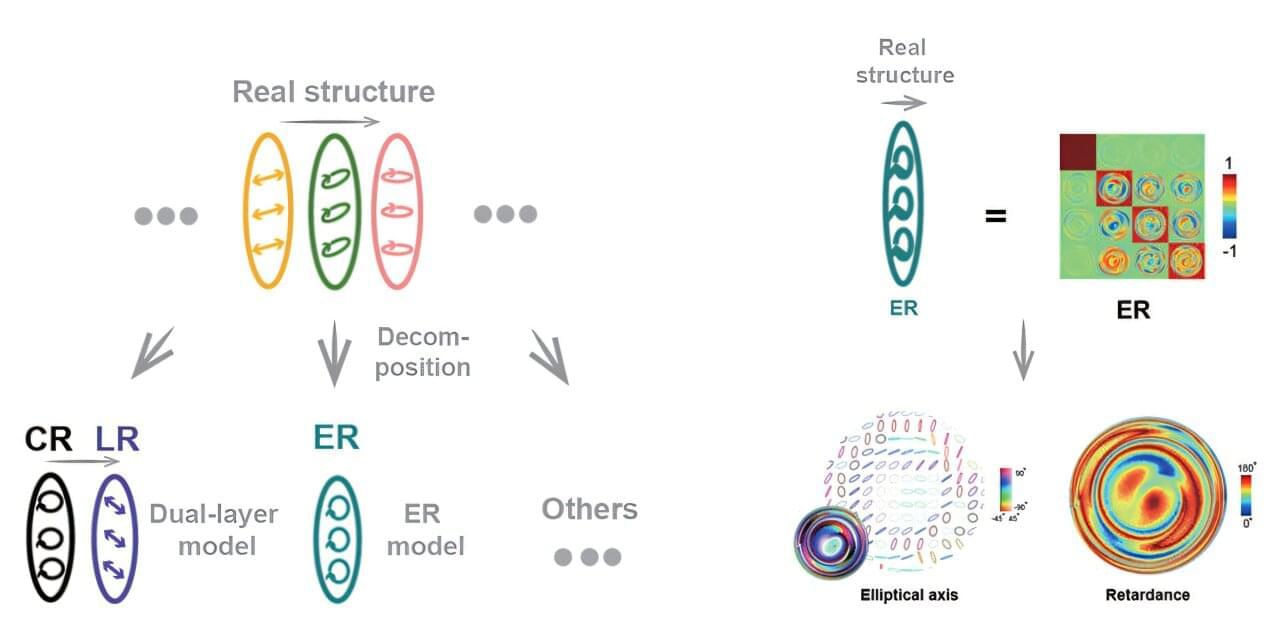
Scientists at the University of Oxford demonstrate an approach to interpreting how materials interact with polarized light, which could help advance biomedical imaging and material design.
Their work, reported in Advanced Photonics Nexus, focuses on improving how researchers analyze a key optical property known as the retarder.
In optics, a retarder is a material or device that changes the way light waves are oriented as they pass through. Light waves have an orientation called polarization, and a retarder shifts the phase between different components of that light—essentially delaying one part of the wave compared to another.