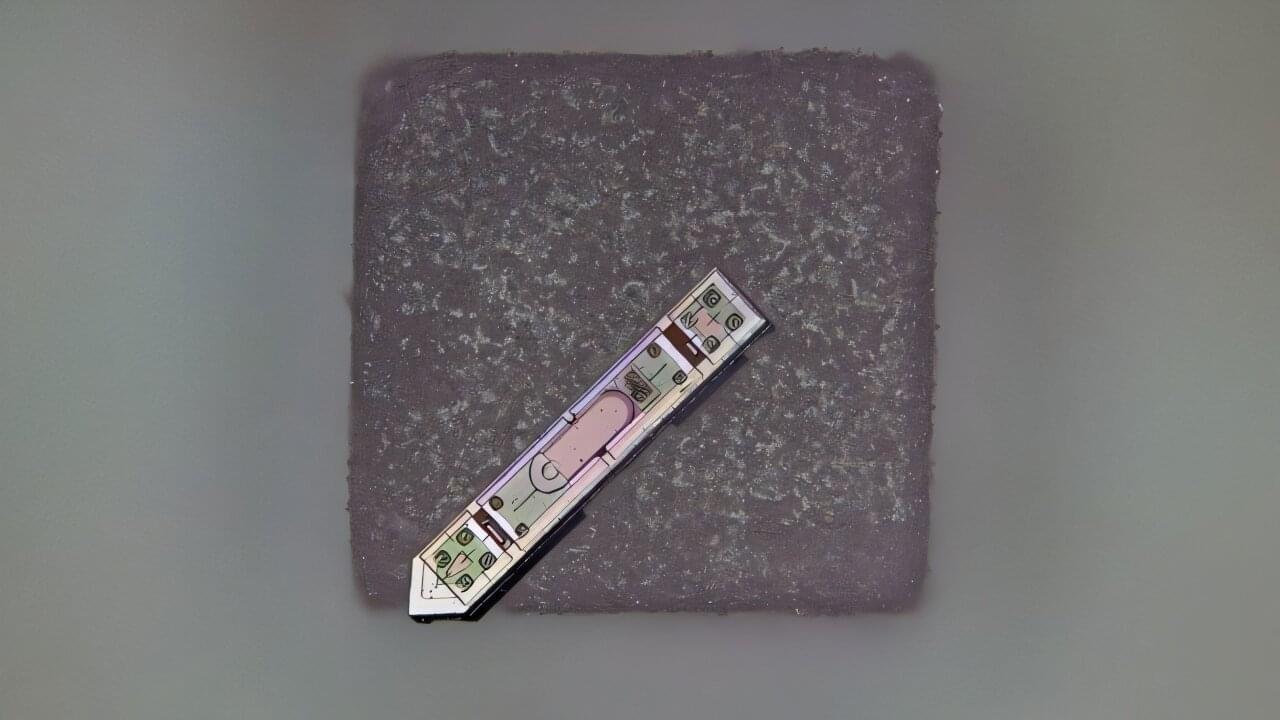
Cornell University researchers and collaborators have developed a neural implant so small that it can rest on a grain of salt, yet it can wirelessly transmit brain activity data in a living animal for more than a year.
The breakthrough, detailed Nov. 3 in Nature Electronics, demonstrates that microelectronic systems can function at an unprecedentedly small scale, opening new possibilities for neural monitoring, bio-integrated sensing and other applications.
Development of the device, called a microscale optoelectronic tetherless electrode, or MOTE, was co-led by Alyosha Molnar, professor in the school of electrical and computer engineering, and Sunwoo Lee, an assistant professor at Nanyang Technological University who first began working on the technology as a postdoctoral associate in Molnar’s lab.