Toggle light / dark theme

Get the latest international news and world events from around the world.

Log in for authorized contributors

Early Alpha-Fetoprotein Response Predicts Sustained Tumor Response Following Immune Checkpoint Inhibitors Combined with Targeted Therapy in Liver Cancer

Background: Although immune checkpoint inhibitors (ICI) have revolutionized liver cancer treatment, some patients experience early tumor progression after therapy, missing the window for other potential treatments, such as neoadjuvant therapy. Therefore, identifying the predictive factors for early progression is critical for timely therapeutic adjustment and the optimization of patient outcomes. Methods: This retrospective study enrolled patients with liver cancer who received their first ICI combined with targeted therapy at the Fifth Medical Center of the PLA General Hospital between June 2022 and December 2023. Early tumor progression was defined as tumor progression within 6 months of therapy initiation.

Reversing treatment resistance in prostate cancer

Scientists at the Herbert Irving Comprehensive Cancer Center (HICCC) have discovered a key mechanism that makes prostate cancer cells resistant to the latest drugs used to treat them. Their findings, reported in the current issue of Nature, solve a longstanding puzzle in tumor biology and present preclinical data on a drug compound that could soon enter the clinic.

The work grew out of decades of prostate cancer research by Michael Shen, Ph.D., co-leader of the Tumor Biology and Microenvironment research program at the HICCC. Shen’s research focuses on lineage plasticity, the ability of cancer cells to reprogram themselves to impersonate other types of cells.

Plasticity is a hallmark of cancer in general and a very important feature of advanced prostate cancer, particularly when it comes to the emergence of treatment resistance,” says Shen. Treatment with androgen receptor inhibitors, which have become the standard of care in recent years, often stimulate prostate tumor cells to adopt neuroendocrine characteristics, rendering them resistant to the drugs.

A new five-year survey of the Magellanic Clouds will answer some questions about our neighbors

The Large and Small Magellanic Clouds are irregular dwarf galaxies and satellites of the Milky Way. The LMC is about 163,000 light-years away and the SMC is about 206,000 light-years away, and their close proximity makes them excellent laboratories for the study of galaxies in general. The Clouds are the focus of a new research group being formed at the Leibniz Institute for Astrophysics Potsdam (AIP).

Both clouds are home to numerous objects and regions that capture astronomers’ attention. The LMC hosts the Tarantula Nebula, an extremely active star-forming region that contains some of the largest stars known. The SMC hosts NGC 346, an open star cluster that contains numerous massive stars and is still forming many high-mass stars. The Clouds also contain variable stars that act as standard candles in the cosmic distance ladder. That’s just a sample from a long list of the clouds’ interesting features.

It can be easier to study things like star formation in galaxies other than the Milky Way, because we’re inside the Milky Way and can’t see all of it. The Large and Small Magellanic Clouds are excellent natural laboratories to study how galaxies evolve because astronomers can see them from a good vantage point.

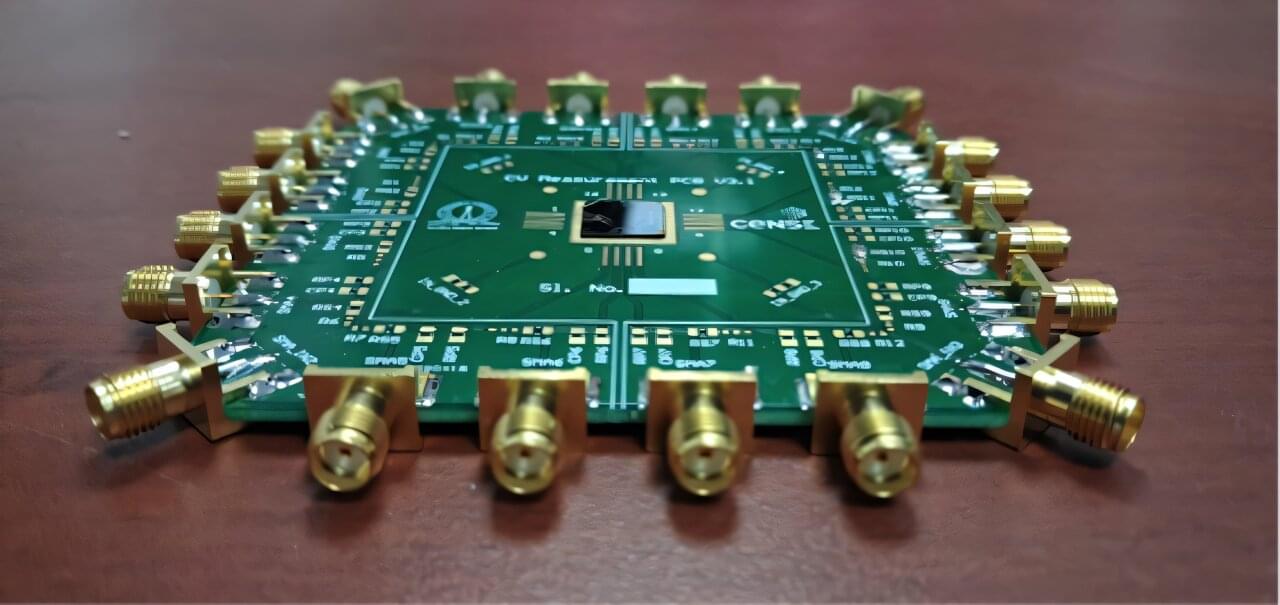
Quilter’s AI just designed an 843‑part Linux computer that booted on the first try. Hardware will never be the same

🤖AI system designed a fully functional Linux computer in one week.


Quilter’s AI designed a working 843-component Linux computer in 38 hours—a task that typically takes engineers 11 weeks. Here’s how they did it.

/* */