Toggle light / dark theme

Get the latest international news and world events from around the world.

Log in for authorized contributors

Alzheimer’s disease can be reversed in animal models to achieve full neurological recovery

For over a century, Alzheimer’s disease (AD) has been considered irreversible. Consequently, research has focused on disease prevention or slowing, rather than recovery. Despite billions of dollars spent on decades of research, there has never been a clinical trial of a drug for AD with an outcome goal of reversing disease and recovering function.

Now, a research team from University Hospitals, Case Western Reserve University, and the Louis Stokes Cleveland VA Medical Center has challenged this long-held dogma in the field. They tested whether brains already badly afflicted with advanced AD could recover.

The study, led by Kalyani Chaubey, Ph.D., from the Pieper Laboratory, is published in Cell Reports Medicine.

Scientists boost mitochondria to burn more calories

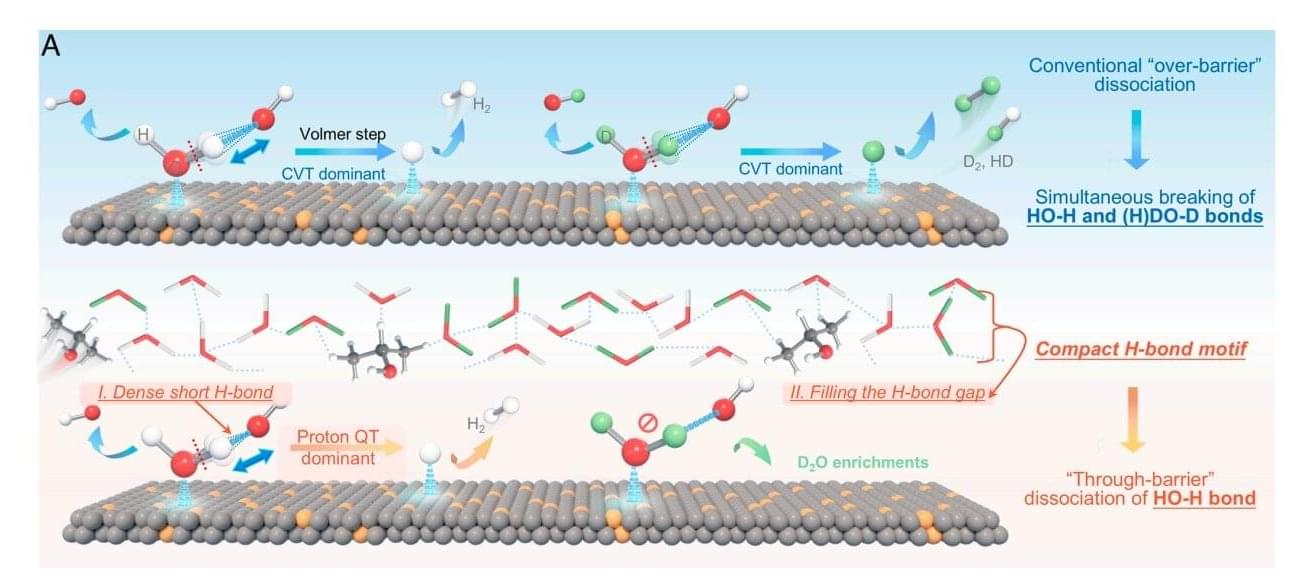
Researchers have developed experimental drugs that encourage the mitochondria in our cells to work a little harder and burn more calories. The findings could open the door to new treatments for obesity and improve metabolic health.

Obesity is a global epidemic and a risk factor for many diseases, including diabetes and cancer. Current obesity drugs require injections and can cause side effects, so a safe way to boost weight loss could deliver significant public health benefits.

The study, led by Associate Professor Tristan Rawling from the University of Technology Sydney (UTS), has just been published in Chemical Science, where it was highlighted as “pick of the week.”

An AI-based blueprint for designing catalysts across materials

Hydrogen peroxide is widely used in everyday life, from disinfectants and medical sterilization to environmental cleanup and manufacturing. Despite its importance, most hydrogen peroxide is still produced using large-scale industrial processes that require significant energy. Researchers are thus seeking cleaner alternatives.

A team of researchers has made a breakthrough in this regard, developing a new computational framework that helps identify effective catalysts for producing hydrogen peroxide directly from water and electricity.

The work focuses on the two-electron water oxidation reaction, an electrochemical process that can generate hydrogen peroxide in a more localized and potentially sustainable way.

Research uncovers the telltale tail of black hole collisions

When black holes collide, the impact radiates into space like the sound of a bell in the form of gravitational waves. But after the waves, there comes a second reverberation—a murmur that physicists have theorized but never observed.

An international collaboration has for the first time simulated in detail what these whispers—called late-time gravitational wave tails —might “sound” like.

“So far, we’ve only seen tails in simplified models, not in full simulations of numerical relativity,” said Leo Stein, University of Mississippi associate professor of physics and astronomy and co-author of the study. “These are the first fully numerical simulations where we saw tails clearly.”

A Cosmic Christmas Tree Lights Up the Milky Way

Just in time for Christmas, a vast star-forming region shaped like a Christmas tree is lighting up space 2,700 light-years from Earth.

NGC 2,264 is a vast region of space where new stars are actively forming, located about 2,700 light-years from Earth in the faint constellation Monoceros, also known as the Unicorn. Astronomers use catalog names like NGC 2,264 to identify and track objects beyond our solar system, and this particular one stands out for its intricate mix of glowing clouds and young stars. Positioned near the celestial equator and close to the flat disk of the Milky Way, this region is visible at certain times of year from much of the world.

How young stars light up space

/* */