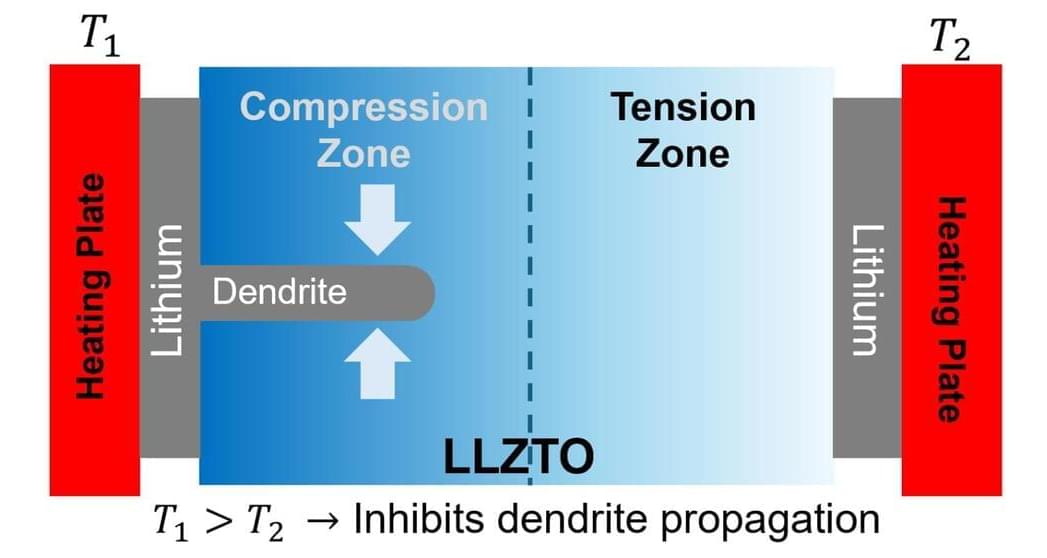
New research by Brown University engineers identifies a simple strategy for combating a major stumbling block in the development of next-generation solid-state lithium batteries.
Solid-state batteries are considered the next frontier in energy storage, particularly for electric vehicles. Compared to current liquid electrolyte batteries, solid-state batteries have the potential for faster charging, longer range and safer operation due to decreased flammability. But there’s been a consistent problem holding back their commercialization: lithium dendrites.
Dendrites are filaments of lithium metal that can grow inside a battery’s electrolyte (the part of the battery that separates the anode from the cathode) during charging at high current. When they grow across the electrolyte, dendrites cause circuits between the battery’s anode and cathode, which destroy the battery. So while solid electrolytes can—in theory—enable faster charging than liquid electrolytes, the dendrite problem is one of the primary limitations that has to date prevented them from reaching that potential.