SODIUM/POTASSIUM PUMP • Found in the membrane of all animal cells • Active transport — uses ATP (around 30% of a cell’s total ATP usage) breaking it down to ADP and phosphate • Helps maintain membrane voltage (thought to contribute about 10% of
Join us on Patreon! https://www.patreon.com/MichaelLustgartenPhD
Discount Links/Affiliates:
Blood testing (where I get the majority of my labs): https://www.ultalabtests.com/partners/michaellustgarten.
At-Home Metabolomics: https://www.iollo.com?ref=michael-lustgarten.
Use Code: CONQUERAGING At Checkout.
Clearly Filtered Water Filter: https://get.aspr.app/SHoPY
Epigenetic, Telomere Testing: https://trudiagnostic.com/?irclickid=U-s3Ii2r7xyIU-LSYLyQdQ6…M0&irgwc=1
Use Code: CONQUERAGING
NAD+ Quantification: https://www.jinfiniti.com/intracellular-nad-test/
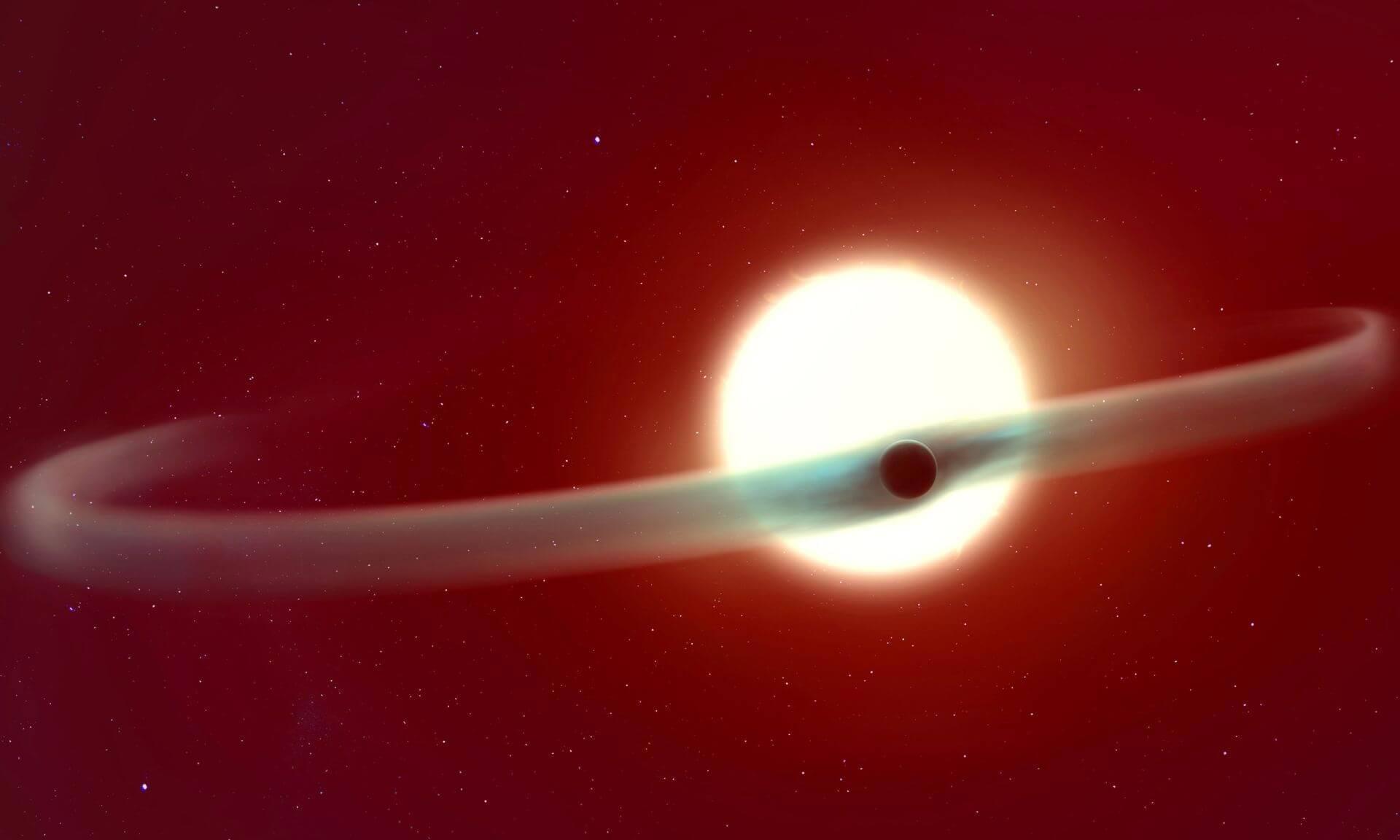
A Carnegie-led team of astronomers detected the strongest evidence yet of an atmosphere around a rocky planet beyond our solar system. Their work, published in The Astrophysical Journal Letters, used NASA’s JWST to reveal an alien atmosphere in an unexpected place—an ancient, ultra-hot super-Earth that likely hosts a magma ocean.
TOI-561 b is a rocky world that’s about twice Earth’s mass but bears little resemblance to our home planet due to its proximity to its host star. Although the star is slightly less massive and cooler than our sun, the planet orbits at one fortieth the distance of Mercury in our own solar system. On TOI-561 b, a year lasts just 10.56 hours, and one side of the planet is in perpetual daylight.
“Based on what we know about other systems, astronomers would have predicted that a planet like this is too small and hot to retain its own atmosphere for long after formation,” explained Carnegie Science Postdoctoral Fellow Nicole Wallack, the paper’s second author. “But our observations suggest it is surrounded by a relatively thick blanket of gas, upending conventional wisdom about ultra-short-period planets.”
The TOI Tech Desk is a dedicated team of journalists committed to delivering the latest and most relevant news from the world of technology to readers of The Times of India. TOI Tech Desk’s news coverage spans a wide spectrum across gadget launches, gadget reviews, trends, in-depth analysis, exclusive reports and breaking stories that impact technology and the digital universe. Be it how-tos or the latest happenings in AI, cybersecurity, personal gadgets, platforms like WhatsApp, Instagram, Facebook and more; TOI Tech Desk brings the news with accuracy and authenticity.
The road to a more sustainable planet may be partially paved with manganese. According to a new study by researchers at Yale and the University of Missouri, chemical catalysts containing manganese—an abundant, inexpensive metallic element—proved highly effective in converting carbon dioxide into formate, a compound viewed as a potential key contributor of hydrogen for the next generation of fuel cells.
The new study appears in the journal Chem. The lead authors are Yale postdoctoral researcher Justin Wedal and Missouri graduate research assistant Kyler Virtue; the senior authors are professors Nilay Hazari of Yale and Wesley Bernskoetter of Missouri.