Sharing my latest Forbes article: by Chuck Brooks.
Thanks for reading and sharing!
#cybersecurity #tech #ai #quantum #space Forbes
Artificial intelligence and quantum computing are no longer speculative technologies. They are reshaping cybersecurity, economic viability, and managing risk in real time.
When we talk about the universe, we usually imagine space filled with galaxies, stars, and matter expanding endlessly in all directions. It feels natural to think of the universe as a vast container — a place where everything exists. But modern theoretical physics suggests that this picture may be deeply misleading.
In this video, we explore a more fundamental question: what is the universe really made of? Is it space? Matter? Energy? Or something far more abstract than our everyday intuition allows?
Drawing on ideas associated with Leonard Susskind, this long-form exploration challenges the assumption that the universe is a physical stage where reality takes place. Instead, physics increasingly points toward a universe defined not by objects and locations, but by information, relationships, and boundaries.
Black hole physics, quantum theory, and modern cosmology have forced scientists to rethink the foundations of reality. In some of the deepest descriptions of nature, space and time no longer appear as fundamental ingredients. What we experience as a three-dimensional universe may be an emergent structure — a convenient description rather than the true underlying reality.
Rather than focusing on equations, this video emphasizes intuition and conceptual understanding. Through thought experiments and simple analogies, we examine why the universe feels like a place, why that picture works so well at human scales, and why it may break down at the most fundamental level.
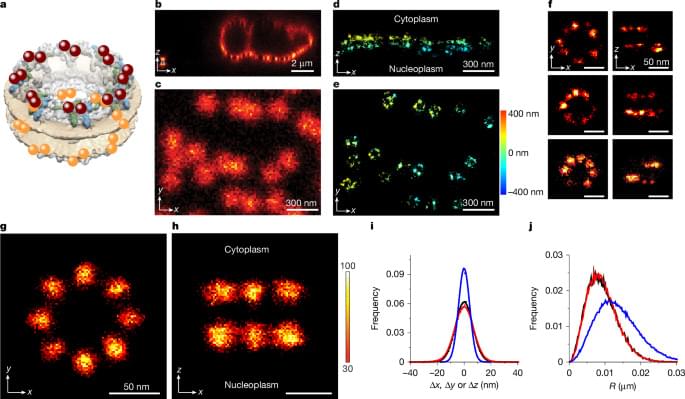
High spatiotemporal precision tracking using 3D MINFLUX shows that nuclear import and export occur in overlapping regions of the central pore, providing insight into transport across the nuclear pore complex.
It is theoretically possible for a particularly massive star to collapse in on itself to form a black hole rather than exploding in a supernova, and we might now have seen the process in action.
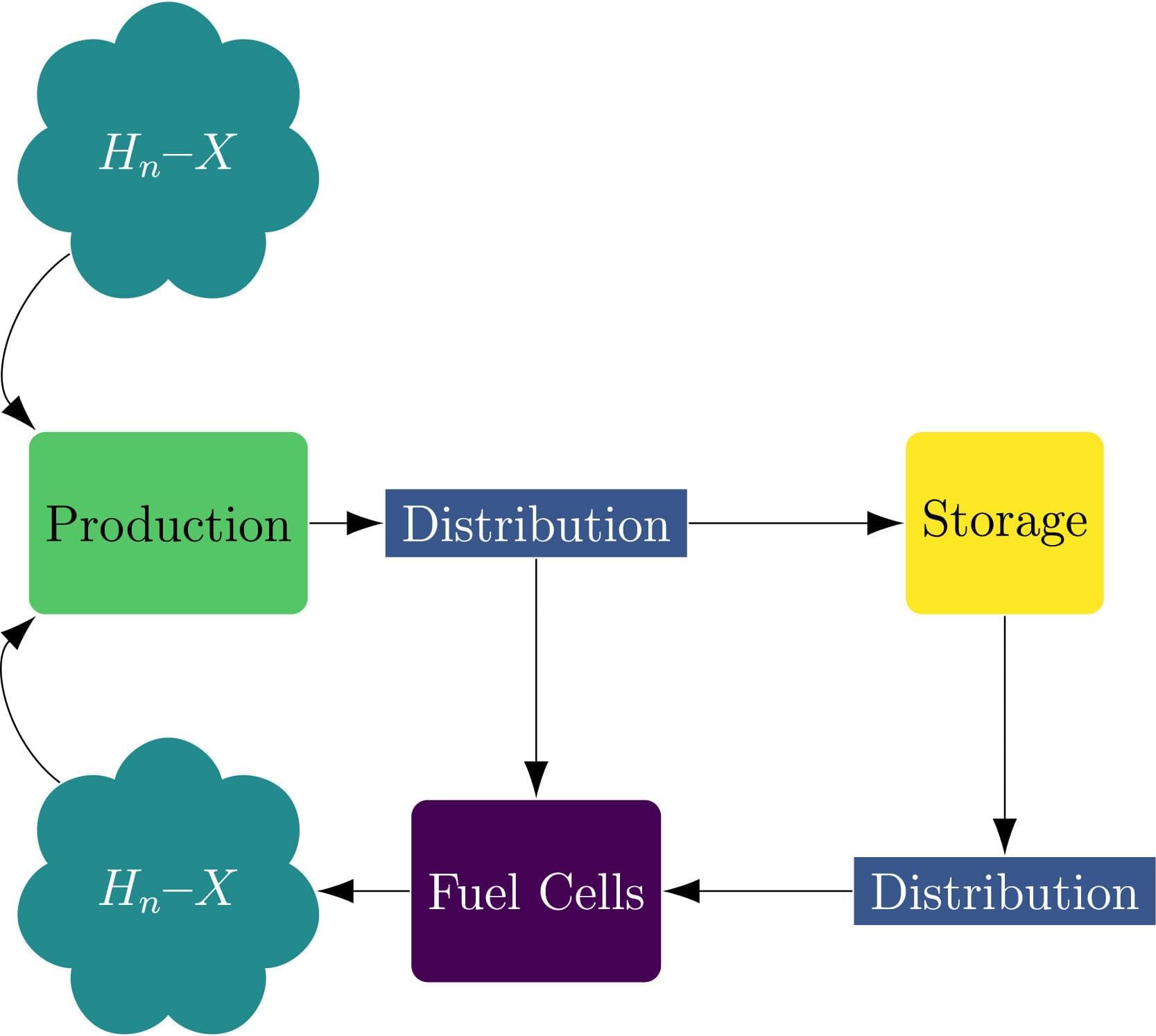
A study from Edinburgh Business School at Heriot-Watt University found that while hydrogen production, storage and fuel cell technologies are advancing rapidly, the hydrogen distribution infrastructure is developing at half the speed, creating a critical bottleneck that could put billions in clean energy at risk.
The paper “Dynamics of knowledge production: A relational-event analysis of patent citation hazards in hydrogen technologies” was published in Sustainable Futures.
The findings are an important milestone in recognizing that, while other hydrogen technologies improve and costs fall, distribution expenses could take up a large share of hydrogen system budgets, significantly limiting overall efficiency and growth of the hydrogen sector.
In a surprising discovery, University of New Mexico researchers have found that OTULIN – an enzyme that helps regulate the immune system – also drives the formation of tau, a protein implicated in many neurodegenerative diseases, as well as brain inflammation and aging.
In a study published in the journal Genomic Psychiatry, the researchers reported that when they deactivated OTULIN, either by administering a custom-designed small molecule or knocking out the gene that codes for it, it halted the production of tau and removed it from neurons. The study was conducted on two different types of cells, some derived from a patient who had died from late-onset sporadic Alzheimer’s disease, and the rest from a line of human neuroblastoma cells that are frequently used in neuroscience research.
The discovery opens the door to potential treatments for Alzheimer’s and other neurodegenerative diseases, said Karthikeyan Tangavelou, PhD, a senior scientist in the lab of Kiran Bhaskar, PhD, professor in the Department of Molecular Genetics & Microbiology in the UNM School of Medicine.
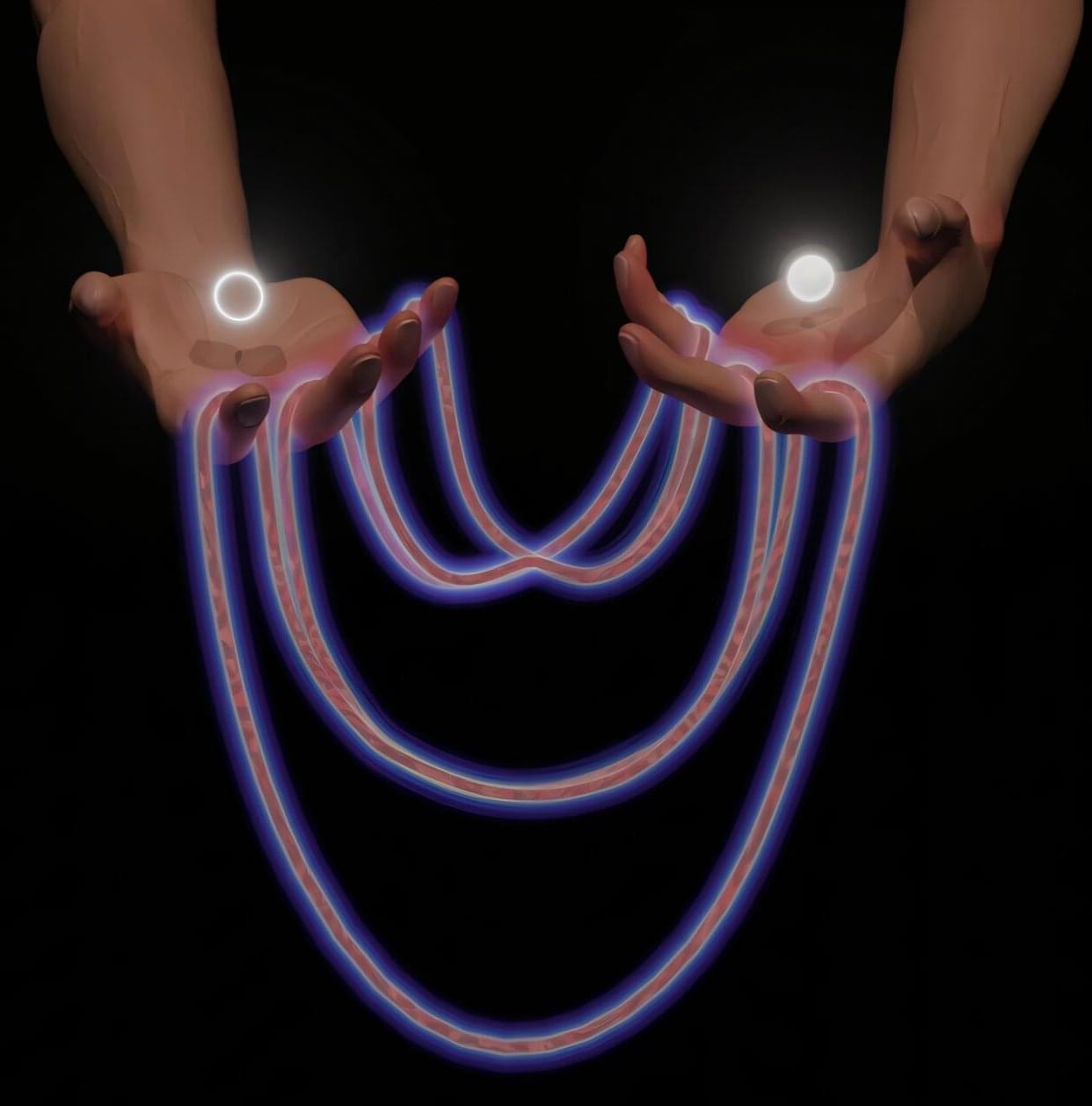
What if you could create new materials just by shining a light at them? To most, this sounds like science fiction or alchemy, but to physicists investigating the burgeoning field of Floquet engineering, this is the goal. With a periodic drive, like light, scientists can “dress up” the electronic structure of any material, altering its fundamental properties—such as turning a simple semiconductor into a superconductor.
While the theory of Floquet physics has been investigated since a bold proposal by Oka and Aoki in 2009, only a handful of experiments within the past decade have managed to demonstrate Floquet effects. And though these experiments show the feasibility of Floquet engineering, the field has been limited by the reliance on light, which requires very high intensities that almost vaporize the material while still only achieving moderate results.
But now, a diverse team of researchers from around the world, co-led by the Okinawa Institute of Science and Technology (OIST) and Stanford University have demonstrated a powerful new alternative approach to Floquet engineering by showing that excitons can produce Floquet effects much more efficiently than light. Their results are now published in Nature Physics.
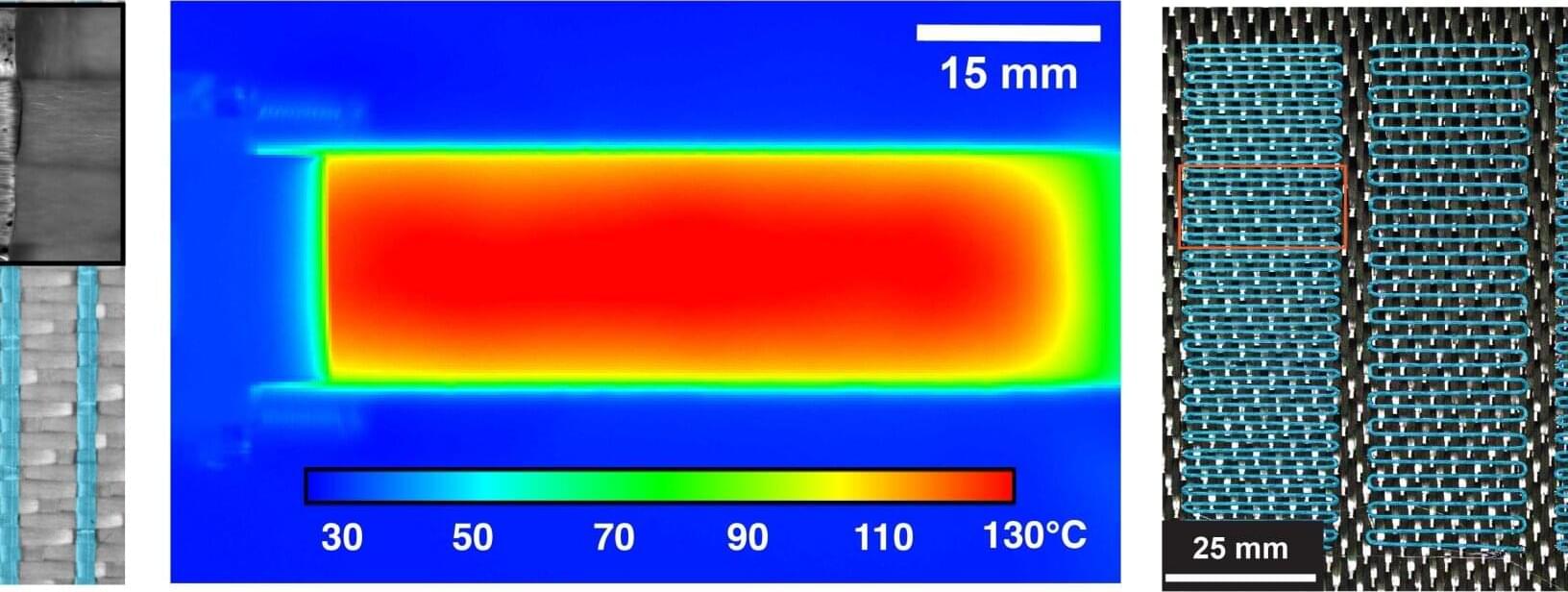
Researchers have created a self-healing composite that is tougher than materials currently used in aircraft wings, turbine blades and other applications—and can repair itself more than 1,000 times. The researchers estimate their self-healing strategy can extend the lifetime of conventional fiber-reinforced composite materials by centuries compared to the current decades-long design-life.
The work is published in the journal Proceedings of the National Academy of Sciences.
“This would significantly drive down costs and labor associated with replacing damaged composite components, and reduce the amount of energy consumed and waste produced by many industrial sectors—because they’ll have fewer broken parts to manually inspect, repair or throw away,” says Jason Patrick, corresponding author of the paper and an associate professor of civil, construction and environmental engineering at North Carolina State University.