Toggle light / dark theme

Get the latest international news and world events from around the world.

Log in for authorized contributors

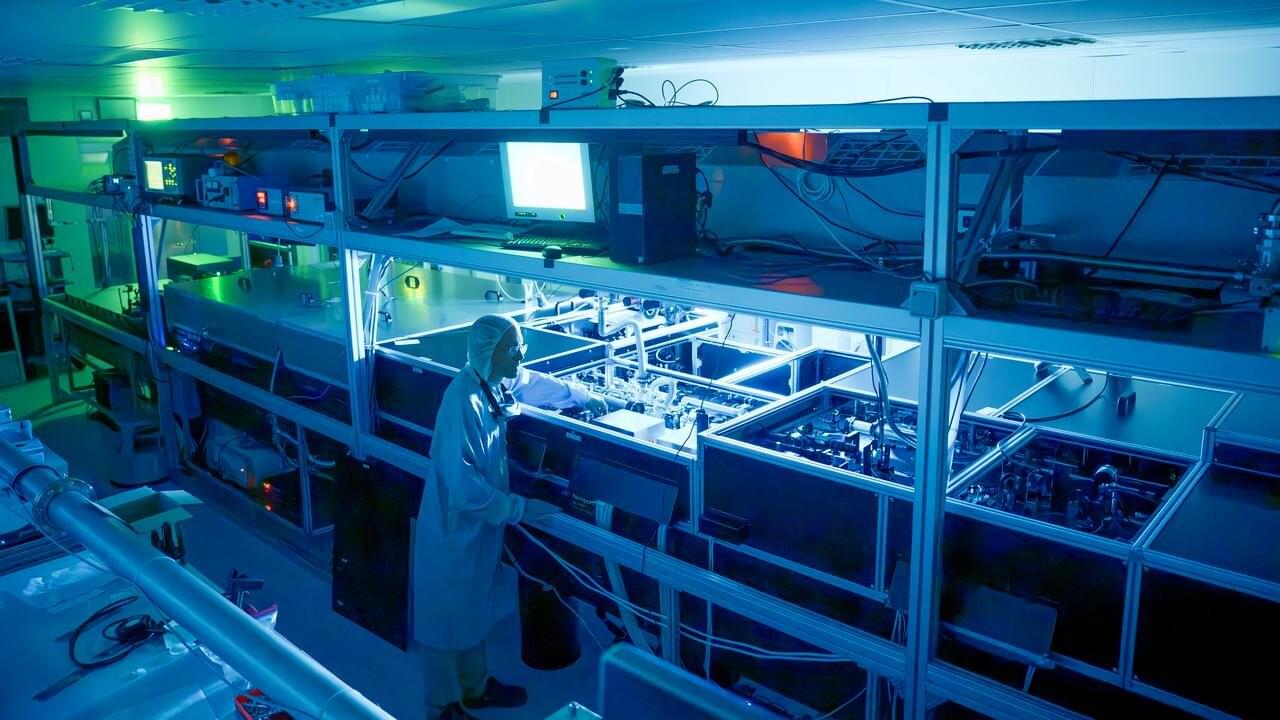
Sweden’s most powerful laser delivers record-short light pulses

For the first time, researchers at Umeå University have demonstrated the full capabilities of their large-scale laser facility. In a study published in Nature Photonics, the team reports generating a combination of ultrashort laser pulses, extreme peak power, and precisely controlled waveforms that make it possible to explore the fastest processes in nature.

This Martian Rock’s Mysterious Spots May Reveal Clues to Ancient Life

By studying the leopard-like spots on rocks from Earth and Mars now, scientists will be ready to analyze returned space samples when they arrive. In 2024, NASA’s Perseverance rover retrieved an unusual rock sample from Mars. Named Sapphire Canyon, the specimen stands out for its striking pattern:

BioNxt advances chemotherapy delivery platform to revolutionise cancer treatment

Hugh Rogers, CEO of BioNxt Solutions, commented: Our team is dedicated to advancing targeted chemotherapy delivery technology to help improve the standard of care for cancer patients.

We look forward to sharing further updates as the programme moves forward.

Unlike conventional chemotherapy, which circulates toxic agents system-wide, BioNxt’s proprietary targeted drug delivery system (TDDS) uses a dual-action mechanism that zeroes in on tumours while safeguarding healthy cells.

Once the drug reaches the tumour environment, it becomes activated and begins releasing its chemotherapeutic payload. Meanwhile, any drug molecules that stray beyond the tumour are rapidly neutralised, only to be reactivated if they re-enter the tumour zone.


BioNxt Solutions unveils a revolutionary chemotherapy delivery platform that targets tumours directly, boosting treatment effectiveness.

The Quantum Future

We analyse five potential trajectories for the development of quantum computing, based on current technical achievements and fundamental challenges. We draw from recent experimental results including Google’s Willow processor achieving below-threshold error correction. We also consider IBM’s quantum roadmap and emerging classical algorithms that challenge quantum supremacy. Additionally, our evaluation includes the bifurcation between NISQ and fault-tolerant approaches.

Small But Mighty: How is Nanotechnology Powering AI?

The limitations of conventional semiconductor technology have become increasingly apparent as AI applications require exponentially larger computational resources. Once the engines of rapid technological advances, silicon-based transistors are now encountering fundamental physical constraints at the nanoscale that inhibit further scaling and performance enhancement. Moore’s law, which predicted the doubling of transistors on a chip every two years, is running out of space.

On top of that, the breakdown of Dennard scaling, which once enabled simultaneous improvements in speed, power efficiency, and density, has further intensified the need for alternative materials and device architectures capable of sustaining AI-driven workloads.

This is where nanotechnology comes in. Working on a nanoscale offers a pathway to overcome the constraints of conventional tech, enabling the precise manipulation of materials at the atomic and molecular levels, typically within the one to 100 nanometer range.

At this minute scale, materials exhibit unique physical, chemical, and electrical characteristics. These small-scale properties can enable faster operation, lower energy consumption, and can be used to deliver complex functionalities within a single nanoscale architecture.


Discover how nanotechnology is advancing AI with energy-efficient chips, in-memory computing, neuromorphic hardware, and nanoscale data storage solutions.

/* */