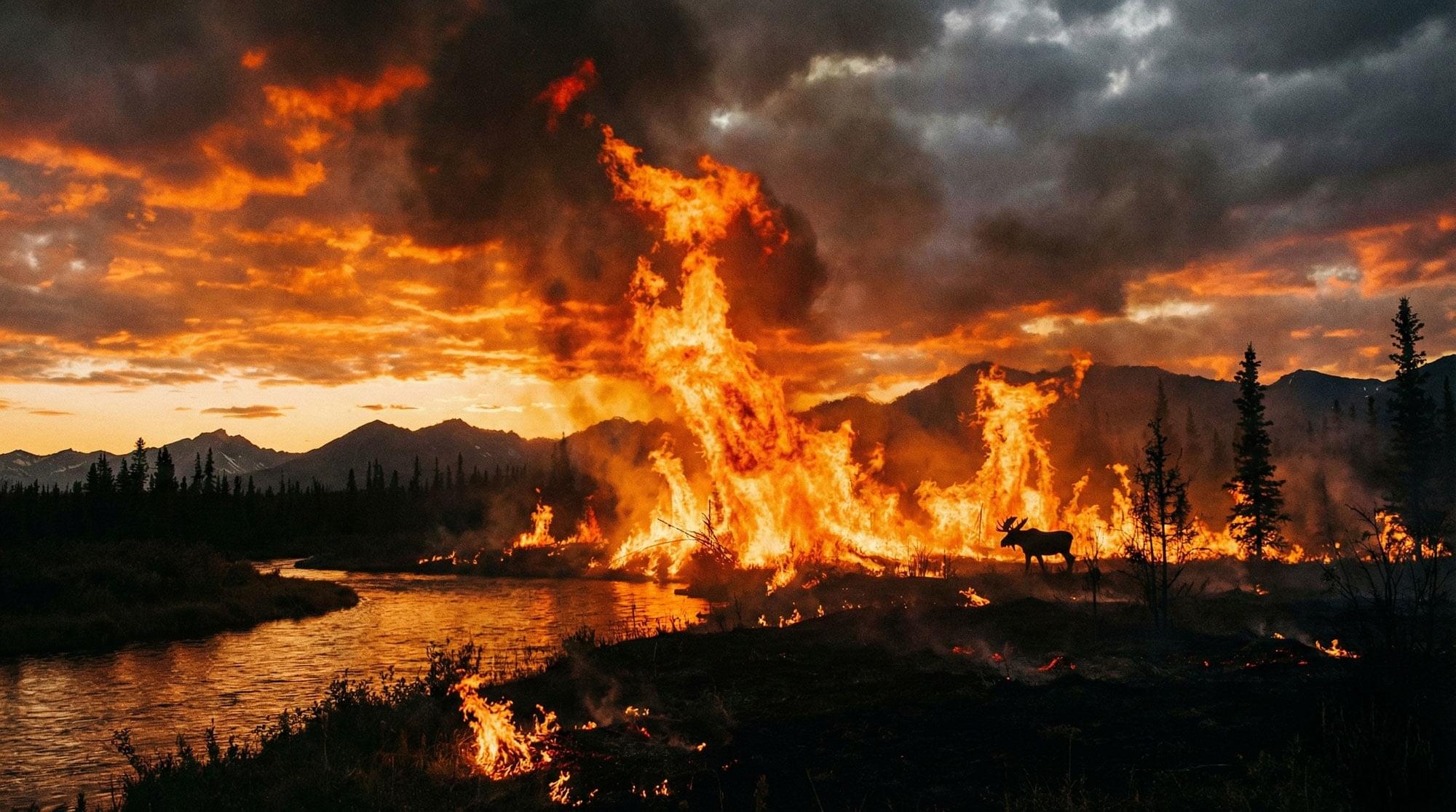
Wildfires across Alaska’s North Slope have been more frequent over the last century than at any point in the previous 3,000 years, according to new research published in the journal Biogeosciences.
The work was carried out in Arctic Alaska by an international group of scientists representing institutions in Germany, Poland, the United Kingdom, Romania, and the University of Alaska Fairbanks’ Toolik Field Station.
Angelica Feurdean, the study’s lead author and a senior researcher at Goethe University in Germany, explained that the team combined multiple scientific methods to piece together a long-term record of fire activity. The results suggest that the recent surge in wildfires is linked to expanding woody vegetation and increasingly dry soils, both of which are associated with rising temperatures.