Toggle light / dark theme

Get the latest international news and world events from around the world.

Log in for authorized contributors

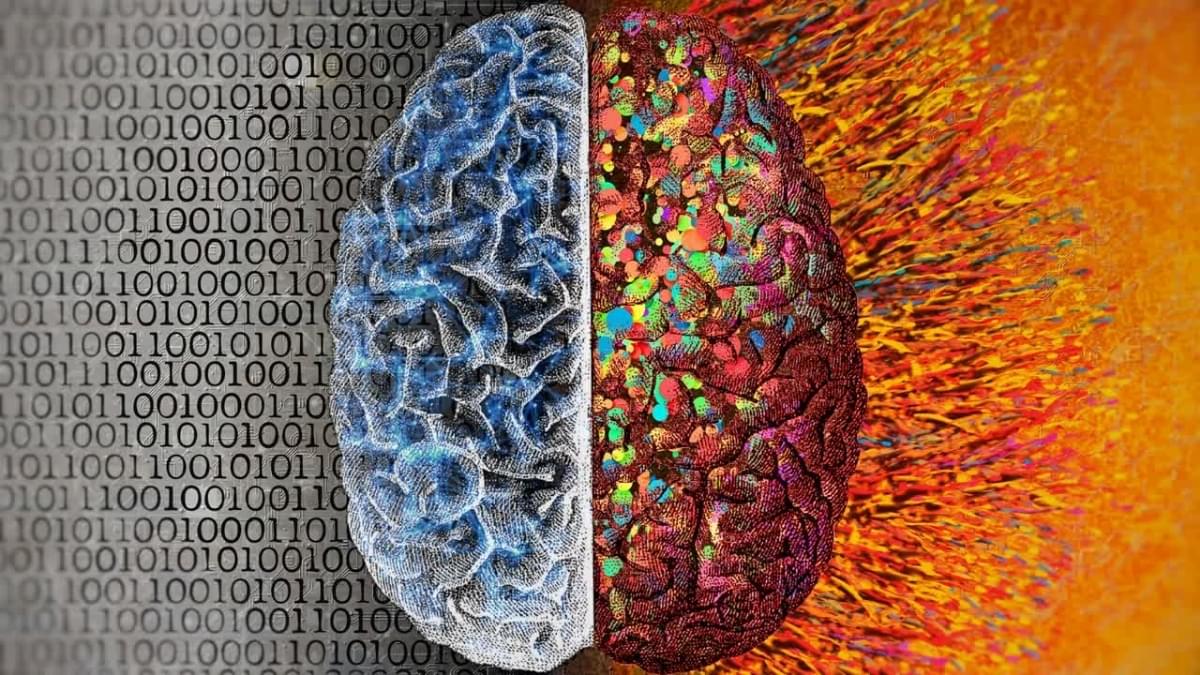
Why some memories last a lifetime while others fade fast

Correlation alone could not answer the key questions, so co-lead Celine Chen created a CRISPR-based screening platform to alter gene activity in the thalamus and cortex. This approach showed that removing certain molecules changed how long memories lasted, and each molecule operated on its own timescale.

Timed Programs Guide Memory Stability

The results indicate that long-term memory relies not on a single on/off switch, but on a sequence of gene-regulating programs that unfold like molecular timers across the brain.

For the first time in history, scientists capture a rare phenomenon in space: a ‘moon factory’ 625 light-years from Earth

In a quiet control room in northern Chile, a dozen people held their breath at the same time.

The monitors glowed a cold blue, showing a disc of dust and gas 625 light-years away, circling a young star known as PDS 70. At first glance, it looked like so many other protoplanetary disks astronomers have seen before. But then the data sharpened, the patterns cleared, and something jumped out that nobody had *ever* seen so clearly: a place where moons are being born in real time.

The room didn’t erupt in shouts. It was slower than that. A whispered “no way”, a chair rolling back, someone rubbing their forehead like they’d been staring at the sun too long. On the screen, the “moon factory” came into focus: a ring of material around a newborn planet, turning raw space dust into future worlds. Everyone present knew they were staring at a first in human history.

This French company signs with a US data‑centre giant to build the world’s first reactor of its kind

As artificial intelligence devours electricity, a quiet nuclear revolution is taking shape deep below future data centers.

Across Europe, tech firms are staring at an uncomfortable equation: soaring digital demand, power grids near saturation, and climate goals that leave little room for more fossil fuels. A young French company now claims it can rewrite that equation with a compact reactor that hides underground and feeds on nuclear waste.

14-Year-Old Wins Prize For Origami That Can Hold 10,000 Times Its Own Weight

While most 14-year-olds are folding paper airplanes, Miles Wu is folding origami patterns that he believes could one day improve disaster relief.

The New York City teen just won $25,000 for a research project based on an origami fold called Miura-ori, which is known for collapsing and expanding with precision.

“I’ve been folding origami as a hobby for more than six years, mostly of animals or insects,” Wu told Business Insider. “Recently I’ve been designing my own origami, too.”

Quantum Algorithm Solves Metabolic Modeling Test

A Japanese research team from Keio University demonstrated that a quantum algorithm can solve a core metabolic-modeling problem, marking one of the earliest applications of quantum computing to a biological system. The study shows quantum methods can map how cells use energy and resources.

Flux balance analysis is a method widely used in systems biology to estimate how a cell moves material through metabolic pathways. It treats the cell as a network of reactions constrained by mass balance laws, finding reaction rates that maximize biological objectives like growth or ATP production.

No. The demonstration ran on a simulator rather than physical hardware, though the model followed the structure of quantum machines expected in the first wave of fault-tolerant systems. The simulation used only six qubits.

Speaking Multiple Languages May Slow Brain Aging, Study Suggests

People are living longer than ever around the world. Longer lives bring new opportunities, but they also introduce challenges, especially the risk of age-related decline.

Alongside physical changes such as reduced strength or slower movement, many older adults struggle with memory, attention and everyday tasks.

Researchers have spent years trying to understand why some people stay mentally sharp while others deteriorate more quickly. One idea attracting growing interest is multilingualism, the ability to speak more than one language.

Moss spores survive 9 months outside International Space Station

Mosses thrive in the most extreme environments on Earth, from the peaks of the Himalayas to the sands of Death Valley, the Antarctic tundra to the lava fields of active volcanoes. Inspired by moss’s resilience, researchers sent moss sporophytes—reproductive structures that encase spores—to the most extreme environment yet: space.

Their results, published in the journal iScience on November 20, show that more than 80% of the spores survived nine months outside of the International Space Station (ISS) and made it back to Earth still capable of reproducing, demonstrating for the first time that an early land plant can survive long-term exposure to the elements of space.

“Most living organisms, including humans, cannot survive even briefly in the vacuum of space,” says lead author Tomomichi Fujita of Hokkaido University. “However, the moss spores retained their vitality after nine months of direct exposure. This provides striking evidence that the life that has evolved on Earth possesses, at the cellular level, intrinsic mechanisms to endure the conditions of space.”


Underwriting Superintelligence: AIUC’s Insurance, Standards & Audits to Accelerate AI Adoption

Rune Kvist and Rajiv Dattani, co-founders of the AI Underwriting Company, reveal their innovative strategy for unlocking enterprise AI adoption. They detail how certifying and insuring AI agents, through rigorous technical standards, periodic audits, and insurance, builds crucial \.

/* */