Toggle light / dark theme

Get the latest international news and world events from around the world.

Log in for authorized contributors

TerraLingua: Emergence and Open-Ended Dynamics in LLM Ecologies

Unlike previous AI simulations where agents existed in consequence-free bubbles, TerraLingua operates more like a real ecosystem. Agents have limited resources and finite lifespans. When an agent “dies,” it’s gone—but here’s the twist: anything it created “survives.” A tool, a rule, a piece of knowledge—these artifacts live on, shaping how future generations of agents behave and interact.


Introducing TerraLingua, a multi-agent LLM ecology that shows how AI agents interact, cooperate, and build shared culture over time in a persistent environment.

Insulin resistance prediction from wearables and routine blood biomarkers

A machine-learning model that integrates data from wearable devices (such as smartwatches) with blood biomarkers and demographic data can predict whether someone has insulin resistance, enabling timely lifestyle interventions to prevent progression to type 2 diabetes.

A lost moon may have created Titan and Saturn’s rings

Titan may be the battered survivor of a colossal moon merger that reshaped Saturn’s rings and rewrote the planet’s history.

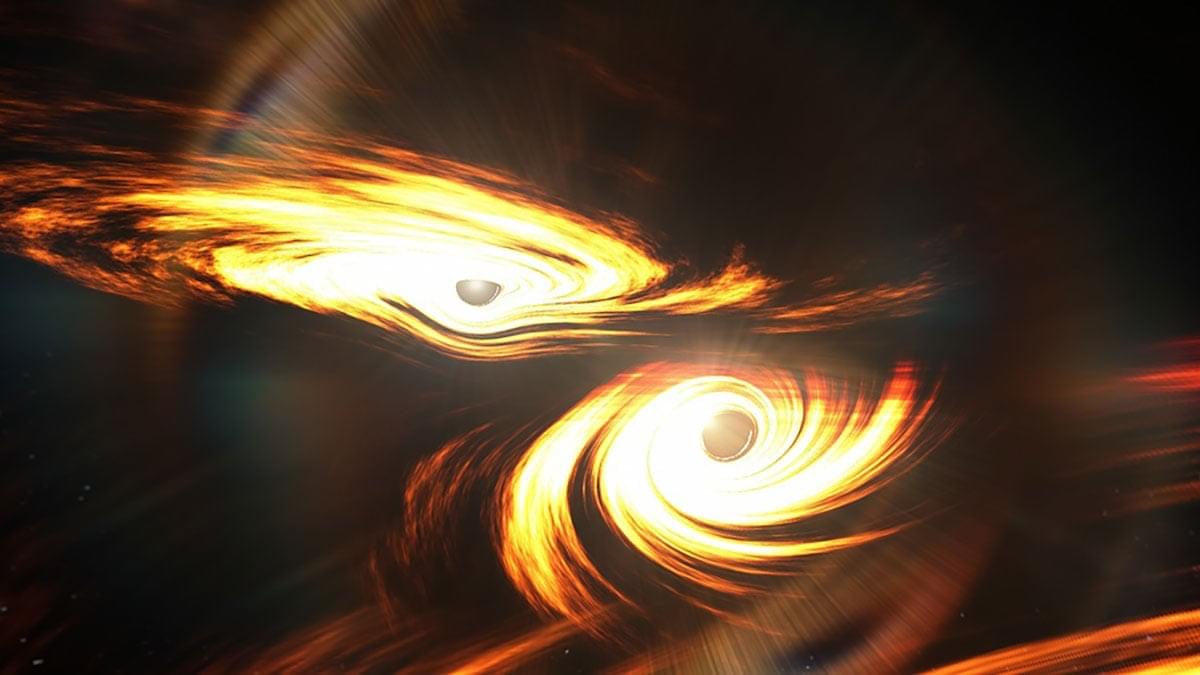
Saturn’s largest moon, Titan, may have been born in a colossal cosmic crash. New research suggests Titan formed when two older moons slammed together hundreds of millions of years ago—an event so violent it reshaped Saturn’s entire moon system and may have indirectly sparked the formation of its iconic rings. Clues come from Titan’s unusual orbit, its surprisingly smooth surface, and the strange behavior of the tumbling moon Hyperion.

New research suggests that Saturn’s brilliant rings and its largest moon, Titan, may share a violent past shaped by collisions between moons. Although NASA’s Cassini spacecraft transformed our understanding of Saturn during its 13 year mission, it also uncovered new puzzles, including the surprisingly young age of Saturn’s rings and Titan’s shifting orbit. A new study led by SETI Institute scientist Matija Ćuk proposes that these mysteries are connected and that Titan itself may have formed when two earlier moons merged.

Glutamine metabolism tunes myeloid responses to drive resolution of inflammation during skin repair

Xu et al. uncover how metabolites regulate cellular communication during inflammatory resolution and tissue repair in vivo. They find that glutamine metabolism alters chromatin accessibility and suppresses neutrophil chemotaxis gene transcription to resolve inflammation and drive tissue repair.

Clinical Heterogeneity and Candidate Biomarkers in POLG-Related Mitochondrial Disease

POLG-related disorders demonstrate extensive clinical variability with no consistent genotype-phenotype correlation. GDF15 and NF-L may serve as useful, though nonspecific, biomarkers of mitochondrial and neuroaxonal dysfunction, respectively.


Background and Objectives.

End Point–Based Threshold for the Ambulatory Arterial Stiffness Index

RESEARCH ARTICLE: End Point–Based Threshold for the Ambulatory Arterial Stiffness Index @jasta49 @melgarejo1024 @neurociencias @PPBoggia


BACKGROUND: The ambulatory arterial stiffness index (AASI) is increasingly used in clinical research and practice. This individual-participant meta-analysis aims to consolidate the prognostic accuracy of AASI in the general population and to derive an end point–based AASI risk threshold. METHODS: In 12 558 individuals enrolled in 14 population studies (48.8% women; mean age, 59.3 years), AASI was derived by regressing 24-hour diastolic on systolic blood pressure (mm Hg/mm Hg). Using Cox regression, the risk-carrying AASI threshold was established by examining stepwise increasing AASI levels and by determining the AASI level, yielding a 10-year risk similar to an office systolic pressure of 140 mm Hg. RESULTS: Over 10.7 years (median), 3,027 all-cause deaths and 2,183 cardiovascular end points occurred.

Pearls & Oy-sters: Using Susceptibility-Based Imaging in Highly Active Late-Onset Multiple Sclerosis

Central vein sign and paramagnetic rim lesions can aid in an earlier diagnosis of late-onset multiple sclerosis and may circumvent the need for biopsy. Learn more in this Pearls & Oy-sters article.


CSF analysis revealed lymphocytic pleocytosis (41 total nucleated cells [normal 0–5/μL], 98% lymphocytes) and an elevated protein of 89 mg/dL (normal, 0–35 mg/dL) without hypoglycorrhachia. CSF kappa free light chains (KFLC) and IgG index were not elevated, and CSF-specific oligoclonal bands (OCBs) were absent. CSF cytology and flow cytometry were negative for malignancy. Extensive neural antibody testing was negative including serum aquaporin-4-immunoglobulin G, myelin oligodendrocyte glycoprotein-immunoglobulin G, and CSF glial fibrillary acidic protein antibody. Extensive rheumatological and infectious testing was also negative. Neurofilament light chain was elevated to 188 pg/mL (normal ≤19 pg/mL for age 60–65 years). Whole body PET was negative, and optical coherence tomography was normal.

Owing to concerns for neurosarcoidosis, lymphoma, or vasculitis, a percutaneous stereotactic biopsy of a right occipital lesion was performed. Pathology revealed a demarcated CD68/163+ macrophage-rich lesion with myelin loss, relative axonal preservation, and a CD3+ predominant lymphocytic infiltrate with rare CD20+ B cells, consistent with active demyelination (Figure 2). She initiated a 5-day course of high-dose oral prednisone (1,250 mg daily) followed by a taper. Within 2 days of treatment, she experienced mild improvement in dysarthria and ataxia, although her EDSS score remained 6 on discharge.

Open in Viewer.

/* */