Toggle light / dark theme

Get the latest international news and world events from around the world.

Log in for authorized contributors

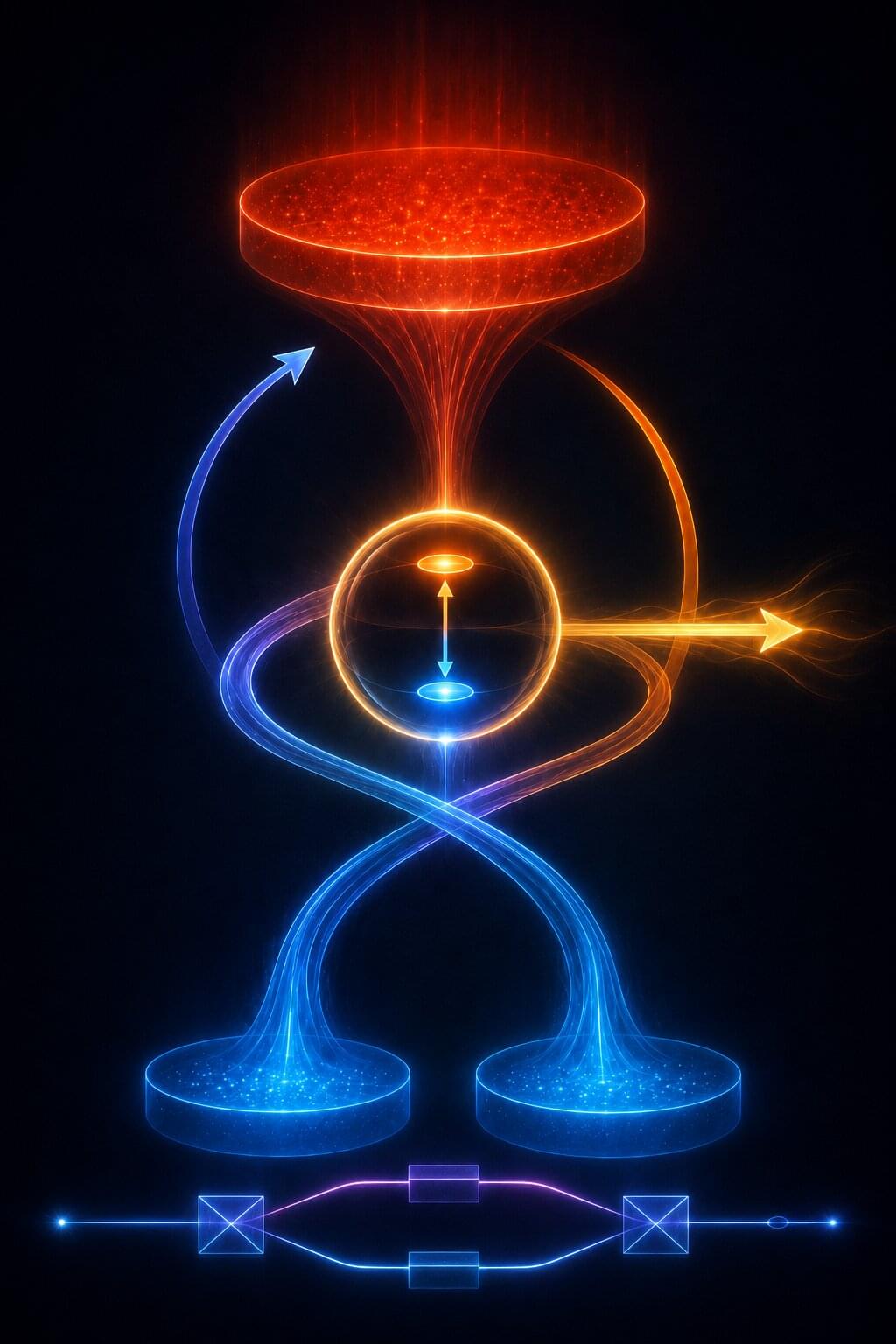
A quantum heat engine that simultaneously provides work and refrigeration

The laws of thermodynamics state that heat naturally flows from hotter systems or regions to colder systems or regions until a state of thermal equilibrium is reached. This simple principle underpins the operation of numerous technologies, ranging from refrigerators to power plants.

Yet quantum systems, which are governed by quantum mechanics, can exhibit unusual behaviors that cannot be explained by classical physics. These behaviors could be used to create innovative thermal devices.

Researchers at Qufu Normal University, the University of Hong Kong and the University of Palermo recently observed an anomalous thermal effect that allows a quantum system to absorb heat from colder thermal reservoirs. This unusual effect, outlined in a paper in Physical Review Letters, was leveraged to develop a new quantum heat engine that simultaneously produces work (i.e., mechanical energy created by converting heat into motion or power) and refrigeration.

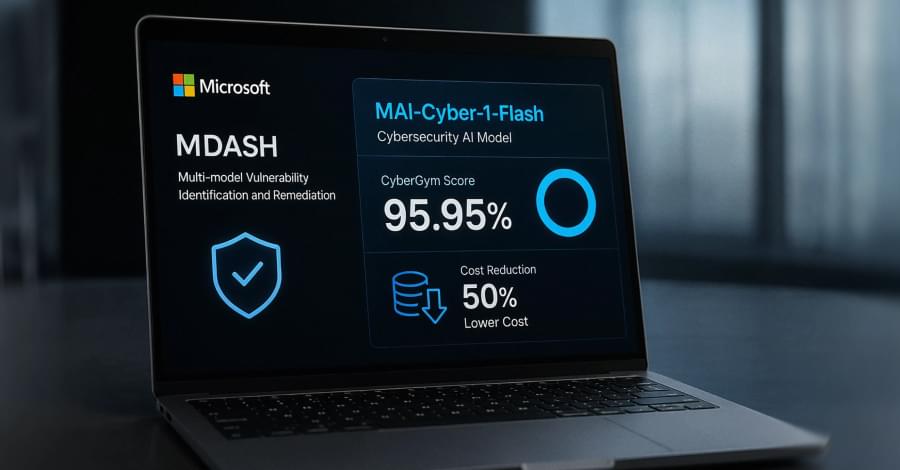
Microsoft Says New Cybersecurity AI Model Helps MDASH Hit 95.95% at Half the Cost

Microsoft has launched its first cybersecurity-specific model inside MDASH, its multi-model vulnerability identification and remediation harness.

The company says MDASH, using MAI-Cyber-1-Flash and GPT-5.4, scored 95.95% on CyberGym. It also claims the configuration costs 50% less than its current best MDASH combination of GPT-5.4, GPT-5.4 mini, and GPT-5.3 Codex. Access is limited to approved MDASH customers through an Azure AI Foundry private preview.

MAI-Cyber-1-Flash is designed to handle up to 90% of MDASH tasks, with GPT-5.4 reserved for the hardest 10%. It is available only inside MDASH, not as a standalone public model or general-purpose application programming interface.

Dysphoria IoT Botnet Adds Blockchain C2 and Victim Relays After JackSkid Disruption

The lineage runs through JackSkid, one of four IoT botnets targeted in coordinated U.S., German, and Canadian law-enforcement actions on March 19. Court documents attributed more than 90,000 DDoS commands to JackSkid alone.

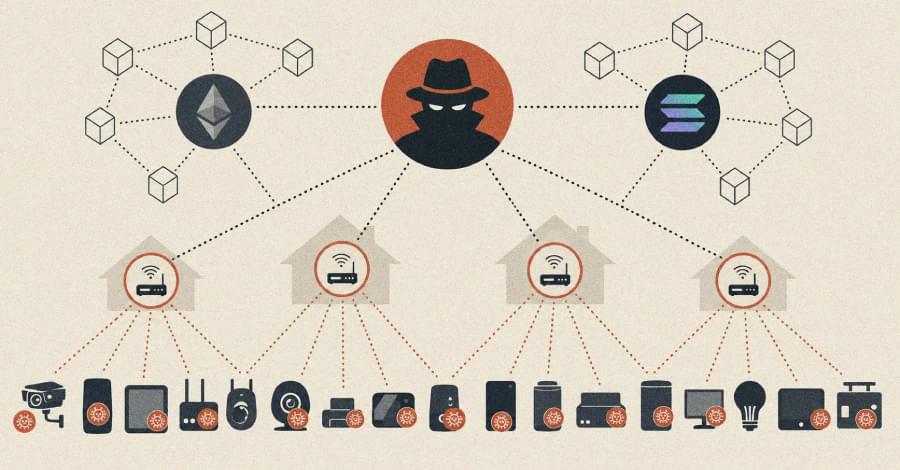
Within days, Nokia Deepfield and Comcast’s threat lab documented the operator falling back to an Ethereum Name Service (ENS) domain, m3rnbvs5d[.]eth, for command-and-control (C2). XLab’s Dysphoria timeline opens with a JackSkid sample captured on March 25, six days after the disruption, that resolves C2 through the same domain.

XLab found that the burrberry[.]eth record encodes distribution-node IPv4 addresses, while 24carnforth2merseyside[.]sol supplies other infrastructure records. The DDoS sample asks a distribution node over HTTP for a current server list, and the listed endpoints are infected machines relaying traffic to the real controllers. The design keeps those controllers one step removed from the addresses exposed to bots.

/* */