Accumulation of senescent cells is associated with age-related diseases. Here, the authors present a prodrug nanoplatform to trigger ferroptosis specifically and exclusively in senescent cells.

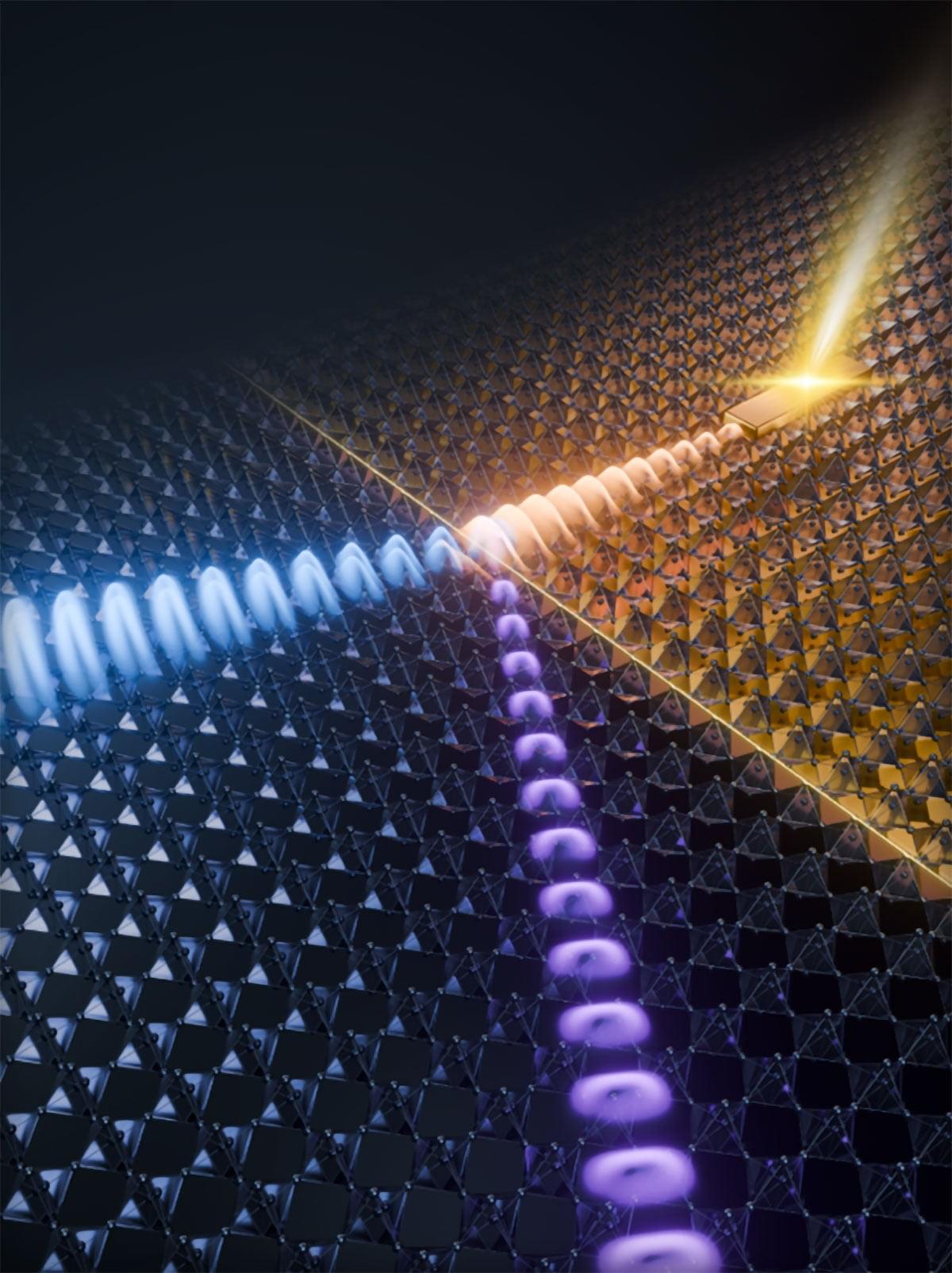
Experiments reveal that inflation not only smooths the universe but populates it with a specific distribution of initial perturbations, creating a foundation for structure formation. The team measured how quantum fluctuations during inflation are stretched and amplified, transitioning from quantum to classical behavior through a process of decoherence and coarse-graining. This process yields an emergent classical stochastic process, captured by Langevin or Fokker-Planck equations, demonstrating how classical stochastic dynamics can emerge from underlying quantum dynamics. The research highlights that the “initial conditions” for galaxy formation are not arbitrary, but constrained by the Gaussian field generated during inflation, possessing specific correlations. This framework provides a cross-scale narrative, linking microphysics and cosmology to life, brains, culture, and ultimately, artificial intelligence, demonstrating a continuous evolution of dynamics across the universe.
Universe’s Evolution, From Cosmos to Cognition
This research presents a unified, cross-scale narrative of the universe’s evolution, framing cosmology, astrophysics, biology, and artificial intelligence as successive regimes of dynamical systems. Rather than viewing these fields as separate, the work demonstrates how each builds upon the previous, connected by phase transitions, symmetry-breaking events, and attractors, ultimately tracing a continuous chain from the Big Bang to contemporary learning systems. The team illustrates how gravitational instability shapes the cosmic web, leading to star and planet formation, and how geochemical cycles establish stable, long-lived attractors, providing the foundation for life’s emergence as self-maintaining reaction networks. The study emphasizes that the universe is not simply evolving in state, but also in its capacity for description and learning, with each transition.
Tim Gibson has been involved in cryonics for many years.
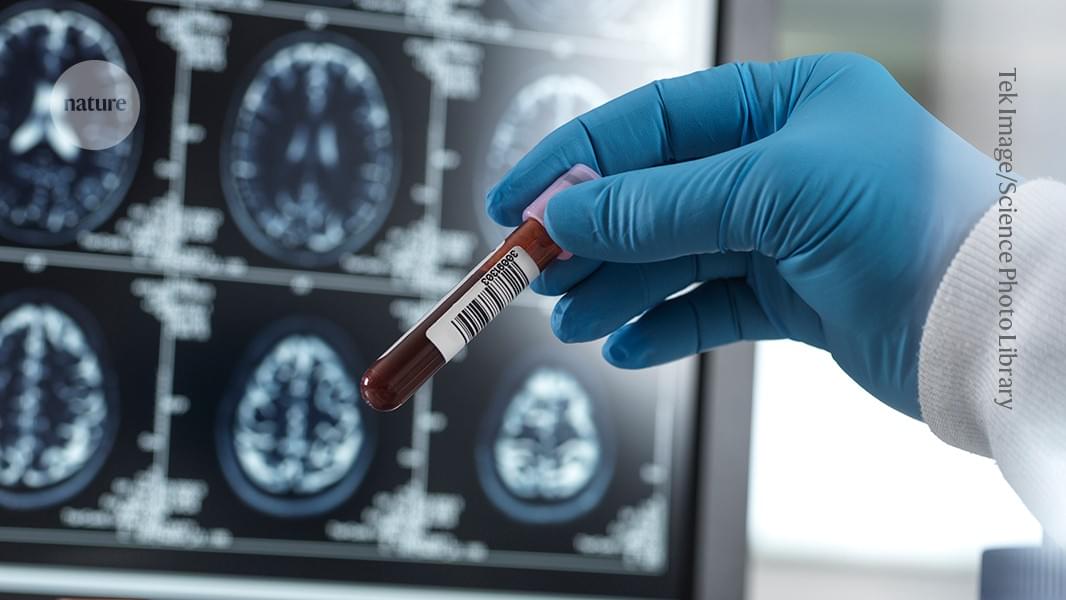
A Nature analysis of a major Norwegian study challenges existing estimates of Alzheimer’s prevalence, finding that 25% of people aged 85–89 have dementia with Alzheimer’s pathology — far higher than previous 7–13% estimates — while preclinical Alzheimer’s in younger seniors (70−74) occurs at only 8% versus earlier 22% estimates. Using blood biomarker pTau217 in 11,486 participants, researchers identified that 10% of over-70s had dementia, 10% had mild cognitive impairment, and 10% had preclinical Alzheimer’s, but warn that blood tests alone are insufficient for widespread screening due to potential harm from false positives. The discrepancies highlight how previous studies may have been skewed by selection bias, while demonstrating that blood-based biomarkers require careful interpretation and comprehensive clinical assessment.
A survey of Alzheimer’s disease prevalence in Norway confirms earlier estimates and might show how education level relates to risk.

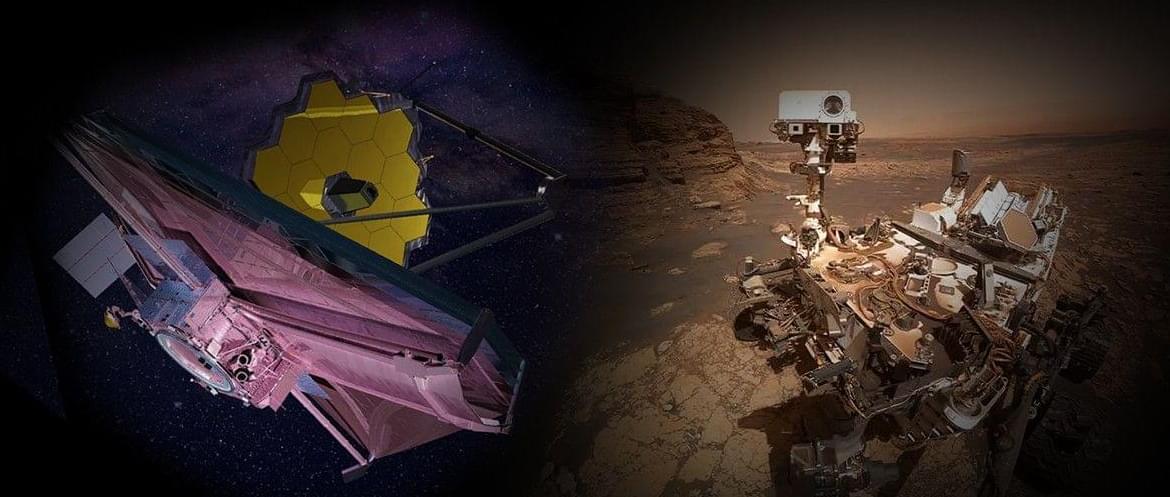
Two icons of discovery, NASA’s James Webb Space Telescope and NASA’s Curiosity rover, have earned places in TIME’s “Best Inventions Hall of Fame,” which recognizes the 25 groundbreaking inventions of the past quarter century that have had the most global impact, since TIME began its annual Best Inventions list in 2000. The inventions are celebrated in TIME’s December print issue.
“NASA does the impossible every day, and it starts with the visionary science that propels humanity farther than ever before,” said Nicky Fox, associate administrator, Science Mission Directorate, NASA Headquarters in Washington. “Congratulations to the teams who made the world’s great engineering feats, the James Webb Space Telescope and the Mars Curiosity Rover, a reality. Through their work, distant galaxies feel closer, and the red sands of Mars are more familiar, as they expanded and redefined the bounds of human achievement in the cosmos for the benefit of all.”
Decades in the making and operating a million miles from Earth, Webb is the most powerful space telescope ever built, giving humanity breathtaking views of newborn stars, distant galaxies, and even planets orbiting other stars. The new technologies developed to enable Webb’s science goals – from optics to detectors to thermal control systems – now also touch Americans’ everyday lives, improving manufacturing for everything from high-end cameras and contact lenses to advanced semiconductors and inspections of aircraft engine components.

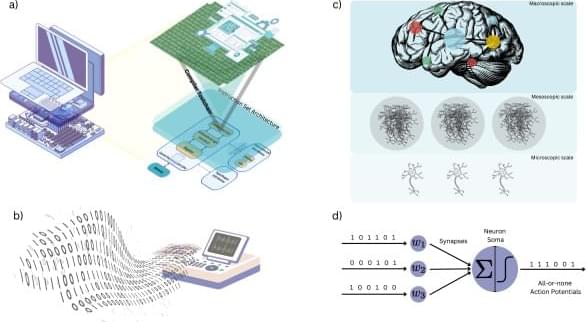
The rapid advances in the capabilities of Large Language Models (LLMs) have galvanised public and scientific debates over whether artificial systems might one day be conscious. Prevailing optimism is often grounded in computational functionalism: the assumption that consciousness is determined solely by the right pattern of information processing, independent of the physical substrate. Opposing this, biological naturalism insists that conscious experience is fundamentally dependent on the concrete physical processes of living systems. Despite the centrality of these positions to the artificial consciousness debate, there is currently no coherent framework that explains how biological computation differs from digital computation, and why this difference might matter for consciousness.
Jeff Lutz is an ex Supply Chain C-Level Exec at several Fortune 100 companies like Google, Lenovo and Motorola. Currently running his own consulting firm.
Follow Jeff Lutz on X: @theJeffLutz.
Become a Patreon: / brighterwithherbert.
Become a YouTube Channel Member: / @brighterwithherbert.
Your support means alot! ❤️
My website: https://www.HerbertOng.com.
15+ modules of resources for the $TSLA Investor + free TESLA Milestone Tables.
Buying a Tesla? Use my referral link and get 3 months free FSD.