Toggle light / dark theme

Get the latest international news and world events from around the world.

Log in for authorized contributors

AI Bathroom Monitors? Welcome To America’s New Surveillance High Schools

This isn’t a high-security government facility. It’s Beverly Hills High School.

District superintendent Alex Cherniss says the striking array of surveillance tools is a necessity, and one that ensures the safety of his students. “We are in the hub of an urban setting of Los Angeles, in one of the most recognizable cities on the planet. So we are always a target and that means our kids are a target and our staff are a target,” he said. In the 2024–2025 fiscal year, the district spent $4.8 million on security, including staff. The surveillance system spots multiple threats per day, the district said.

Beverly Hills’ apparatus might seem extreme, but it’s not an outlier. Across the U.S., schools are rolling out similar surveillance systems they hope will keep them free of the horrific and unceasing tide of mass shootings. There have been 49 deaths from gunfire on school property this year. In 2024, there were 59, and in 2023 there were 45, per Everytown for Gun Safety. Between 2000 and 2,022,131 people were killed and 197 wounded at schools in the U.S., most of them children. Given those appalling metrics, allocating a portion of your budget to state of the art AI-powered safety and surveillance tools is a relatively easy decision.

To flexibly organize thought, the brain makes use of space

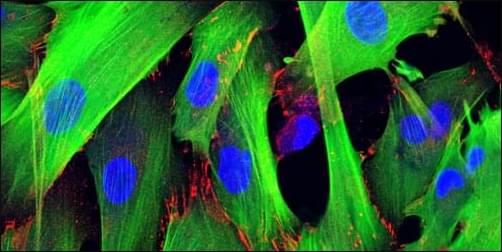
In Current Biology, the Miller Lab at MIT provides new evidence that the brain recruits and controls ad hoc groups of neurons for cognitive tasks by applying brain waves to patches of the cortex.

News: Study:

#neuroscience #cognition #brain


In a new study, MIT researchers tested their theory of Spatial Computing, which holds that the brain recruits and controls ad hoc groups of neurons for cognitive tasks by applying brain waves to patches of the cortex.

Seasonal influenza

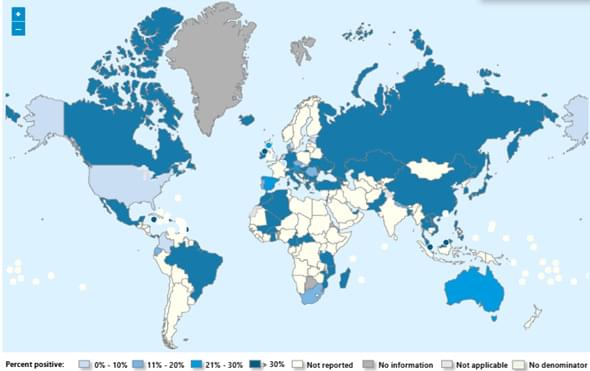
Seasonal influenza activity has increased globally in recent months, and influenza A(H3N2) viruses are predominant. This rise coincides with the onset of winter in the northern hemisphere. Epidemics and outbreaks of seasonal influenza and other circulating respiratory viruses can place significant pressure on healthcare systems. Although global activity remains within expected seasonal ranges, early increases and higher activity than typical at this time of year have been observed in some regions. Seasonal influenza could place significant pressure on healthcare systems even in non-temperate countries. Genetically drifted influenza A(H3N2) viruses, known as subclade K viruses, have been detected in many countries. While data on how well the vaccine works against clinical disease this season are still limited, vaccination is still expected to protect against severe illness and remains one of the most effective public health measures.

Surveillance

Due to the constantly evolving nature of influenza viruses, WHO continues to stress the importance of year-round global surveillance to detect and monitor virological, epidemiological and clinical changes associated with emerging or circulating influenza viruses that may affect human health and timely virus sharing for risk assessment. Countries are encouraged to remain vigilant to the threat of influenza viruses and review any unusual epidemiological patterns.

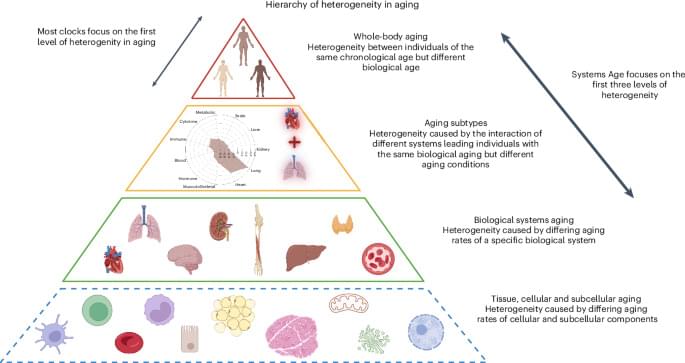
A blood DNA methylation test reveals how quickly each organ system is aging

We developed a single blood-based methylation test that estimates biological aging across 11 physiological systems. This multisystem measure predicts mortality and health outcomes more precisely than existing epigenetic clocks, and reveals distinct aging patterns that could guide personalized gerotherapeutic and geroprotective interventions.

Reining In a Chaotic Fluid

Fluid flows mimicking biological flows can be controlled in the lab using a feedback system, which could be useful in robotics and other technologies.

Ordinary fluids can flow when driven by pressure or gravity, but biological fluids, such as those inside cells, generate complex flows through internal sources of chemical energy. Flows of such “active fluids” could be extremely useful in robotics and other areas of engineering, but controlling them remains difficult. Now researchers have demonstrated a method of control that maintains a constant fluid speed despite changing conditions [1]. They hope that the approach can be used to stabilize active-matter flows in future technologies.

Life depends on biochemical processes that respond to many situations while maintaining fixed chemical conditions despite external and internal disruptions. Inspired by this impressive stability, researchers have been developing analogous artificial systems by assembling active fluids from key biochemical components akin to those inside cells. For example, they have created fluids that can generate their own bulk contractions or undergo spontaneous flows. Although these rudimentary designs mimic some features of living matter, researchers have so far failed to demonstrate techniques that keep properties such as fluid flow speeds stable over time.

Two ancient human species came out of Africa together, not one, suggests new study

The textbook version of the “Out of Africa” hypothesis holds that the first human species to leave the continent around 1.8 million years ago was Homo erectus. But in recent years, a debate has emerged suggesting it wasn’t a single species, but several. New research published in the journal PLOS One now hopes to settle the matter once and for all.

First beta-delayed neutron emission observed in rare fluorine-25 isotope

A research team at the Facility for Rare Isotope Beams (FRIB) is the first ever to observe a beta-delayed neutron emission from fluorine-25, a rare, unstable nuclide. Using the FRIB Decay Station Initiator (FDSi), the team found contradictions in prior experimental findings. The results led to a new line of inquiry into how particles in exotic, unstable isotopes remain bound under extreme conditions. Led by Robert Grzywacz, professor of physics at the University of Tennessee, Knoxville (UTK), the team included Jack Peltier, undergraduate student at UTK, Zhengyu Xu, postdoctoral researcher at UTK, Sean Liddick, professor of chemistry at FRIB and interim chairperson of MSU’s Department of Chemistry, and Rebeka Lubna, scientist at FRIB.

The team published its results in Physics Letters B.

“The different results on decay lifetime we obtained for fluorine-25 were similar to previously measured decay of oxygen-24. And while we are not entirely certain why we found this difference between previously published results, we have conducted numerous checks on our results and are confident in our findings,” Grzywacz said.

The simulation hypothesis: Mathematical framework redefines what it means for one universe to simulate another

The simulation hypothesis—the idea that our universe might be an artificial construct running on some advanced alien computer—has long captured the public imagination. Yet most arguments about it rest on intuition rather than clear definitions, and few attempts have been made to formally spell out what “simulation” even means.

A new paper by SFI Professor David Wolpert aims to change that. In Journal of Physics: Complexity, Wolpert introduces the first mathematically precise framework for what it would mean for one universe to simulate another—and shows that several longstanding claims about simulations break down once the concept is defined rigorously.

His results point to a far stranger landscape than previous arguments suggest, including the possibility that a universe capable of simulating another could itself be perfectly reproduced inside that very simulation.

/* */