Toggle light / dark theme

Get the latest international news and world events from around the world.

Log in for authorized contributors

NVIDIA’s Partners Are Beginning to Tilt Toward Google’s TPU Ecosystem, with Foxconn Reportedly Securing TPU Rack Orders

Foxconn, one of NVIDIA’s largest supply chain partners, has reportedly received orders for AI clusters around Google’s TPUs, marking a significant shift for the Taiwanese manufacturer.

There’s no doubt that the buzz around ASICs, especially after the release of Google’s latest Ironwood TPU platform, has become increasingly mainstream. More importantly, Google’s TPUs are rumored to be on the verge of adoption among several companies, with a notable name being Meta. This is why TPUs are evolving into a platform that is now targeting external adoption. According to a report by the Taiwan Economic Daily, Foxconn has received orders for Google’s TPU compute trays and will also collaborate on Google’s ‘Intrinsic’ robotics plans.


Switch Turns Brain’s Defenses Into Protectors Against Alzheimer’s

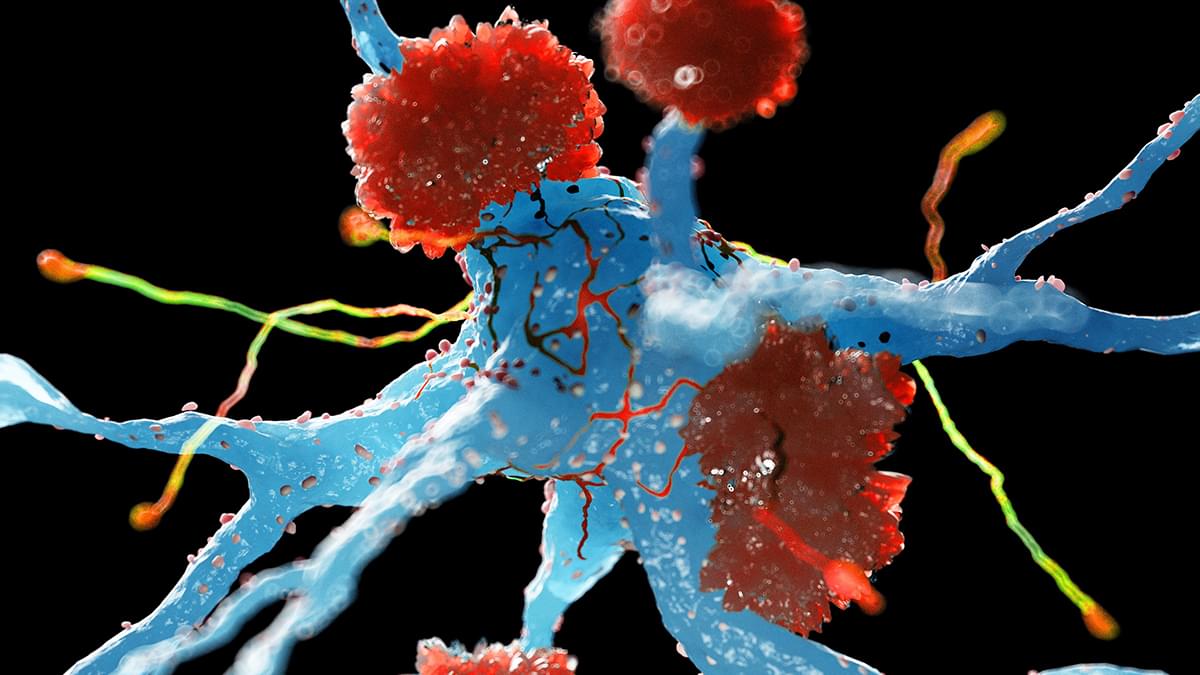
Specific immune cells in the brain may play a crucial role in preventing the onset of Alzheimer’s disease, according to a new study – a discovery that could lead to new therapies that try to coax cells into this protective state.

Earlier studies have shown that immune cells in the brain called microglia can effectively tackle the symptoms of Alzheimer’s, but also make them worse through inflammation.

Here, an international team of scientists took a detailed look at how microglia switch between those two helpful and harmful modes.

Ethics of neurotechnology: UNESCO adopts the first global standard in

Today UNESCO’s Member States took the final step towards adopting the first global normative framework on the ethics of neurotechnology. The Recommendation, which will enter into force on November 12, establishes essential safeguards to ensure that neurotechnology contributes to improving the lives of those who need it the most, without jeopardizing human rights.

New theory proposes that consciousness is the universe’s foundation, not atoms

Maria Strømme, a materials science professor at Uppsala University, outlines a new theoretical model in AIP Advances that begins with a central claim: consciousness is fundamental field, and time, space, and matter develop from it.

Her paper treats conscious experience not as a late add-on, but as the basic “stuff” that reality is made of. In that picture, your brain, your body, and even space and time grow out of a deeper kind of “mind” that fills the whole universe.

Most neuroscientists still ask, “How does the brain produce consciousness?”

Close brush with two hot stars millions of years ago left a mark just beyond our solar system

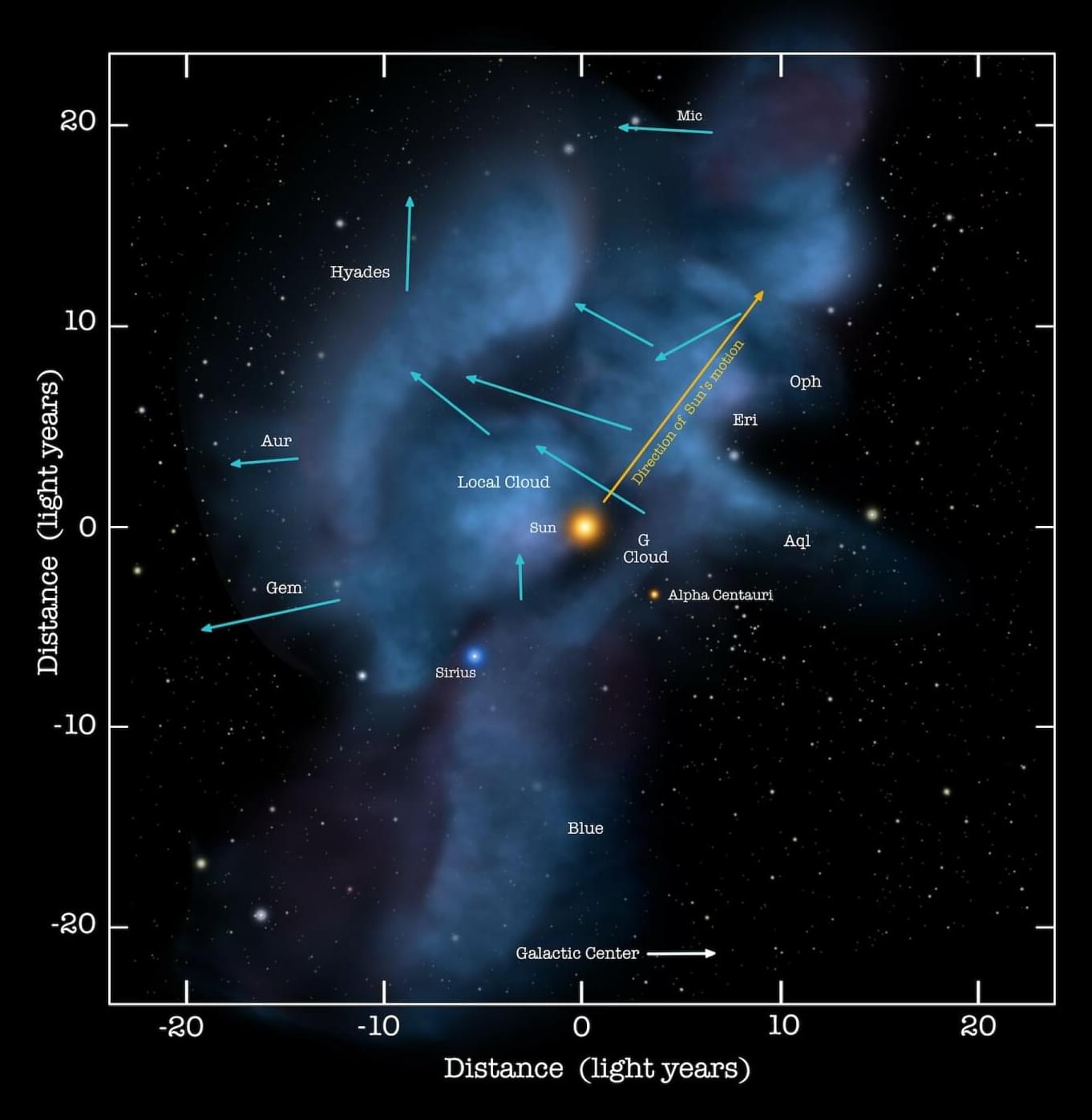
Nearly 4.5 million years ago, two large, hot stars brushed tantalizingly close to Earth’s sun. They left behind a trace in the clouds of gas and dust that swirl just beyond our solar system—almost like the scent of perfume after someone has left the room.

That’s one finding from new research led by Michael Shull, an astrophysicist at the University of Colorado Boulder, and published Nov. 24 in The Astrophysical Journal.

The study sheds new light on the details of Earth’s neighborhood in space.

Crowded Cosmic Regions Slow Galaxy Growth

“Our upbringing and environment influence who we are,” said Dr. Luke Davies. “Someone who has lived their whole life in the city may have a very different personality compared to someone who lives remotely or in an isolated community. Galaxies are no different.”


How does galaxy location drive galaxy structure and star formation? This is what a recent study published in the Monthly Notices of the Royal Astronomical Society hopes to address as a team of scientists investigated the interaction between galaxy location and evolution. This study has the potential to help scientists better understand galaxy formation and evolution, including stars and planets within them.

For the study, the researchers conducted the first study with the Deep Extragalactic Visible Legacy Survey (DEVILS) survey using the Anglo-Australian Telescope’s AAOmega spectrograph, the latter of which is located at Siding Spring Observatory in Australia. The goal of the study was to use DEVILS to add to the existing catalog of galaxy populations based on their speed traveling away from us, also known as redshift. In contrast, blueshift happens when an object is moving towards us.

In the end, the researchers found that galaxies that are clustered together, or more densely packed, result in slower growth and evolution compared to galaxies that are spread apart. The researchers used the analogy of city centers compared to more rural areas. Essentially, a galaxy’s location potentially determines its evolutionary fate.

/* */