Toggle light / dark theme

Get the latest international news and world events from around the world.

Log in for authorized contributors

How multiple sclerosis kills neurons

MS is typically diagnosed when clinicians see lesions in the myelin-rich white matter of the brain on MRI scans. White matter is made of the nerves that link brain cells and it looks white on a brain scan.

The brain’s grey matter, which houses the “bodies” of the brain cells, can also have MS lesions, especially in its outer layers. These lesions are less common — and harder to see on a brain scan — but they are a sign of chronic and disabling MS.

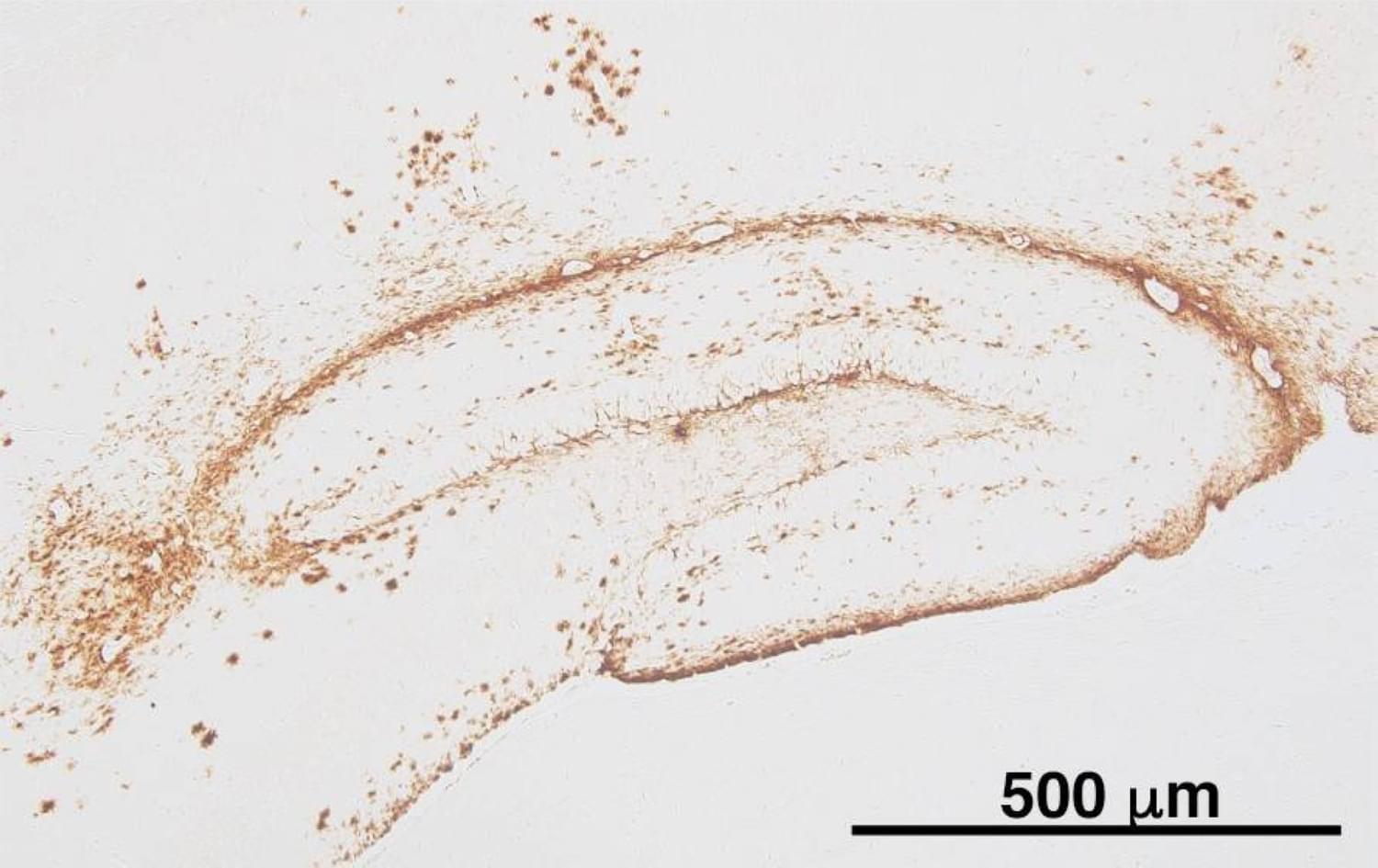
The scientists wanted to learn more about the neurons that died in these grey-matter lesions, which express a gene called CUX2. In the first study, they looked at developing mouse brains to see how CUX2 neurons are born. This occurs early in life, when the brain is growing quickly, putting cells under tremendous stress.

The cells relied on a mechanism to repair their DNA as they rapidly multiplied, fanned out into the far reaches of the brain and wired up with one another. The mechanism depends on a stress-response gene called ATF4 to keep chromosomes intact. When the team removed ATF4, the growing neurons were rife with DNA damage, and this prevented the frontal part of the brain from forming.

In the second study, the team found DNA damage in grey matter lesions from people with MS involving the same neurons.

In mouse models of MS, the researchers saw that inflammation sparked chemical reactions that damaged DNA in CUX2 neurons. The repair systems that protect these neurons from the stresses of development could no longer keep up; and this led to brain damage.

Together, the two studies outline the natural way the brain’s outer layer neurons cope with DNA damage — and how that system breaks down in MS. ScienceMission sciencenewshighlights.

Scientists uncover brain circuits for impulsivity

Scientists from the Lee Kong Chian School of Medicine at Nanyang Technological University, Singapore, have uncovered how different brain regions work together to enable self-control—the ability to suppress impulsive behaviors and wait for the right moment to act. Their findings advance the understanding of conditions such as attention-deficit hyperactivity disorder (ADHD) and addiction, and could lead to more effective management of these disorders.

According to the researchers, this is the first time that this interplay underlying self-control has been found in the brain. The findings were reported in Science Advances.

Safety Profile of the Trastuzumab-Based ADCs: Analysis of Real-World Data Registered in EudraVigilance

Trastuzumab (T) and tyrosine kinase inhibitors (TKIs) are among the first-line treatments recommended for HER2-positive breast cancer. More recently, antibody-drug conjugates (ADCs) such as trastuzumab deruxtecan (T-DXd) and trastuzumab emtansine (T-DM1) have been authorized, and they represent the second-line therapy in this type of cancer. The present study aimed to evaluate adverse drug reactions (ADRs) associated with T-based ADCs that were spontaneously reported in EudraVigilance—the European pharmacovigilance database. Out of 42,272 ADRs reported for currently approved ADCs on the market, 24% of ADRs were related to T-DM1, while 12% of ADRs were related to T-DXd.

Blood test can predict Alzheimer’s disease progression years before symptoms or brain scan changes

A study by investigators at Mass General Brigham has found that a blood test of plasma phosphorylated tau 217 (pTau217), an Alzheimer’s disease biomarker, can predict the progression of amyloid PET scan changes and cognitive decline in cognitively healthy older adults. The findings may help push back the clock to enable simpler, earlier disease prediction and indicate who may be at risk for cognitive decline. The results are published in Nature Communications.

“We used to think that PET scan detection was the earliest sign of Alzheimer’s disease progression, revealing amyloid accumulation in the brain 10 to 20 years before symptoms appear,” said lead author Hyun-Sik Yang, MD, a neurologist with Mass General Brigham Neuroscience Institute and an associate member of the Broad Institute of MIT and Harvard. “But now we are seeing that pTau217 can be detected years earlier, well before clear abnormalities appear on amyloid PET scans.”

Last year, the U.S. Food and Drug Administration cleared the first blood test for Alzheimer’s disease, paving the way for a cheaper, less invasive alternative to lumbar punctures and PET scans. The new study by Yang and colleagues adds important evidence about the predictive potential of these kinds of blood tests.

AI Model Can Help Cut Hospitalizations in Patients With Dialysis

AI models identified patients with end-stage kidney disease (ESKD) receiving hemodialysis who faced an imminent risk for hospital admission due to infections or fluid status abnormalities. When paired with nurse-led case reviews and targeted interventions, this strategy helped avert short-term admissions, demonstrating AI’s potential to guide timely, focused care.


AI-driven interventions reduce the odds of hospitalization within 7 days by 8% in patients with end-stage kidney disease receiving hemodialysis, according to a recent study.

Sibling Stem Cell Transplant Leads to Rare HIV Remission in ‘Oslo Patient’

After receiving a stem cell transplant from his brother, a 63-year-old Norwegian man known as the “Oslo patient” has become one of only a handful of people to see their HIV (human immunodeficiency virus) go into long-term remission.

While HIV can now be controlled with medication that stops the virus from replicating, the virus remains in the body, rebounding when the drugs are stopped. So case studies like this one are invaluable for researchers working towards a full cure.

The Oslo man was given a bone marrow stem cell transplant to treat a rare type of blood cancer. Discovering at the last minute that his brother carried a rare genetic mutation previously shown to resist HIV, researchers led by a team from Oslo University Hospital closely tracked the operation’s impact on the virus.

Proteomic insights into troponin elevation following COVID-19 infection

Background Raised cardiac troponin-I is a common finding in patients hospitalised with acute viral infections, including but not limited to COVID-19. This often occurs in the absence of overt myocardial injury presenting a challenge for interpretation. The mechanisms underlying troponin elevation are uncertain.

Methods The CISCO-19 (Cardiovascular Imaging in SARS-CoV-19) study (NCT04403607) is a prospective, multicentre cohort study, in which hospitalised PCR-confirmed COVID-19 participants (N=267) underwent multisystem evaluation at enrolment and at 28–60 days. The study incorporated plasma proteomics (SOMAscan V.4.1), cardiovascular MRI and clinical biomarkers. Of these, 211 had baseline plasma proteomic data and 185 completed follow-up sampling. Matched proteomic and imaging data were available for 155 participants (mean age: 55 years (SD 12); 43% female).

Results A high likelihood of myocarditis was identified in 13.2% (N=21/159) of participants. High-sensitivity troponin-I was modestly elevated at enrolment (median 3 ng/L; IQR 2–6; n=159). Among males (n=90), 9.3% had a high-sensitivity troponin that exceeded 34 ng/L. Among females (n=69), 4.5% exceeded 16 ng/L. Smooth muscle myosin light chain proteins were downregulated at follow-up (log2 fold change −0.12 to −0.6; all adjusted p0.02) and positively correlated with high-sensitivity troponin-I, but not N-terminal brain natriuretic peptide or cardiac MRI indices (n=155).

Association of Perinatal HIV Exposure and HIV Disease Severity With BP in Youth

RESEARCH ARTICLE: association of perinatal HIV exposure and HIV disease severity with BP in youth.


BACKGROUND: HIV infection is associated with cardiovascular events in adults. We compared mean blood pressure (BP) obtained at study visits between youth with/without perinatally acquired HIV infection and evaluated whether HIV disease severity was associated with BP. METHODS: BP was compared between participants with/without HIV in the Adolescent Master Protocol of the Pediatric HIV/AIDS Cohort Study. Marginal repeated measures analyses using generalized estimating equations evaluated the association of HIV disease severity with BP index (mean BP/95th percentile BP) and abnormal BP. RESULTS: 447 youth with HIV and 226 youth without HIV were included. Youth with HIV were more often Black non-Hispanic (66% versus 54%), had greater household income (54% versus 35%), and lower measures of adiposity than those without.

/* */