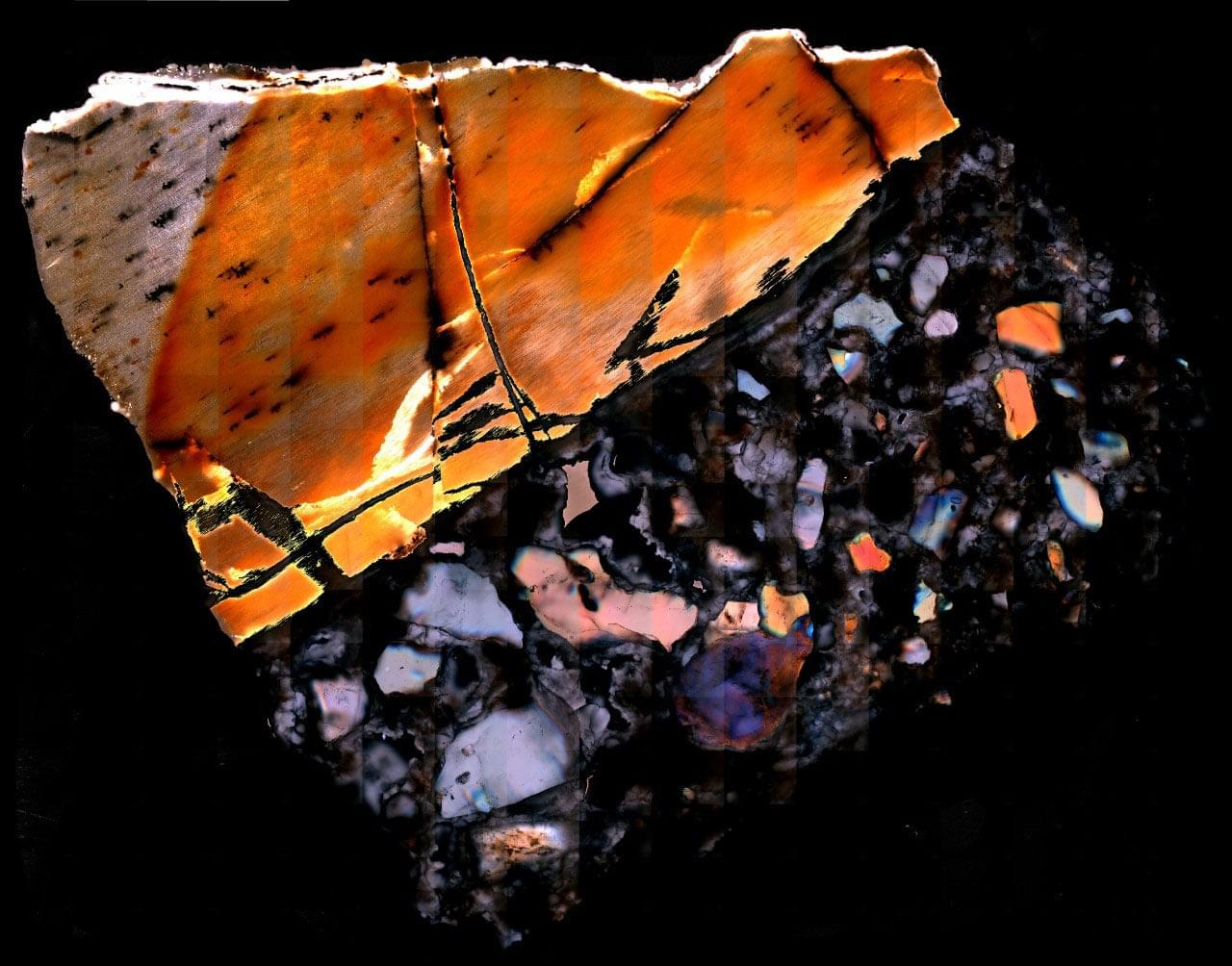
Fossils can reveal far more than the shapes of ancient creatures. Molecules preserved inside old animal bones provide clues about past diseases, what those animals ate, and the climates they lived in. For the first time, researchers have examined metabolism-related molecules preserved in fossiliz
The region also plays a role in the gradual loss of hydrogen, a key component of water, or H2O. Tracking how hydrogen escapes from Earth may help explain why our planet has managed to hold onto its water while others have not, offering valuable clues in the search for potentially habitable exoplanets, or planets beyond our solar system.
NASA’s Carruthers Geocorona Observatory, named in honor of George Carruthers, is designed to capture the first continuous movies of Earth’s exosphere, revealing its full expanse and internal dynamics.
“We’ve never had a mission before that was dedicated to making exospheric observations,” said Alex Glocer, the Carruthers mission scientist at NASA’s Goddard Space Flight Center in Greenbelt, Maryland. “It’s really exciting that we’re going to get these measurements for the first time.”
*GUEST BIO:* Irving Finkel is a scholar of ancient languages and a longtime curator at the British Museum, renowned for his expertise in Mesopotamian history and cuneiform writing. He specializes in reading and interpreting cuneiform inscriptions, including tablets from Sumerian, Akkadian, Babylonian, and Assyrian contexts. He became widely known for studying a tablet with a Mesopotamian flood story that predates the biblical Noah narrative, which he presented in his book “The Ark Before Noah” and in a documentary that involved building a circular ark based on the tablet’s technical instructions.