Toggle light / dark theme

Get the latest international news and world events from around the world.

Log in for authorized contributors

AI streamlines deluge of data from particle collisions

Scientists at the U.S. Department of Energy’s (DOE) Brookhaven National Laboratory have developed a novel artificial intelligence (AI)-based method to dramatically tame the flood of data generated by particle detectors at modern accelerators. The new custom-built algorithm uses a neural network to intelligently compress collision data, adapting automatically to the density or “sparsity” of the signals it receives.

As described in a paper just published in the journal Patterns, the scientists used simulated data from sPHENIX, a particle detector at Brookhaven Lab’s Relativistic Heavy Ion Collider (RHIC), to demonstrate the algorithm’s potential to handle trillions of bits of detector data per second while preserving the fine details physicists need to explore the building blocks of matter.

The algorithm will help physicists gear up for a new era of streaming data acquisition, where every collision is recorded without pre-selecting which ones might be of interest. This will vastly expand the potential for more accurate measurements and unanticipated discoveries.

Using complex networks to tame combustion instability

Engineers have long battled a problem that can cause loud, damaging oscillations inside gas turbines and aircraft engines: combustion instability. These unwanted pressure fluctuations create vibrations so intense that they can cause fatal structural damage to combustor walls, posing a serious threat in many applications. Combustion instability occurs when acoustic waves, heat release, and flow patterns interact in a strong feedback loop, amplifying each other until the entire system becomes unstable.

The complex interaction has made it difficult to predict when and where dangerous oscillations will emerge. This challenge has motivated researchers to seek new analytical frameworks that can capture the key driving regions of combustion instability.

Now, a research team led by Professors Hiroshi Gotoda from Tokyo University of Science and Ryoichi Kurose from Kyoto University, Japan, has developed an innovative approach using network science to understand and suppress combustion instability. Their paper, published in the journal Physical Review Applied on July 1, 2025, applies complex network analysis to spray combustion instability in a backward-facing step combustor.

A clearer look at critical materials, thanks to refrigerator magnets

With an advanced technology known as angle-resolved photoemission spectroscopy (ARPES), scientists are able to map out a material’s electron energy-momentum relationship, which encodes the material’s electrical, optical, magnetic and thermal properties like an electronic DNA. But the technology has its limitations; it doesn’t work well under a magnetic field. This is a major drawback for scientists who want to study materials that are deployed under or even actuated by magnetic fields.

Inspired by refrigerator magnets, a team of Yale researchers may have found a solution. Their study was featured recently on the cover of The Journal of Physical Chemistry Letters.

Quantum materials —such as unconventional superconductors or topological materials—are considered critical to advancing quantum computing, high-efficiency electronics, nuclear fusion, and other fields. But many of them need to be used in the presence of a magnetic field, or even only become activated by magnetic fields. Being able to directly study the electronic structure of these materials in magnetic fields would be a huge help in better understanding how they work.

Natural magnetic materials can control light in unprecedented ways

Imagine shining a flashlight into a material and watching the light bend backward—or in an entirely unexpected direction—as if defying the law of physics. This phenomenon, known as negative refraction, could transform imaging, telecommunications, and countless other technologies. Now, a team of scientists has managed to use a natural magnetic material called CrSBr to achieve negative refraction—without the need for complicated artificial structures. The study, published in Nature Nanotechnology, opens the door to ultra-compact lenses, super-high-resolution microscopes, and reconfigurable optical devices that can be controlled with magnets.

The researchers used a very thin layer of CrSBr, a material that has a unique magnetic structure—its magnetic atoms align in different ways within and between layers. This magnetic order changes how the material interacts with light. When the magnetic order is active, it causes light to bend “the wrong way,” creating negative refraction.

By guiding light into this material on a tiny chip, the team visually confirmed the backward bending of light. They also built a miniature “hyperlens” —a device that can focus light into extremely small spots—an essential step for future high-precision imaging and data processing.

Focusing and defocusing light without a lens: First demonstration of the structured Montgomery effect in free space

Applied physicists in the Harvard John A. Paulson School of Engineering and Applied Sciences (SEAS) have demonstrated a new way to structure light in custom, repeatable, three-dimensional patterns, all without the use of traditional optical elements like lenses and mirrors. Their breakthrough provides experimental evidence of a peculiar natural phenomenon that had been confined mostly to theory.

Researchers from the lab of Federico Capasso, the Robert L. Wallace Professor of Applied Physics and Vinton Hayes Senior Research Fellow in Electrical Engineering, report in Optica the first experimental demonstration of the little-known Montgomery effect, in which a coherent beam of light seemingly vanishes, then sharply refocuses itself over and over, in free space, at perfectly placed distances. This lensless, repeatable patterning of light could lay the groundwork for powerful new tools in many areas including microscopy, sensing, and quantum computing.

This effect had been predicted mathematically in the 1960s but never observed under controlled lab conditions. The new work underscores not only that the effect is real, but that it can be precisely engineered and tuned.

Real-time single-event position detection using high-radiation-tolerance GaN

Silicon semiconductors are widely used as particle detectors; however, their long-term operation is constrained by performance degradation in high-radiation environments. Researchers at University of Tsukuba have demonstrated real-time, two-dimensional position detection of individual charged particles using a gallium nitride (GaN) semiconductor with superior radiation tolerance.

Silicon (Si)-based devices are widely used in electrical and electronic applications; however, prolonged exposure to high radiation doses leads to performance degradation, malfunction, and eventual failure. These limitations create a strong demand for alternative semiconductor materials capable of operating reliably in harsh environments, including high-energy accelerator experiments, nuclear-reactor containment systems, and long-duration lunar or deep-space missions.

Wide-bandgap semiconductors, characterized by strong atomic bonding, offer the radiation tolerance required under such conditions. Among these materials, gallium nitride (GaN)—commonly employed in blue light-emitting diodes and high-frequency, high-power electronic devices—has not previously been demonstrated in detectors capable of two-dimensional particle-position sensing for particle and nuclear physics applications.

Intercity quantum sensor network tightens axion dark matter constraints

Recently, scientists from institutions including the University of Science and Technology of China made a fundamental breakthrough in nuclear-spin quantum precision measurement. They developed the first intercity nuclear-spin-based quantum sensor network, which experimentally constrains the axion topological-defect dark matter and surpasses the astrophysical limits. The study is published in the journal Nature.

Current studies indicate that ordinary visible matter accounts for only about 4.9% of the universe, while dark matter makes up about 26.8%. Axions are among the best-motivated dark matter candidates, and axion fields can form topological defects during phase transitions in the early universe. As Earth crosses topological defects, the defects are expected to interact with nuclear spins and induce signals. However, detection remains a formidable challenge because signals are extremely weak and short-duration.

To overcome the detection challenge, the research team innovatively developed a nuclear-spin quantum precision measurement that “stores” microsecond-scale axion-induced signals in a long-lived nuclear-spin coherent state, enabling a minute-scale readout signal. At the same time, the team used nuclear spin as a quantum spin amplification to further enhance the weak dark-matter signal by at least 100-fold, increasing the sensitivity of spin rotation to about 1 μrad, representing an improvement of more than four orders of magnitude over previous techniques.

Imaging the Wigner crystal state in a new type of quantum material

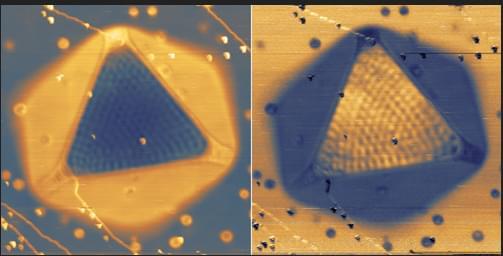
In some solid materials under specific conditions, mutual Coulomb interactions shape electrons into many-body correlated states, such as Wigner crystals, which are essentially solids made of electrons. So far, the Wigner crystal state remains sensitive to various experimental perturbations. Uncovering their internal structure and arrangement at the atomic scale has proven more challenging.

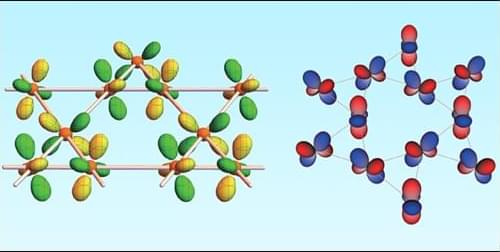
Researchers at Fudan University have introduced a new approach to study the Wigner crystal state in strongly correlated two-dimensional (2D) systems. They successfully made sub-unit-cell resolution images of the Wigner crystalline state in a carefully engineered material comprised of a single atomic layer of ytterbium chloride (YbCl₃) stacked on graphite.

The research is published in the journal Physical Review Letters.

Optical atomic clocks poised to redefine how the world measures seconds

Time is almost up on the way we track each second of the day, with optical atomic clocks set to redefine the way the world measures one second in the near future. Researchers from Adelaide University worked with the National Institute of Standards and Technology (NIST) in the United States and the National Physical Laboratory (NPL) in the United Kingdom to review the future of the next generation of timekeeping.

They found that development is happening at such a fast rate that optical atomic clocks are well positioned to become the gold standard for timekeeping within the next few years, provided some technical challenges can be addressed.

Optica l atomic clocks have advanced rapidly over the past decade, to the point where they are now one of the most precise measurement tools ever built. They’re more accurate than the best microwave atomic clocks and can even work outside the lab—this is a place that conventional atomic clocks have trouble venturing,” said co-author Professor Andre Luiten from Adelaide University’s Institute for Photonics and Advanced Sensing.

/* */