Toggle light / dark theme

The insect-inspired bionic eye that sees, smells and guides robots

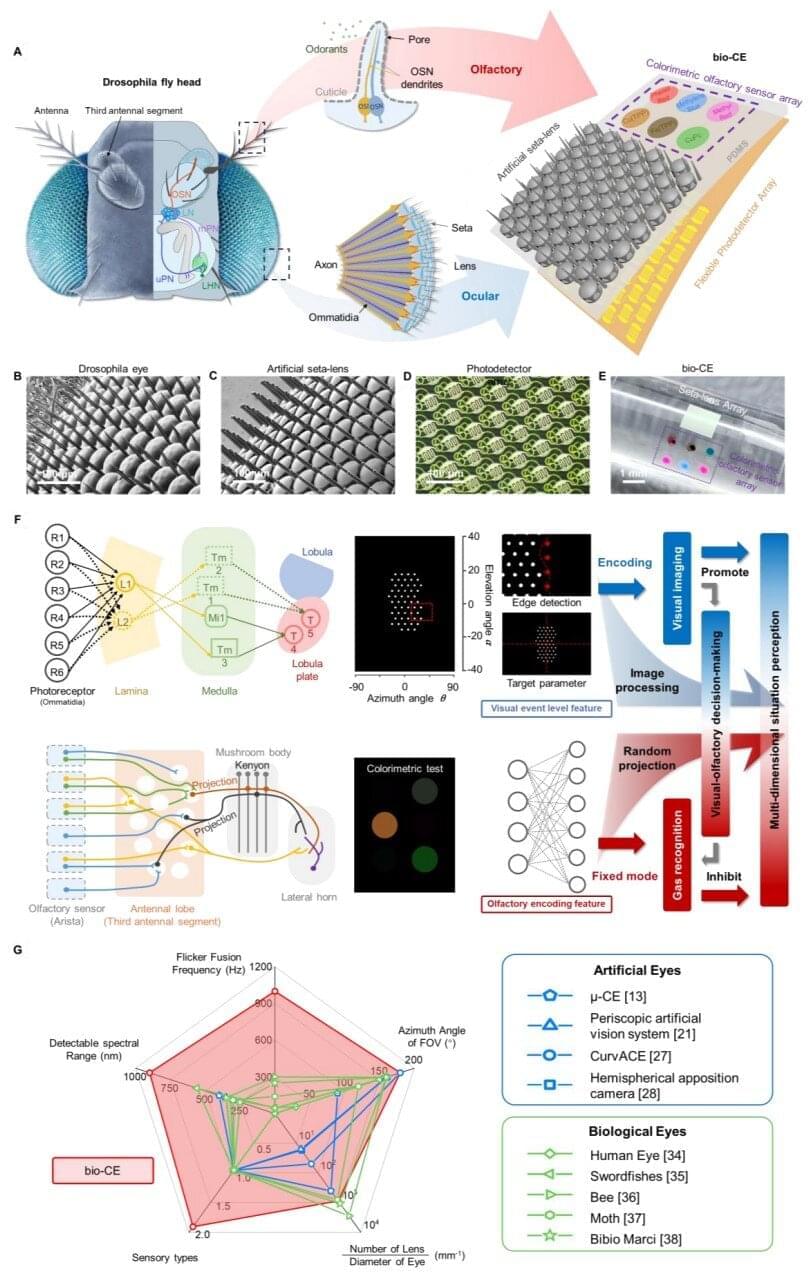
The compound eyes of the humble fruit fly are a marvel of nature. They are wide-angle and can process visual information several times faster than the human eye. Inspired by this biological masterpiece, researchers at the Chinese Academy of Sciences have developed an insect-scale compound eye that can both see and smell, potentially improving how drones and robots navigate complex environments and avoid obstacles.

Traditional cameras on robots and drones may excel at capturing high-definition photos, but struggle with a narrow field of view and limited peripheral vision. They also tend to be bulky and power-hungry.

The Singularity: Everyone’s Certain. Everyone’s Guessing

The Technological Singularity is the most overconfident idea in modern futurism: a prediction about the point where prediction breaks. It’s pitched like a destination, argued like a religion, funded like an arms race, and narrated like a movie trailer — yet the closer the conversation gets to specifics, the more it reveals something awkward and human. Almost nobody is actually arguing about “the Singularity.” They’re arguing about which future deserves fear, which future deserves faith, and who gets to steer the curve when it stops looking like a curve and starts looking like a cliff.

The Singularity begins as a definitional hack: a word borrowed from physics to describe a future boundary condition — an “event horizon” where ordinary forecasting fails. I. J. Good — British mathematician and early AI theorist — framed the mechanism as an “intelligence explosion,” where smarter systems build smarter systems and the loop feeds on itself. Vernor Vinge — computer scientist and science-fiction author — popularized the metaphor that, after superhuman intelligence, the world becomes as unreadable to humans as the post-ice age would have been to a trilobite.

In my podcast interviews, the key move is that “Singularity” isn’t one claim — it’s a bundle. Gennady Stolyarov II — transhumanist writer and philosopher — rejects the cartoon version: “It’s not going to be this sharp delineation between humans and AI that leads to this intelligence explosion.” In his framing, it’s less “humans versus machines” than a long, messy braid of tools, augmentation, and institutions catching up to their own inventions.

Bionic LiDAR system achieves beyond-retinal resolution through adaptive focusing

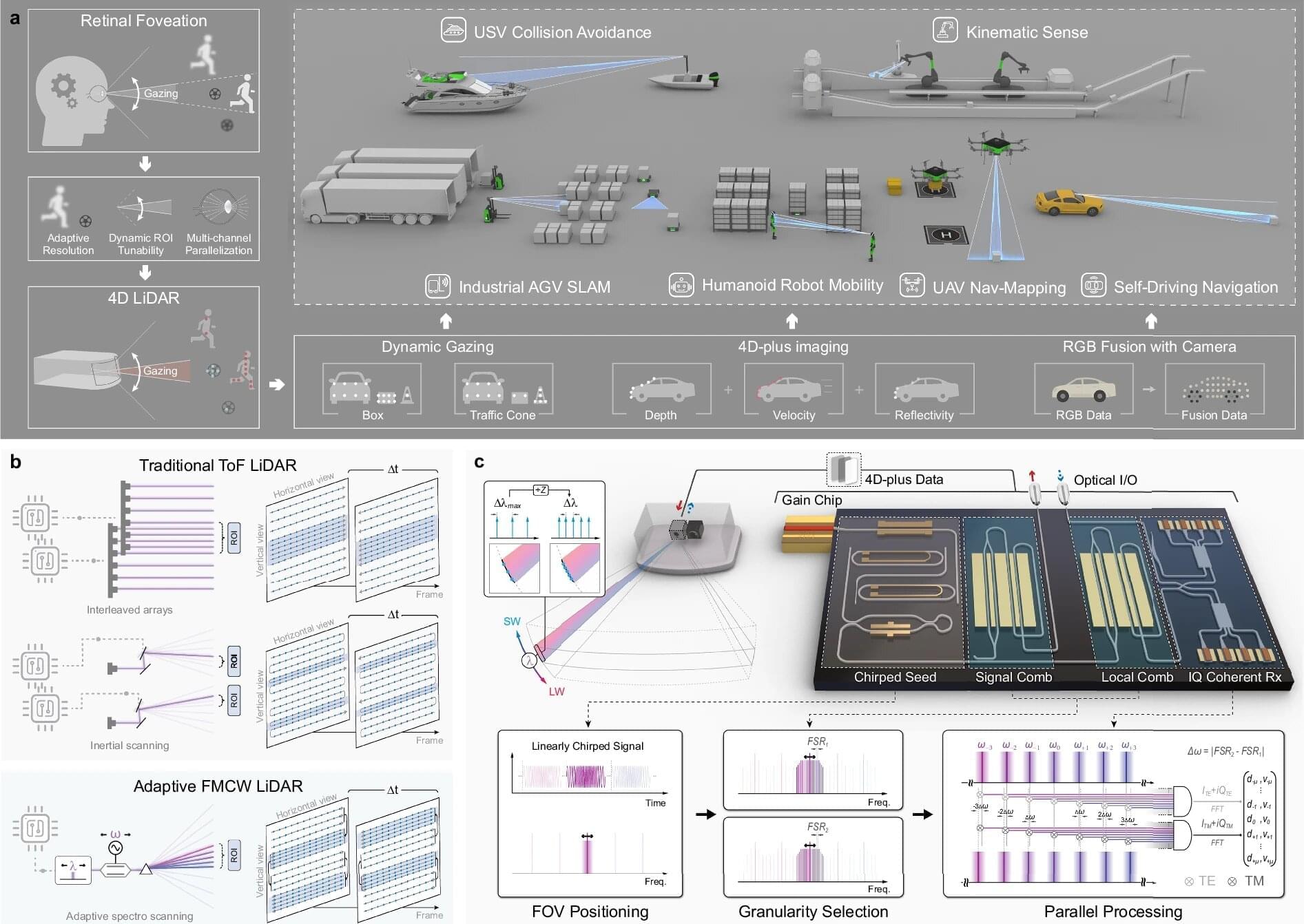
In a recent study, researchers from China have developed a chip-scale LiDAR system that mimics the human eye’s foveation by dynamically concentrating high-resolution sensing on regions of interest (ROIs) while maintaining broad awareness across the full field of view.

The study is published in the journal Nature Communications.

LiDAR systems power machine vision in self-driving cars, drones, and robots by firing laser beams to map 3D scenes with millimeter precision. The eye packs its densest sensors in the fovea (sharp central vision spot) and shifts gaze to what’s important. By contrast, most LiDARs use rigid parallel beams or scans that spread uniform (often coarse) resolution everywhere. Boosting detail means adding more channels uniformly, which explodes costs, power, and complexity.

The Insane Future of Mind Uploading [Documentary]

This video explores aliens, mind uploading to other species, genetic engineering, and future robots.

SOURCES:
https://en.wikipedia.org/wiki/Eagle_eye#:~https://www.scientificamerican.com/ar… • https://en.wikipedia.org/wiki/Human_c… ___ 💡 Future Business Tech explores the future of technology and the world. Examples of topics I cover include: • Artificial Intelligence & Robotics • Virtual and Augmented Reality • Brain-Computer Interfaces • Transhumanism • Genetic Engineering SUBSCRIBE: https://bit.ly/3geLDGO ___ This video explores the future of ChatGPT and 10 ways it could change society. Other related terms: aliens, alien species, advanced civilization, genetic engineering, robot, mind upload, mind uploading, brain computer interface, artificial intelligence, ai, future business tech, future technology, future technologies, etc. ℹ️ Some links are affiliate links. They cost you nothing extra but help support the channel so I can create more videos like this. #alien #aliens #avatar #avatar2 #geneticengineering #braincomputerinterface.
https://vcahospitals.com/know-your-pe
https://www.scientificamerican.com/ar
https://en.wikipedia.org/wiki/Human_c

💡 Future Business Tech explores the future of technology and the world.

Examples of topics I cover include:
• Artificial Intelligence & Robotics.
• Virtual and Augmented Reality.
• Brain-Computer Interfaces.
• Transhumanism.
• Genetic Engineering.

SUBSCRIBE: https://bit.ly/3geLDGO

This video explores the future of ChatGPT and 10 ways it could change society. Other related terms: aliens, alien species, advanced civilization, genetic engineering, robot, mind upload, mind uploading, brain computer interface, artificial intelligence, ai, future business tech, future technology, future technologies, etc.

Gubernatorial Candidate Promises ROBOTS To Every Californian… Is Cenk Buying it?

Here’s my full 30-min interview from yesterday with Cenk Uygur on TYT! We cover a lot of things: superintelligence, Basic Income, my Automated Abundance Economy, and my California Governor run.


Cenk Uygur and Zoltan Istvan discuss the future of AI and California on The Young Turks. Do you agree with TYT’s take? Tell us what you think in the comments below. SUBSCRIBE today: ☞ https://go.tyt.com/ytsubscribe.

Get paid to use your phone less! Switch to Noble Mobile today: https://go.tyt.com/mobile.

CHAPTERS:
0:00 Zoltan Istvan on running as a Democrat.
0:45 Transhumanist party.
2:30 Zoltan on AI & technology.
9:50 No corporate or Israel lobby money.
10:20 Zoltan’s policy priorities.
11:40 Robots for every Californian?!
14:00 Universal basic income.
23:00 Taxing robots?!
25:50 Reaching across the aisle.
28:00 AI revolution.

🔥 Tired of corporate media? Get honest news and bold commentary with TYT.

AI, Autonomy, and Scale: Why Elon Musk’s Timeline Will Break Society

Questions to inspire discussion.

🎯 Q: How should retail investors approach AI and robotics opportunities? A: Focus on technology leaders like Palantir, Tesla, and Nvidia that demonstrate innovation through speed of introducing revolutionary, scalable products rather than attempting venture capital strategies requiring $1M bets across 100 companies.

💼 Q: What venture capital strategy do elite firms use for AI investments? A: Elite VCs like A16Z (founded by Marc Andreessen) invest $1M each in 100 companies, expecting 1–10 to become trillion-dollar successes that make all other bets profitable.

🛡️ Q: Which defense sector companies are disrupting established contractors? A: Companies like Anduril are disrupting the five prime contractors by introducing innovative technologies like drones, which have become dominant in recent conflicts due to lack of innovation in the sector.

⚖️ Q: What mindset should investors maintain when evaluating AI opportunities? A: Be a judicious skeptic, balancing optimism with skepticism to avoid getting carried away by hype and marketing, which is undervalued but crucial for informed investment decisions.

Tesla’s Competitive Advantages.

The Syntellect Hypothesis: Five Paradigms of the Mind’s Evolution: Tuynman PhD, Antonin, Vikoulov, Alex M: 9781733426145: Amazon.com: Books

Celebrating a 7-year anniversary of the first edition of my book The Syntellect Hypothesis (2019)! I can’t help but feel like I’m watching a long-launched probe finally begin to transmit back meaningful data. What started as a speculative framework—half philosophy, half systems theory—has aged into something uncannily timely, as if reality itself had been quietly reading the manuscript and taking notes. In those seven years, AI has gone from clever tool to cognitive co-actor, collective intelligence has accelerated from metaphor to measurable force, and the idea of a convergent, self-reflective Syntellect no longer feels like science fiction so much as a working hypothesis under active experimental validation.

Looking back, the book captured a moment just before the curve went vertical. Looking forward, it reads less like a prediction and more like an early cartography of a terrain we’re now actively inhabiting. The signal is stronger, the noise louder, and the questions sharper—but the core intuition remains intact: intelligence doesn’t merely grow, it integrates. And once it does, history stops being a line and starts behaving more like a phase transition.

Here’s what Google summarizes about the book: The Syntellect Hypothesis: Five Paradigms of the Mind’s Evolution by Alex M. Vikoulov is a book that explores the idea of a future phase transition where human consciousness merges with technology to form a global supermind, or “Syntellect”. It covers topics like digital physics, the technological singularity, consciousness, and the evolution of humanity, proposing that we are on the verge of becoming a single, self-aware superorganism. The book is structured around five paradigms: Noogenesis, Technoculture, the Cybernetic Singularity, Theogenesis, and Universal Mind.

Key Concepts.

Syntellect: A superorganism-level consciousness that emerges when the intellectual synergy of a complex system (like humanity and its technology) reaches a critical threshold. Phase Transition: The book posits that humanity is undergoing a metamorphosis from individual intellect to a collective, higher-order consciousness.

Five Paradigms: The book is divided into five parts that map out this evolutionary journey: Noogenesis: The emergence of mind through computational biology. Technoculture: The rise of human civilization and technology. The Cybernetic Singularity: The point of Syntellect emergence. Theogenesis: Transdimensional propagation and expansion. Universal Mind: The ultimate cosmic level of awareness.

Themes and Scope.
Who Wants to Enhance Their Cognitive Abilities? Potential Predictors of the Acceptance of Cognitive Enhancement

In the 21st century, new powerful technologies, such as different artificial intelligence (AI) agents, have become omnipresent and the center of public debate. With the increasing fear of AI agents replacing humans, there are discussions about whether individuals should strive to enhance themselves. For instance, the philosophical movement Transhumanism proposes the broad enhancement of human characteristics such as cognitive abilities, personality, and moral values (e.g., ; ). This enhancement should help humans to overcome their natural limitations and to keep up with powerful technologies that are increasingly present in today’s world (see ). In the present article, we focus on one of the most frequently discussed forms of enhancement—the enhancement of human cognitive abilities.

Not only in science but also among the general population, cognitive enhancement, such as increasing one’s intelligence or working memory capacity, has been a frequently debated topic for many years (see ). Thus, a lot of psychological and neuroscientific research investigated different methods to increase cognitive abilities, but—so far—effective methods for cognitive enhancement are lacking (). Nevertheless, multiple different (and partly new) technologies that promise an enhancement of cognition are available to the general public. Transhumanists especially promote the application of brain stimulation techniques, smart drugs, or gene editing for cognitive enhancement (e.g., ). Importantly, only little is known about the characteristics of individuals who would use such enhancement methods to improve their cognition. Thus, in the present study, we investigated different predictors of the acceptance of multiple widely-discussed enhancement methods. More specifically, we tested whether individuals’ psychometrically measured intelligence, self-estimated intelligence, implicit theories about intelligence, personality (Big Five and Dark Triad traits), and specific interests (science-fiction hobbyism) as well as values (purity norms) predict their acceptance of cognitive enhancement (i.e., whether they would use such methods to enhance their cognition).

Passengers’ brain signals may help self-driving cars make safer choices

Cars from companies like Tesla already promise hands-free driving, but recent crashes show that today’s self-driving systems can still struggle in risky, fast-changing situations.

Now, researchers say the next safety upgrade may come from an unexpected source: The brains of the people riding inside those cars.

In a new study appearing in Cyborg and Bionic Systems, Chinese researchers tested whether monitoring passengers’ brain activity could help self-driving systems make safer decisions in risky situations.

/* */