Toggle light / dark theme

Protein denaturation provides a path toward more sustainable 3D printing of photoresins

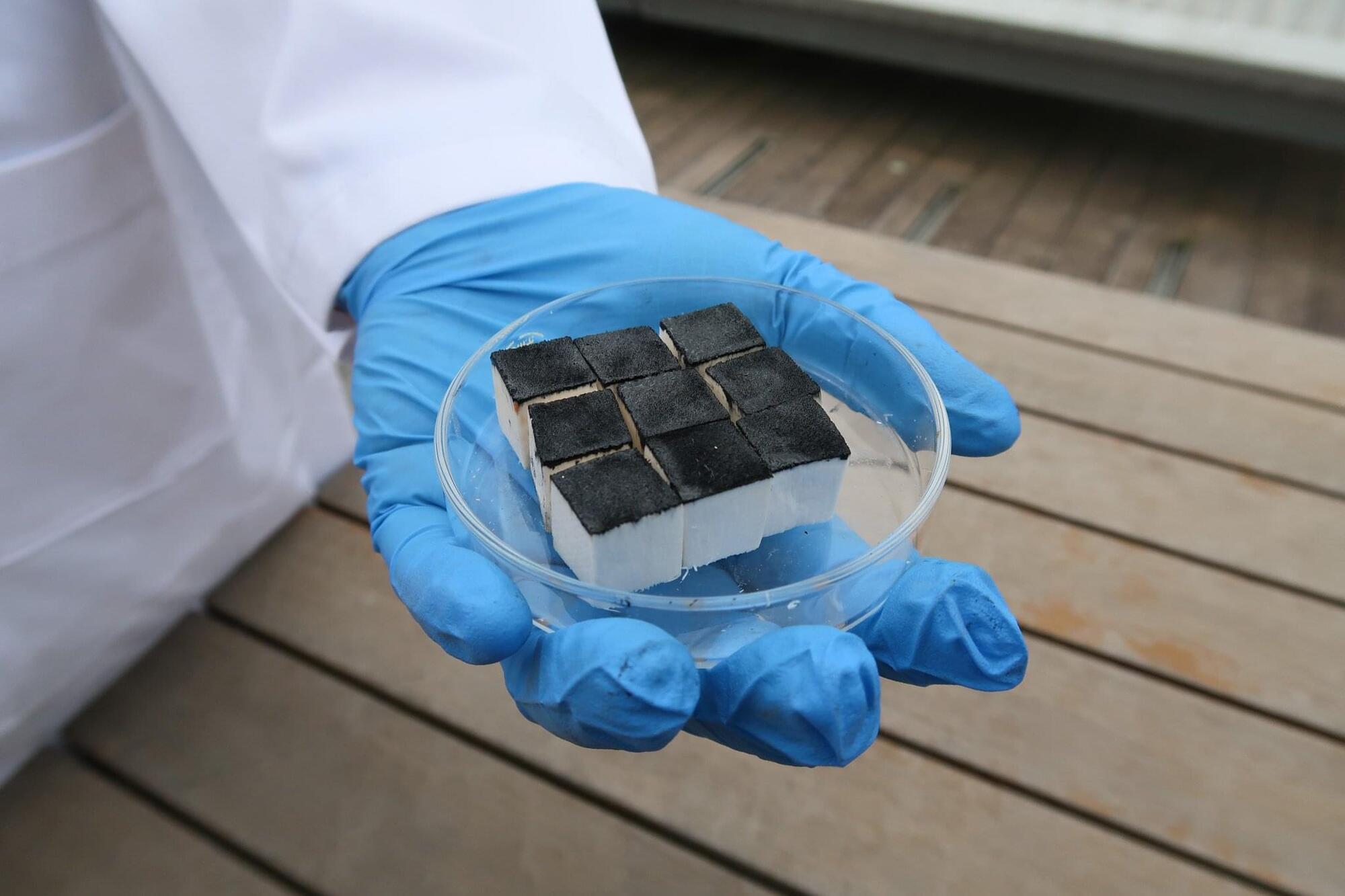
The vast majority of photoresins for 3D printing (also referred to as additive manufacturing or AM) and related technologies are toxic, non-biodegradable, and sourced from unsustainable feedstocks. Non-traditional approaches to 3D printing offer a way to break free of the traditional confines of unsustainable petroleum-based reagents and chemical methods that require toxic monomers.

A recent collaboration between the University of Wisconsin’s Prof. AJ Boydston (Department of Chemistry) and Prof. Audrey Girard (Department of Food Science) has accomplished the first demonstration of via denaturation (AMPD).

The paper is published in the journal Green Chemistry.

A new method to fabricate soft electronics via particle engulfment printing

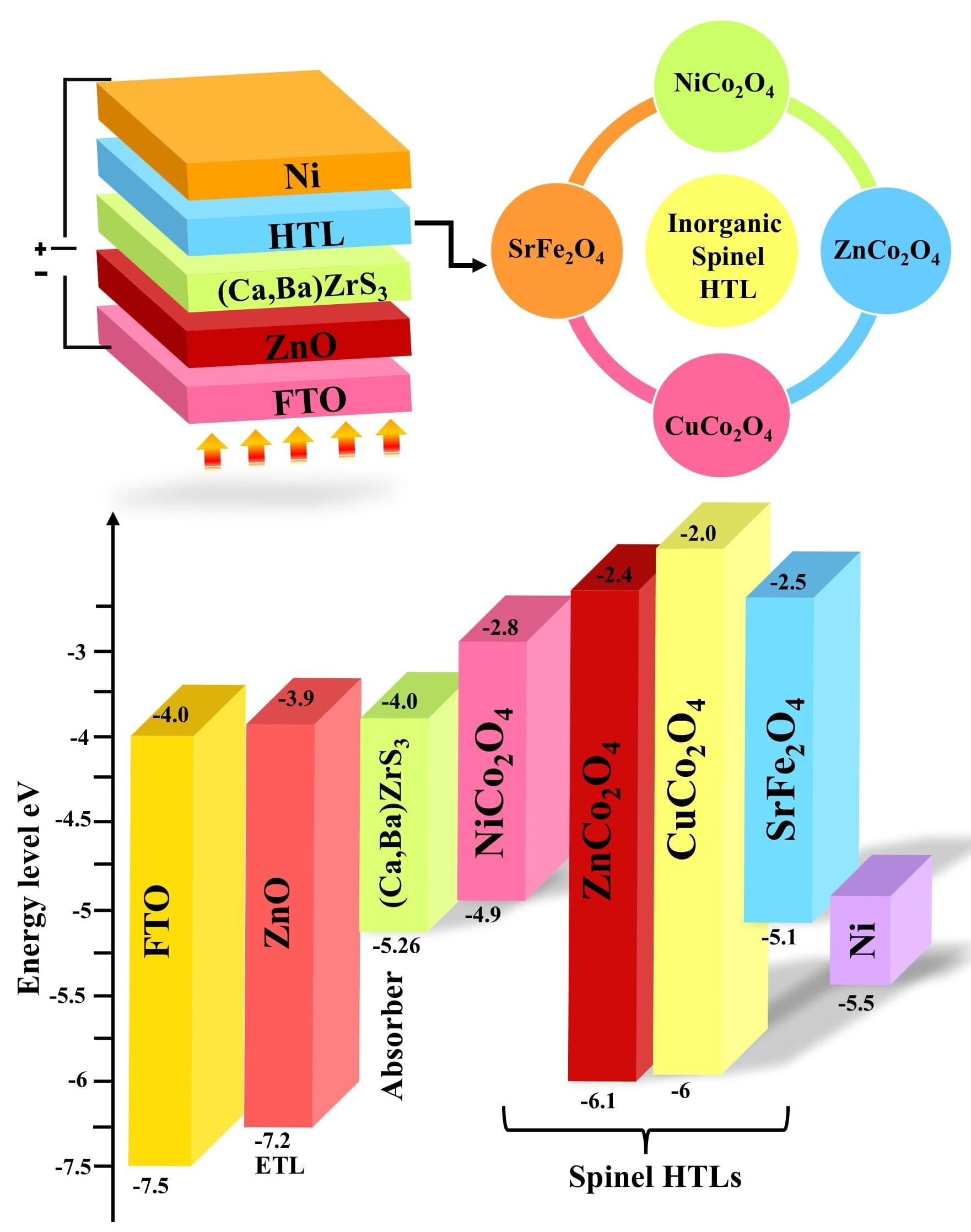
Perovskite solar cells are attracting attention as next-generation solar cells. These cells have high efficiency, are flexible, and can be printed, among other features. However, lead was initially used in their manufacture, and its toxicity has become an environmental issue.

Therefore, a method for replacing lead with tin, which has a low environmental impact, has been proposed. Nevertheless, tin is easily oxidized; consequently, the efficiency and durability of tin are lower than those of lead perovskite solar cells.

To improve the durability of tin perovskite by suppressing tin oxidation, a method that introduces large organic cations into tin perovskite crystals to form a two-dimensional layered structure called Ruddlesden-Popper (RP) tin-based perovskites has been proposed. However, the internal state of this structure and the mechanism by which it improves performance have not been fully elucidated.

Artificial photosynthesis decoded: How carbon nitride splits water (and enables green hydrogen)

Scientists have long sought to understand the exact mechanism behind water splitting by carbon nitride catalysts. For the first time, Dr. Paolo Giusto and his team captured the step-by-step interactions at the interface between carbon nitride and water, detailing the transfer of protons and electrons from water to the catalyst under light.

This discovery lays critical groundwork for optimizing materials for as a renewable energy solution. The findings are published in the journal Nature Communications.

Plants use light to generate fuels through photosynthesis—converting energy from the sun into sugar molecules. With artificial photosynthesis, scientists mimic nature and convert light into high-energy chemicals, in pursuit of sustainable fuels. Carbon nitrides have long been identified as effective catalysts in this ongoing quest. These compounds of carbon and nitrogen use light to break water into its constituent parts, oxygen and hydrogen—with hydrogen representing a promising renewable energy source.

Cori Cycle: How Your Body Recycles Energy During Exercise

Dive into the fascinating world of the Cori Cycle, also known as the lactic acid cycle! 🏋️‍♂️💡 In this video, we’ll explore how your body manages energy during intense exercise by recycling lactate from muscles back into glucose in the liver.
Thank You For Watching.
Please Like And Subscribe to Our Channel: / easypeasylearning.
Join this channel to get access to perks:
/ @easypeasylearning.
Like Our Facebook Page: / learningeasypeasy.
Join Our Facebook Group: / 460057834950033
Support Our Channel: / supereasypeasy.

SMART: One step closer to nuclear fusion with its first plasma

In a pioneering approach to achieve fusion energy, the SMART device has successfully generated its first tokamak plasma. This step brings the international fusion community closer to achieving sustainable, clean, and virtually limitless energy through controlled fusion reactions.

The work is published in the journal Nuclear Fusion.

The SMART tokamak, a state-of-the-art experimental fusion device designed, constructed and operated by the Plasma Science and Fusion Technology Laboratory of the University of Seville, is a unique spherical tokamak due to its flexible shaping capabilities. SMART has been designed to demonstrate the unique physics and engineering properties of Negative Triangularity shaped plasmas towards compact fusion power plants based on Spherical Tokamaks.

Scientists harness the power of ‘layered’ crystals for energy innovation

University of Missouri scientists are unlocking the secrets of halide perovskites—a material that’s poised to reshape our future by bringing us closer to a new age of energy-efficient optoelectronics.

Suchi Guha and Gavin King, two physics professors in Mizzou’s College of Arts and Science, are studying the material at the nanoscale: a place where objects are invisible to the naked eye. At this level, the extraordinary properties of halide perovskites come to life, thanks to the material’s unique structure of ultra-thin crystals—making it astonishingly efficient at converting sunlight into energy.

Think that are not only more affordable but also far more effective at powering homes. Or LED lights that burn brighter and last longer while consuming less energy.

These Anti-Solar Panels Don’t Require Daylight To Generate Power

Link :


Energy is one of the most important elements to any functioning society, and since our modern era of living uses so much power, the industry is always looking to evolve towards newer and more efficient solutions. Furthermore, given the environmental damage that often comes with many of our modern energy generation practices, people have been thinking outside the box to come up with ideas that are harmonious with mother nature.

Solar panel technology has been around for decades, but there are a few main issues with it. First off, you often need sunlight for it to produce enough on demand and stored energy for daily life. There are many areas in the world where that can be an issue in certain seasons. Secondly, during the night energy can’t be gathered so you’re always dealing with a limited time period where you can generate power for the moment or future use. This prompted inventors to imagine a new “anti-solar panel” that is designed to work both during the day and at night.

Typical solar panels work by gathering visible light from the sun and converting it to usable electricity. This energy can be used as it’s created, or it can be stored into battery cells to be used at a later time. That is to say, it might be a sunny day, you and your family are at work so little power is needed at home. When you return home and you need power, batteries hooked up to your solar panel had been storing the energy collected from the sun during the day, so it’s ready for you to use once you need it even if the sun isn’t out.

/* */