Axiom-1 comes home.
The Axiom-1 private space mission returns from its historic International Space Station trip. Plus: Researchers link income inequality with land protection.
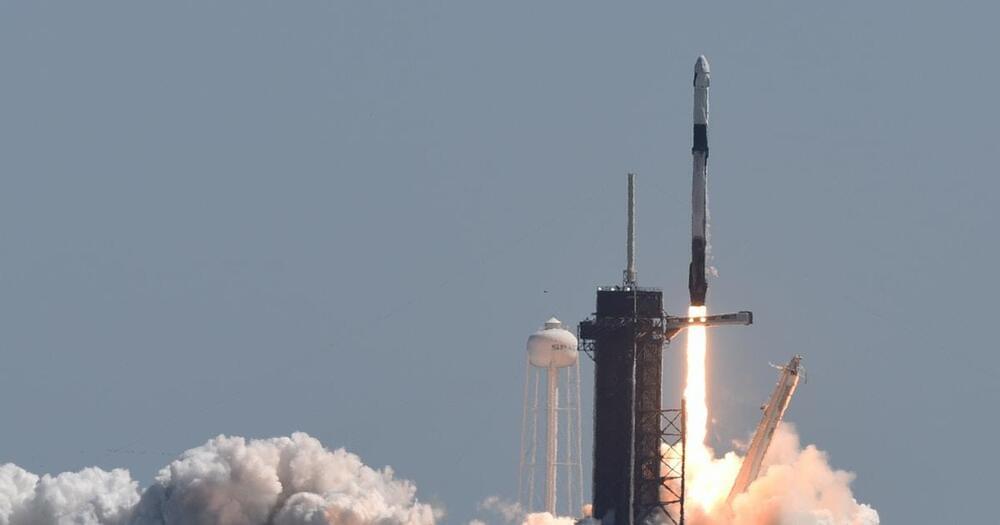
NASA’s Perseverance Mars rover used its Mastcam-Z camera system to shoot video of Phobos, one of Mars’ two moons, eclipsing the Sun. It’s the most zoomed-in, highest frame-rate observation of a Phobos solar eclipse ever taken from the Martian surface.
Several Mars rovers have observed Phobos crossing in front of the Sun over the past 18 years. Spirit and Opportunity made the first observations back in 2004; Curiosity in 2019 was the first to record video of the event. Each time these eclipses are observed, they allow scientists to measure subtle shifts in Phobos’ orbit over time. The moon’s tidal forces pull on the deep interior of the Red Planet, as well as its crust and mantle; studying how much Phobos shifts over time reveals something about how resistant the crust and mantle are, and thus what kinds of materials they’re made of.
The Mars 2020 Perseverance mission is part of NASA’s Moon to Mars exploration approach, which includes Artemis missions to the Moon that will help prepare for human exploration of the Red Planet.
Credit: NASA/JPL-Caltech/ASU/MSSS/SSI
The iconic Hubble Space Telescope observed five galaxies locked in a gravitational dance, before eventually merging together, just before its 23nd anniversary.


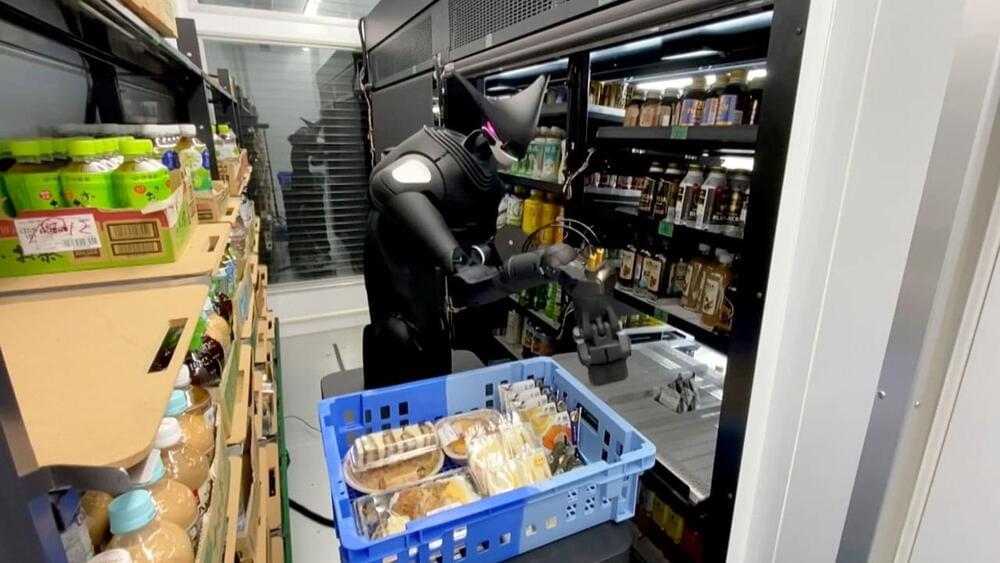
Remote work is expanding into many other areas besides office work. Robots and remote-control technology make a greater range of tasks possible, from stocking convenience stores, to operating heavy machinery and even serving as a labor force in space. A key advantage of remote-controlled robots is that they do not require the kind of complex programming found in automated robots, such as industrial robots that work in factories. This means that remote-controlled robots are more flexible, easily adapting to work that cannot be programmed. Greater use of this technology can allow robots to take over dangerous and exhausting work, subsequently helping to deal with labor shortages and improve work environments. In this episode, we’ll look at the forefront of remote robotics, and see examples of how this technology could transform work.
[J-Innovators]
A muscle suit for back protection.

Perovskites, which have shown enormous potential as a new semiconductor for solar cells, are gaining attention as well as a potential next-generation technology to also power spacefaring missions. As scientists around the globe continue efforts toward harnessing the potential of perovskites on Earth, others are looking into how well the technology might work in the planet’s orbit.
A collaborative research effort to collectively address this important issue involving scientists from the National Renewable Laboratory (NREL) lays out guidelines to test the radiation-tolerating properties of perovskites intended for use in space.
“Radiation is not really a concern on Earth, but becomes increasingly intense as we move to higher and higher altitudes,” said Ahmad Kirmani, a postdoctoral researcher at NREL and lead author of the new paper, “Countdown to perovskite space launch: Guidelines to performing relevant radiation-hardness experiments,” which appears in Joule.
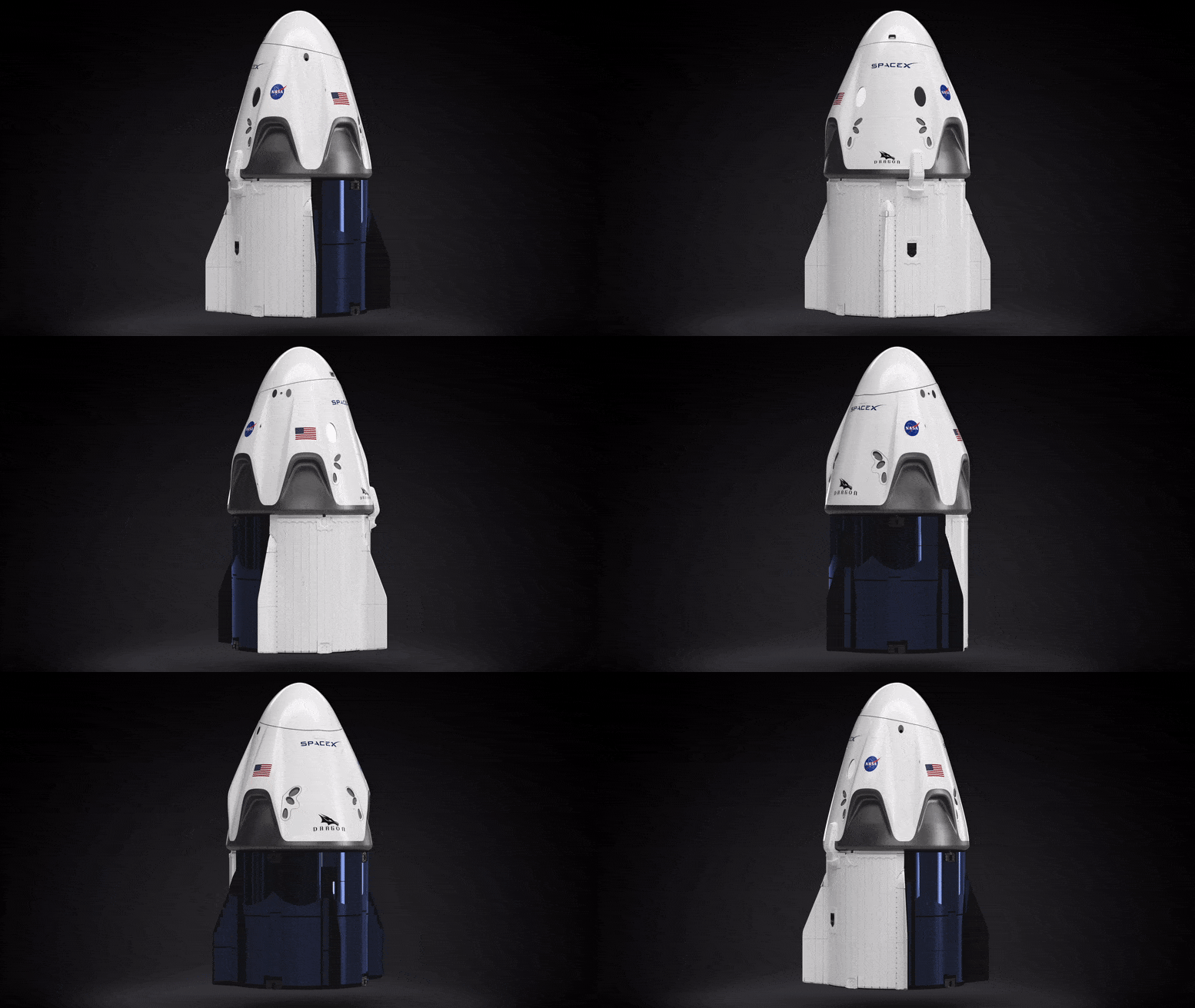
SpaceXs brand-new Dragon spacecraft – named “Freedom” by the Crew-4 astronauts – arrived at Kennedy Space Center’s Launch Complex 39A on April 16, 2022, after making the journey from SpaceX’s processing facility at nearby Cape Canaveral Space Force Station in Florida. After Dragon is mated to the SpaceX Falcon 9 rocket, the launch vehicle will roll out to the pad and be raised to the vertical launch position.
Liftoff is scheduled for 5:26 a.m. EDT on Saturday, April 23. NASA’s Crew-4 mission is the fourth crew rotation flight on a SpaceX Dragon spacecraft and Falcon 9 rocket. NASA astronauts Kjell Lindgren and Bob Hines will serve as mission commander and pilot, respectively, and NASA astronaut Jessica Watkins and ESA (European Space Agency) astronaut Samantha Cristoforetti, will join as mission specialists.
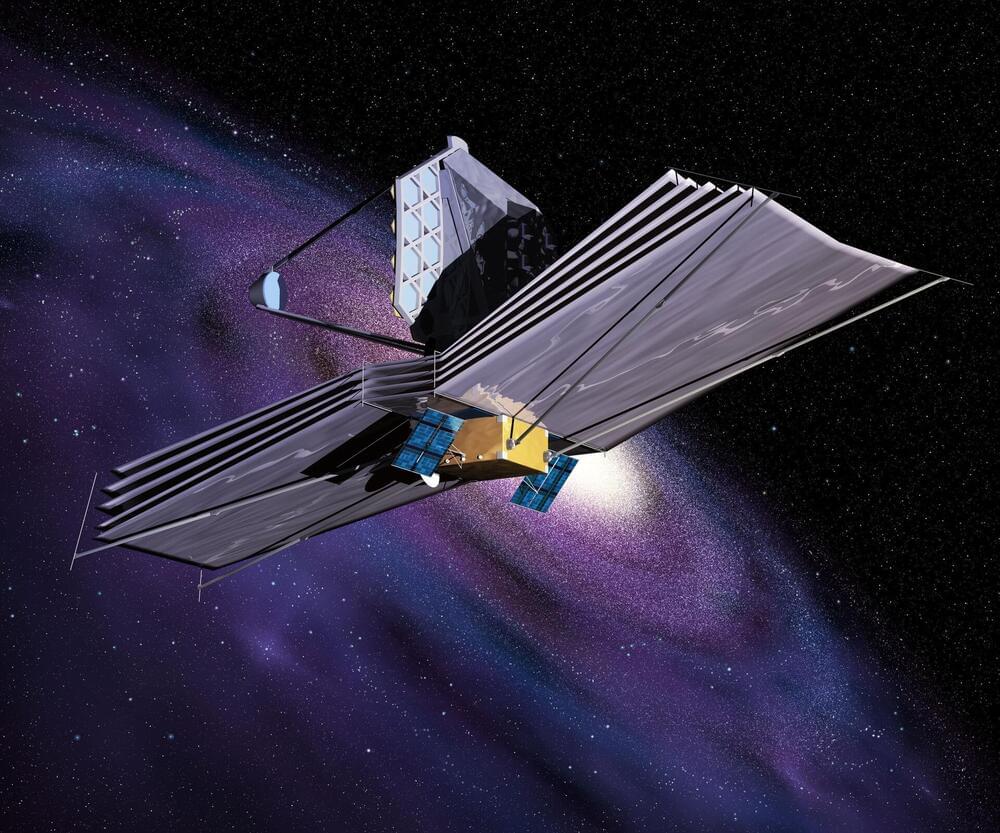
The latest update on the James Webb Space Telescope literally sent a shiver down my spine! The telescope’s Mid-Infrared Instrument (MIRI) has now reached its operating temperature of a chilly 7 kelvins (7 deg above absolute 0, or-266 degrees C,-447 degrees F).
MIRI has now been turned on and is undergoing initial checkouts.
This frigid temp is colder than JWST’s other three instruments need to be, since MIRI detects longer infrared wavelengths than the rest of the instruments. But still, all the instruments need to reach extremely low temperatures — less than 40 K (−223 degrees Celsius,-369.4 degrees Fahrenheit).
