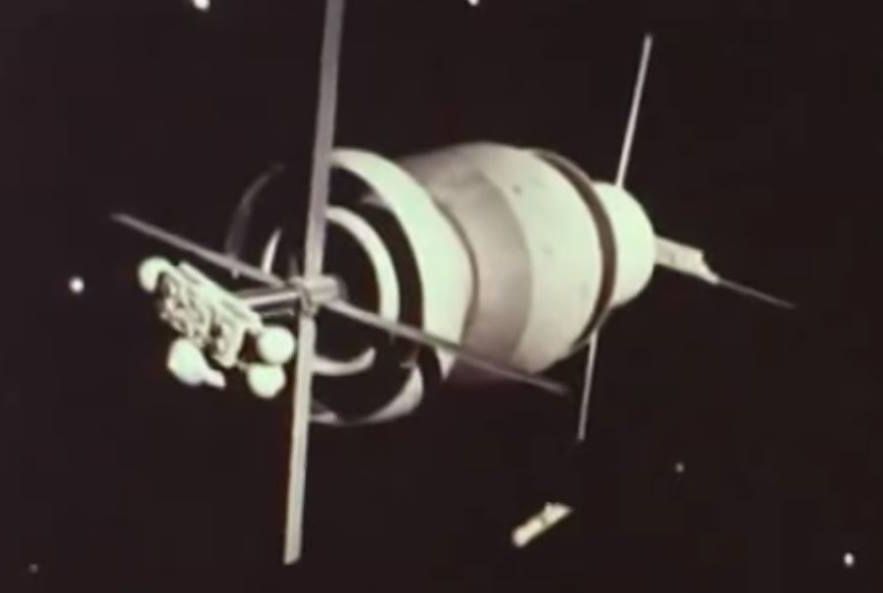
“The year is 2003, and space colony Libra’s development of solar power could solve an acute, worldwide energy crisis. Government opposition to the Libran energy plan sparks a debate about free enterprise and government control.” (IMDb)

A batch of single-cell protein has been produced by using electricity and carbon dioxide in a joint study by the Lappeenranta University of Technology (LUT) and VTT Technical Research Centre of Finland. Protein produced in this way can be further developed for use as food and animal feed. The method releases food production from restrictions related to the environment. The protein can be produced anywhere renewable energy, such as solar energy, is available.” In practice, all the raw materials are available from the air. In the future, the technology can be transported to, for instance, deserts and other areas facing famine.

A batch of single-cell protein has been produced by using electricity and carbon dioxide in a joint study by the Lappeenranta University of Technology (LUT) and VTT Technical Research Centre of Finland. Protein produced in this way can be further developed for use as food and animal feed. The method releases food production from restrictions related to the environment. The protein can be produced anywhere renewable energy, such as solar energy, is available.
“In practice, all the raw materials are available from the air. In the future, the technology can be transported to, for instance, deserts and other areas facing famine. One possible alternative is a home reactor, a type of domestic appliance that the consumer can use to produce the needed protein,” explains Juha-Pekka Pitkänen, Principal Scientist at VTT.
Along with food, the researchers are developing the protein to be used as animal feed. The protein created with electricity can be used as a fodder replacement, thus releasing land areas for other purposes, such as forestry. It allows food to be produced where it is needed.

It’s a technology looking for a new mission.
The technology is solar electric propulsion (SEP), which NASA has identified in recent years as a key enabler for eventual human missions to Mars. SEP, the agency argued, could be used to propel cargo missions to Mars in advance of crewed missions much more efficiently than conventional chemical propulsion systems.
High-power SEP was to be tested in interplanetary space on the Asteroid Redirect Mission (ARM), powering the robotic spacecraft that would travel to a near Earth asteroid, grab a boulder off its surface, and fly back to cislunar space. However, NASA announced earlier this year it planned to cancel ARM, and Congress, never much of a fan of the mission, has shown no signs of opposing it.
We can all agree that solar panels are pretty awesome. It’s hard to beat turning sunlight into electricity. Unless you’re talking turning sunlight into stored chemical fuel. “Solar chemical” takes the logic of photosynthesis and applies it to fuel.

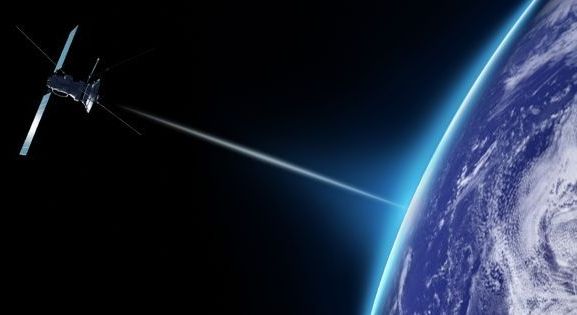
Space-based solar power has had a slow start, but the technology may finally take off in the next few decades. Since its inception, solar power has had a severe limitation as a renewable energy: it only works when the Sun is shining. This has restricted the areas where solar panels can be effectively used to sunnier, drier regions, such as California and Arizona. And even on cloudless days, the atmosphere itself absorbs some of the energy emitted by the Sun, cutting back the efficiency of solar energy. And let’s not forget that, even in the best of circumstances, Earth-bound solar panels are pointed away from the Sun half of the time, during the night.
So, for over half a decade, researchers from NASA and the Pentagon have dreamed of ways for solar panels to rise above these difficulties, and have come up with some plausible solutions. There have been several proposals for making extra-atmospheric solar panels a reality, many of which call for a spacecraft equipped with an array of mirrors to reflect sunlight into a power-conversion device. The collected energy could be beamed to Earth via a laser or microwave emitter. There are even ways to modulate the waves’ energy to protect any birds or planes that might wander into the beam’s path.
The energy from these space-based solar panels would not be limited by clouds, the atmosphere, or our night cycle. Additionally, because solar energy would be continuously absorbed, there would be no reason to store the energy for later use, a process which can cost up to 50 percent of the energy stored.
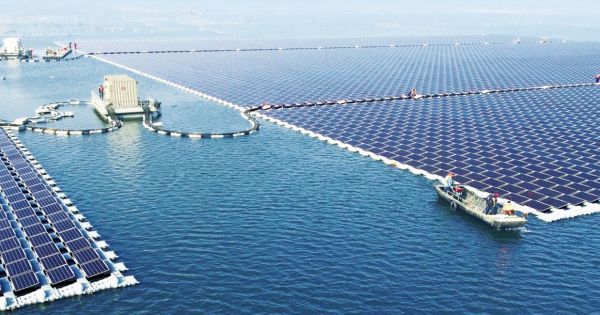
The largest floating solar power plant in the world is now online in China. Floating where coal used to be mined, the installation is helping China transition toward renewables and making the most of its surroundings.
The world’s largest floating solar power plant is now online in China. Built by Sungrow, a supplier of PV inverter systems, the 40MW plant is now afloat in water four to 10 meters deep, and successfully linked to Huainan, China’s grid. The placement was chosen in large part because the area was previously the location of coal mining operations; and, as a result, the water there is now mineralized and mostly useless. The lake itself was only formed after years of mining operations, the surrounding land collapsed and created a cavity that was filled with rainwater.
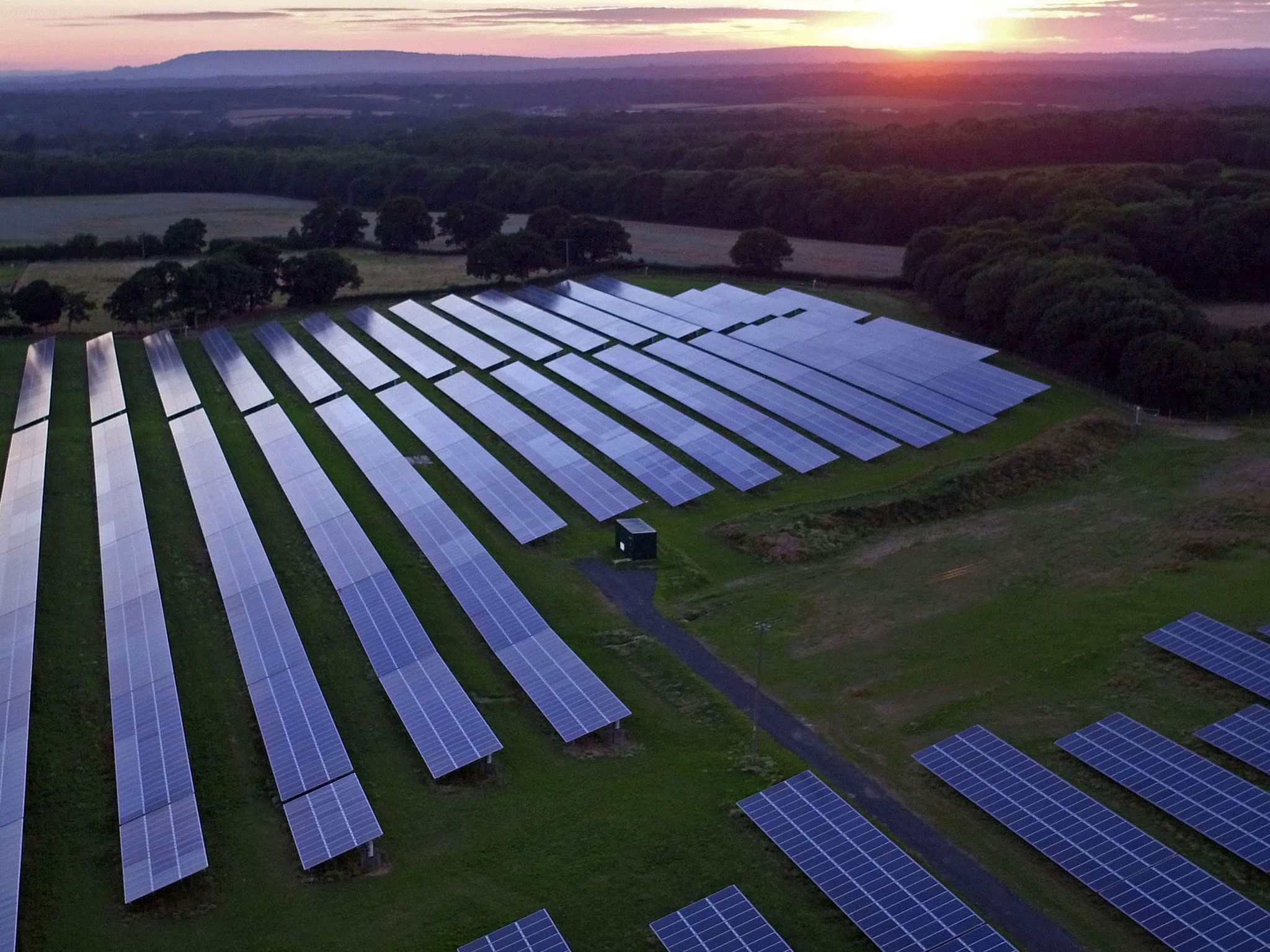
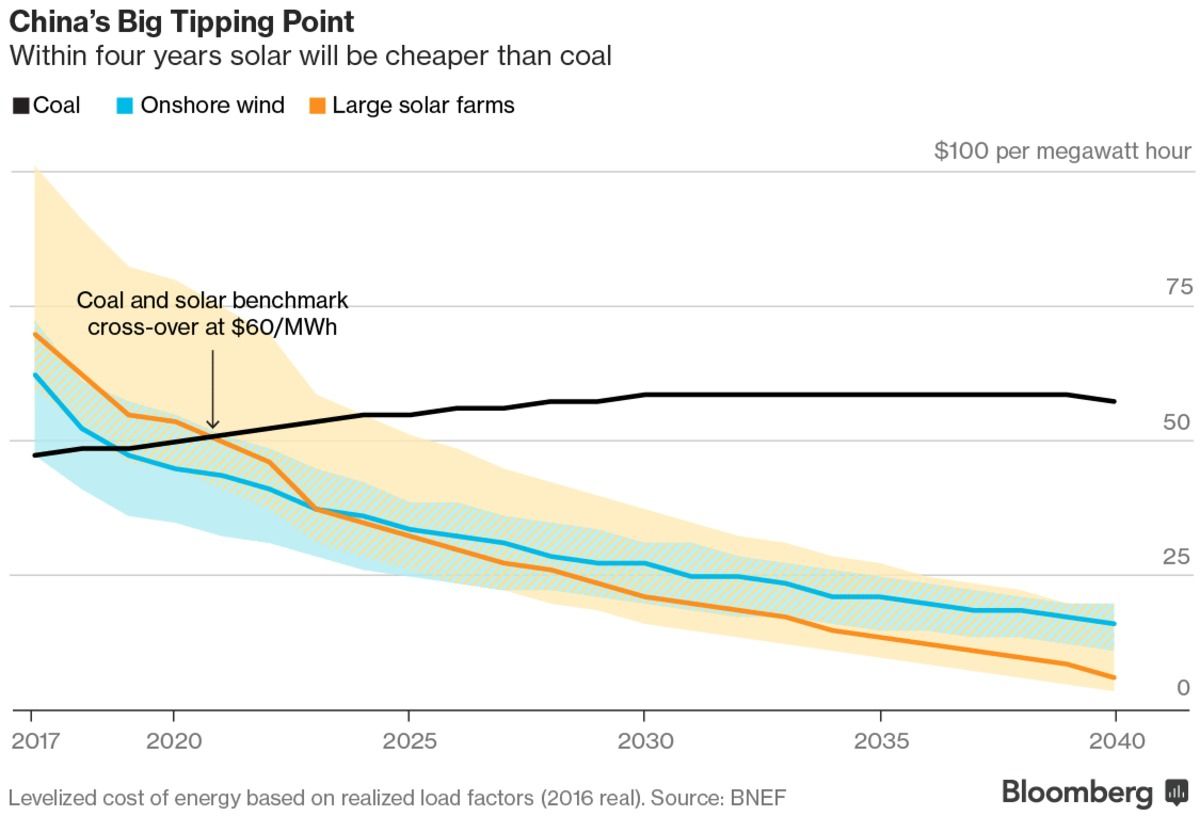
China electricity output from photovoltaic plants rose 80 per cent in the first quarter after the world’s biggest solar power market increased installed capacity.
Solar power generation rose to 21.4 billion kilowatt-hours in the three months ending 31 March from a year earlier, the National Energy Administration said on Thursday in a statement on its website. China added 7.21 gigawatts of solar power during the period, boosting its total installed capacity to almost 85 gigawatts, the NEA said.
The power-generation increase comes even as more solar plants stand idle because of congested transmission infrastructure. China idled about 2.3 billion kilowatt-hours of solar power in the first quarter, up from 1.9 billion kilowatt-hours a year earlier, according to the NEA data.