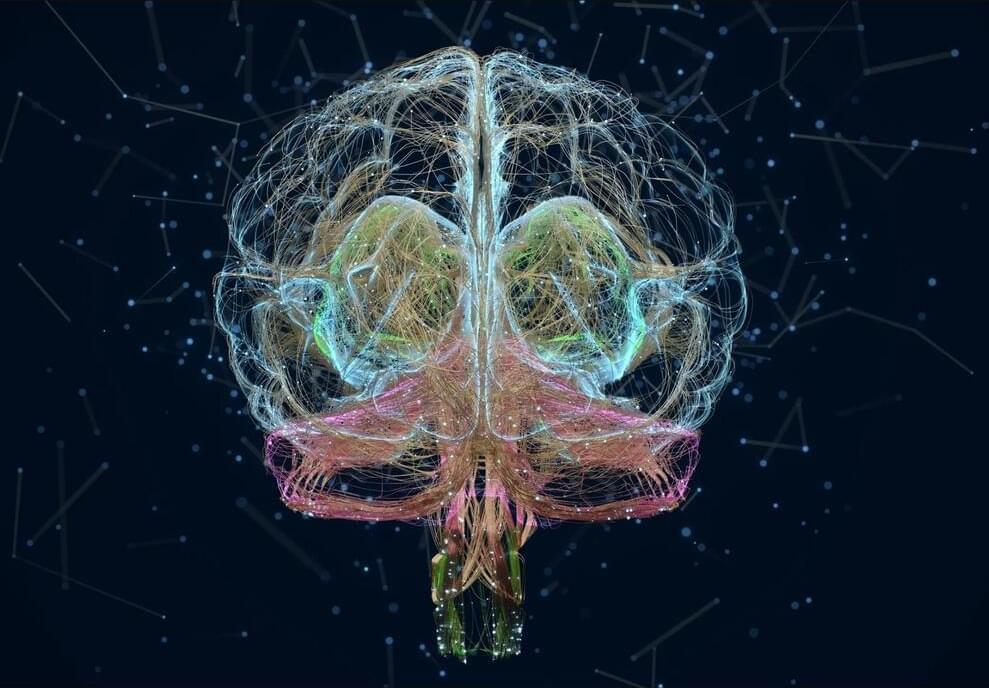
While silicon-based computing is cutting-edge today, human brain-based tech could be on track to dominate the future.
In an era where AI is reshaping industries at breakneck speed, Doug Seven finds himself at the forefront of a technology that’s changing the way developers approach their work.
As the director and general manager of AWS AI Developer Experiences, Seven is at the helm of this transformation, where specialized AI is not just assisting but actively reshaping how code is written and deployed.
With years of experience at Microsoft and Amazon, Seven has witnessed the evolution of developer tools, but nothing compares to the potential he sees in AI agents.

But after five days, Sherif upped the game. He had the two groups compete for food. He limited their resources. It was a fist-swinging, curse-hurling, dust cloud of a mess. When a few punches landed, the adult researchers had to step in, adults with notebooks holding back furious Eagles and violent Rattlers.
Sherif concluded that scarcity was one of the main drivers of all human conflict. War, violence, invasion, and theft were all born of wanting a limited resource. The history of all humanity seems to support the hypothesis: We fight over water, cattle, arable land, ore deposits, oil, precious stones, and so on.
Big Think recently spoke with Oxford University philosopher Nick Bostrom about his new book, Deep Utopia. He’s got good news. Bostrom argues that the future will do away with the need for conflict over scarce resources. To him, the future is plentiful.
What are humanity’s options? Does AI believe in God? In this exclusive Q&A, Nick Bostrom says that the big questions are above his pay grade. But who is in charge, then?
Frankly, I think 100 years is too far to look into the future because we will see dramatic new scientific areas emerge 20 years from now. My grandfather immigrated to Israel in 1946 from Holland to be a Technion student in civil engineering.
At that time, civil engineering and mechanical engineering were the most prestigious fields you could study. Back then, the disciplines of science that I work in, like computer science and electrical engineering, did not even exist as separate fields.
In comparison, today progress happens even more quickly. This rapid progress is especially apparent in disciplines like quantum technologies and AI.

The team has released the width-pruned version of the model on Hugging Face under the Nvidia Open Model License, which allows for commercial use. This makes it accessible to a wider range of users and developers who can benefit from its efficiency and performance.
“Pruning and classical knowledge distillation is a highly cost-effective method to progressively obtain LLMs [large language models] of smaller size, achieving superior accuracy compared to training from scratch across all domains,” the researchers wrote. “It serves as a more effective and data-efficient approach compared to either synthetic-data-style fine-tuning or pretraining from scratch.”
This work is a reminder of the value and importance of the open-source community to the progress of AI. Pruning and distillation are part of a wider body of research that is enabling companies to optimize and customize LLMs at a fraction of the normal cost. Other notable works in the field include Sakana AI’s evolutionary model-merging algorithm, which makes it possible to assemble parts of different models to combine their strengths without the need for expensive training resources.