Carrie Fisher just died but she will likely come back to life because the Singularity is Near and is bringing Singularity CGI with it!
Bringing the dead back to life
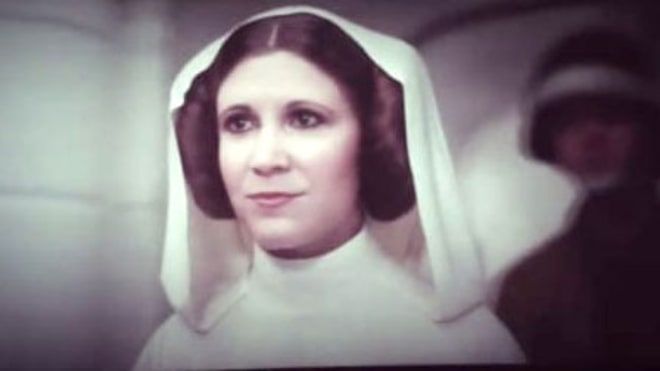
In the latest Star Wars movie, Rogue One, five characters were brought back as they would have looked between episodes 3 and 4 of Star Wars. They were Princess Leia, Grand Moff Tarkin, Dr. Cornelius Evazan (who said “I have the death sentence on twelve systems” in episode 4), General Dodonna, and Mon Mothma. General Dodonna and Mon Mothma were brought back with the traditional method of using actors who looked similar to the original actors. The other three were brought back with CGI (computer-generated imagery), more specifically CGI enhanced with motion capture.
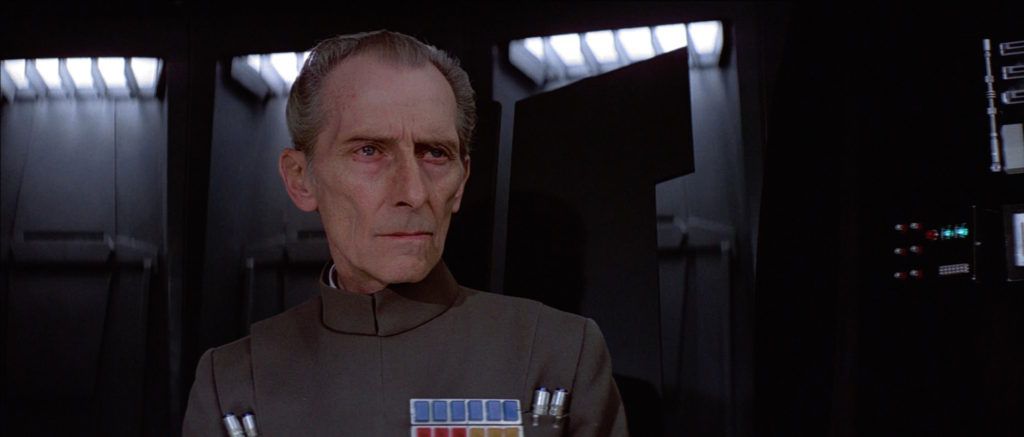
(He looks better because he had more screen time so they spent more money on him.)
Motion capture has been used for a while including depicting Gollum in Lord of the Rings and all the apes in the latest Planet of the Apes movies but Grand Moff Tarkin was considered possibly too hard to do with today’s technology because people are better at seeing flaws in CGI humans than CGI apes and CGI twisted hobbits.
Here is how Grand Moff Tarkin was created:
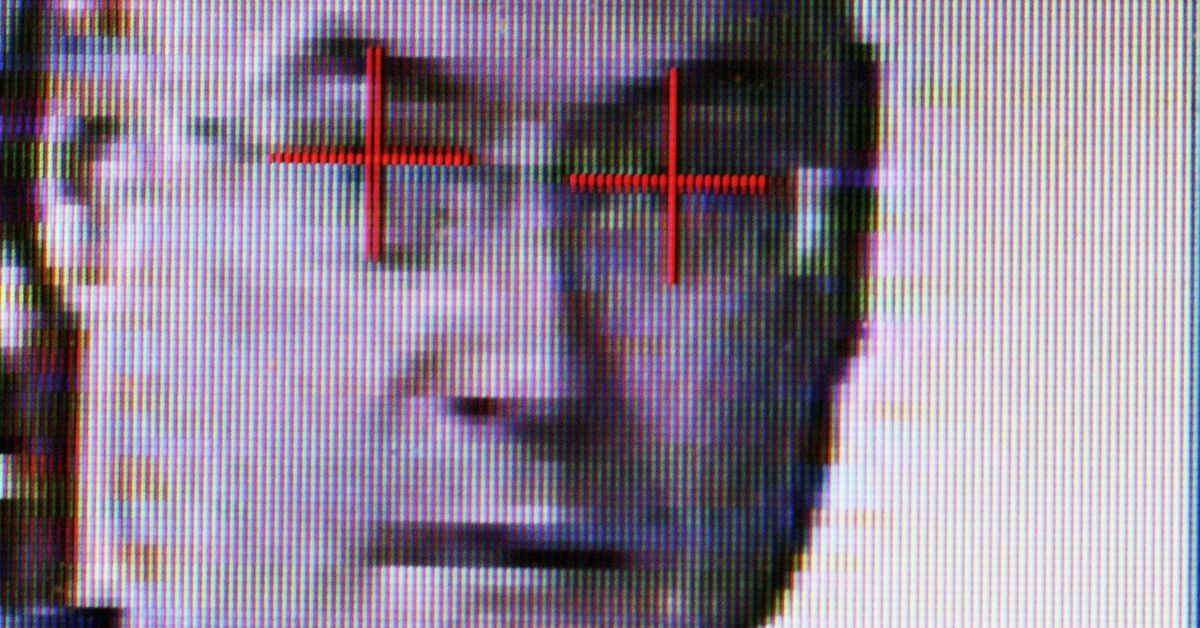
English actor Guy Henry (Harry Potter) wore motion capture materials on his head so that his face could eventually be replaced with a digital likeness of Cushing’s (the original actor for Moff Tarkin). He was picked because he had a similar build and stature as Cushing and was able to speak in a similar manner.
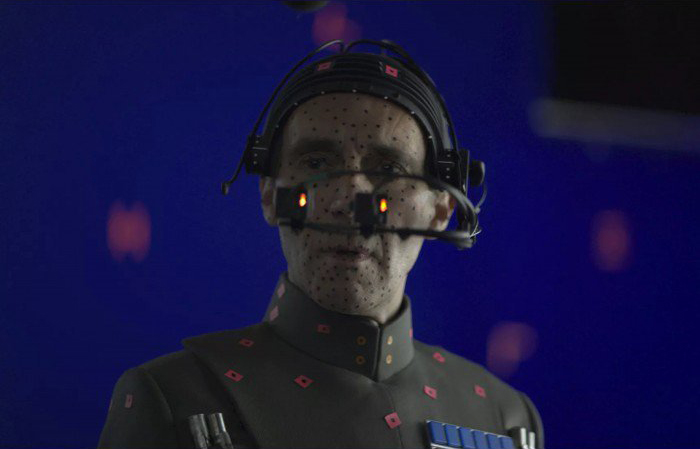
(credit: Industrial Light & Magic/Lucasfilm)
John Knoll, the chief creative officer at Industrial Light & Magic, wasn’t sure they were going to be able to pull this off. He said, “We did talk about Tarkin participating in conversations via hologram, or transferring that dialogue to other characters.” Tarkin ended up looking pretty good (actually fooling some critics!) although Dr. Evazan looked even better for his scene mostly because his distorted face doesn’t look completely human.
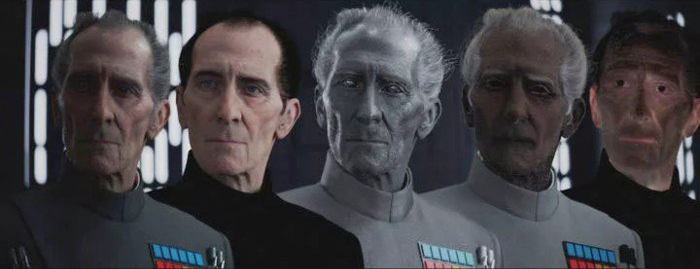
(credit: Industrial Light & Magic/Lucasfilm)
Nvidia
Was this CGI good enough to envision Princess Leia having a significant role using this technology? Probably not. But something amazing happened in 2016. Nvidia completed an over $2 billion project to develop a new class of graphics/AI chips. An example of how good they were is that the new version of the Nvidia Titan X can do AI (artificial intelligence) 566% faster than the previous Titan X that was only released a year before. This $1,200 card is so popular that half a year after its release Nvidia is still rationing this card to two per customer. (Disney gets to use Nvidia cards that are even more powerful than the Titan X!)
Why does Nvidia matter to Star Wars fans? Because Nvidia’s chips power the CGI in virtually all movies. Nvidia is now making 100% of the profits of all companies selling graphics cards, with their chips being put into everything from Nintendo’s newest console to every Tesla car currently being built. This has caused Nvidia to soar in value, with their stock over tripling in 2016. This means that Nvidia is going to be able to spend a lot more than $2 billion on their next generation of graphics/AI chips! (Nvidia has found a way to use about the same architecture for AI chips and regular graphics chips.)
Not only is Nvidia’s new graphics/AI chip design affecting movies but they are helping make Ray Kurzweil’s prediction of human equivalent AI by 2029 a reality. Nvidia’s CEO Jen-Hsun Huang said, “AI is going to increase in capability faster than Moore’s Law. I believe it’s a kind of a hyper Moore’s Law phenomenon because it has the benefit of continuous learning. It has the benefit of large-scale networked continuous learning. Today, we roll out a new software package, fix bugs, update it once a year. That rhythm is going to change. Software will learn from experience much more quickly. Once one smart piece of software on one device learns something, then you can over-the-air (OTA) it across the board. All of a sudden, everything gets smarter.”
Singularity CGI
Nvidia’s improved chips are part of a three layer accelerating returns juggernaut that is affecting CGI and which we will call Singularity CGI.
Layer one of Singularity CGI is better hardware with Nvidia having just switched from 28 nanometer transistors to 16/14 nanometer transistors. (They are getting 16 nanometer technology from TSMC and 14 nanometer from Samsung.) A 14 nanometer part is only 140 atoms wide! Both Samsung and TSMC will be producing 10 nanometer parts in 2017, with large Nvidia parts likely in 2018. (The 10 nanometer parts in 2017 will be for companies like Apple who don’t need large, complex chips as Nvidia does.)
Layer two of Singularity CGI is better Nvidia designs which is what Nvidia just spent over two billion dollars on. Layer three of Singularity CGI is better software. An example of this exponentially improved software is that Disney Research and Carnegie Mellon University scientists have found that three computer vision methods commonly used to reconstruct 3D scenes produce superior results in capturing facial details when they are performed simultaneously, rather than independently.
“The quality of a 3D model can make or break the perceived realism of an animation,” said Paulo Gotardo, an associate research scientist at Disney Research. “That’s particularly true for faces; people have a remarkably low threshold for inaccuracies in the appearance of facial features. PGSF (photogeometric scene flow) could prove extremely valuable because it can capture dynamically moving objects in high detail and accuracy.”
Conclusion
The growing power of Singularity CGI means that when Disney is ready to release episode 9 in 2019, Disney will be able to use much more powerful Nvidia cards and more sophisticated software to bring Carrie Fisher back to life to finish her story whose first two parts were in The Force Awakens (episode 7) in 2015 and episode 8 in 2017. (Carrie already filmed her scenes for episode 8.)
To increase the chance of success of creating a realistic Carrie Fisher, Disney will even be given $50 million thanks to insurance through Lloyd’s of London to fund this effort. May the force be with us!