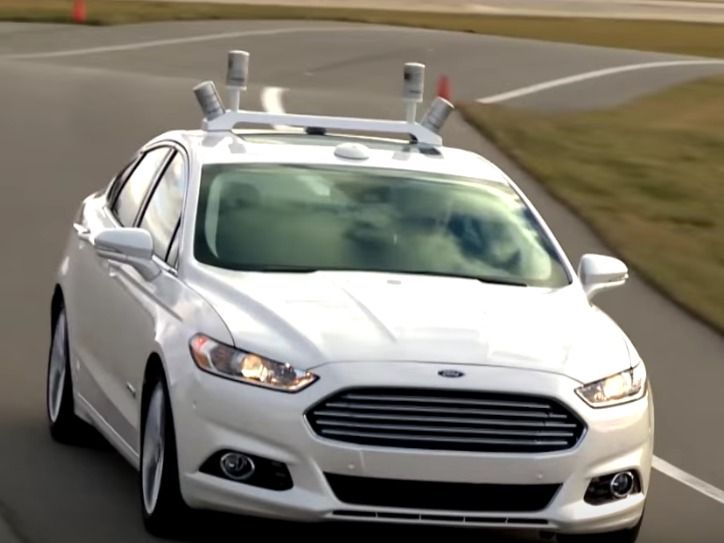
Ford is investing $1 billion in a secretive artificial intelligence startup headed by former Google and Uber execs to advance its self-driving car efforts.
The startup, Argo AI, was founded by Bryan Salesky, the former director of hardware for Google’s self-driving-car efforts, and Peter Rander, Uber’s engineering lead at its autonomous cars center.
The $1 billion investment will be spread out over five years as Ford looks to commercialize its self-driving technology by 2021.
Google and Kaggle today announced a new machine learning challenge that asks developers to find the best way to automatically tag videos.
The challenge, which comes with a $30,000 prize for the first-place finisher (and $25,000, $20,000, $15,000 and $10,000 for the next four teams), asks developers to classify and tag videos from Google’s updated YouTube-8M V2 data set. This data set features a total of 7 million YouTube videos that add up to 450,000 hours of video. YouTube-8M already includes labels, too, and developers can use this as their training data. The challenge then is to tag 700,000 previously unseen videos.
Wide models are great for memorization, deep models are great for generalization — why not combine them to create even better models? In this talk, Heng-Tze Cheng explains Wide and Deep networks and gives examples of how they can be used.
Check out our blog post, paper, YouTube video, TensorFlow tutorials: https://goo.gl/MwVlVa
Not too shock by this given other transplant patient’s stories of memories, etc.
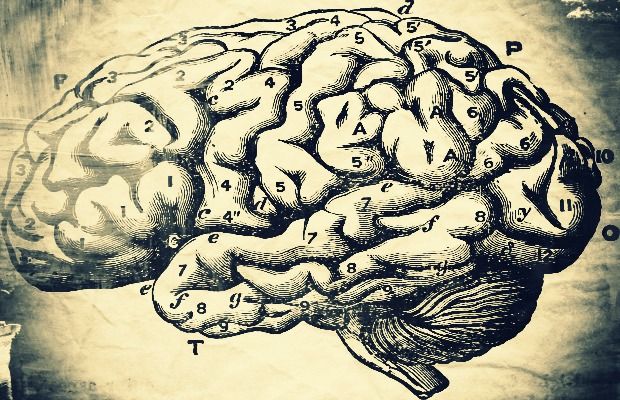
There are a lot of outrageous claims being made within the halls of neuroscience and artificial intelligence. Whether exaggerations, wishful thinking, the dreams of the egocentric and megalomaniacal to be immortal, or just drumming up funding for a never-ending round of “scientific investigation,” the year 2045 seems to always be cited as a target date.
Ray Kurzweil popularized the notion of The Singularity – the threshold when computing power would match or exceed the human brain and human biological systems – in his 2006 book The Singularity is Near: When Humans Transcend Biology. In that book, and subsequent articles, he theorized that 2045 would be the far end of when we could expect full integration of human and machine that would create immortality.
So far there have been indications that we are indeed proceeding in this direction. Beyond the gadgets we all use to augment our intelligence, each day seems to offer a new medical development that reads more like science fiction than reality. Just the other day there was an article in The Seattle Times that a new type of flexible brain implant could enable the paralyzed to walk again. We have robotic prostheses, humanoid robots, artificial human skin, and a range of nanotechnology applications used in medicine and the military that are quickly redefining life and nature itself. In fact, it’s been proclaimed by scientists that the era of cyborgs has begun.
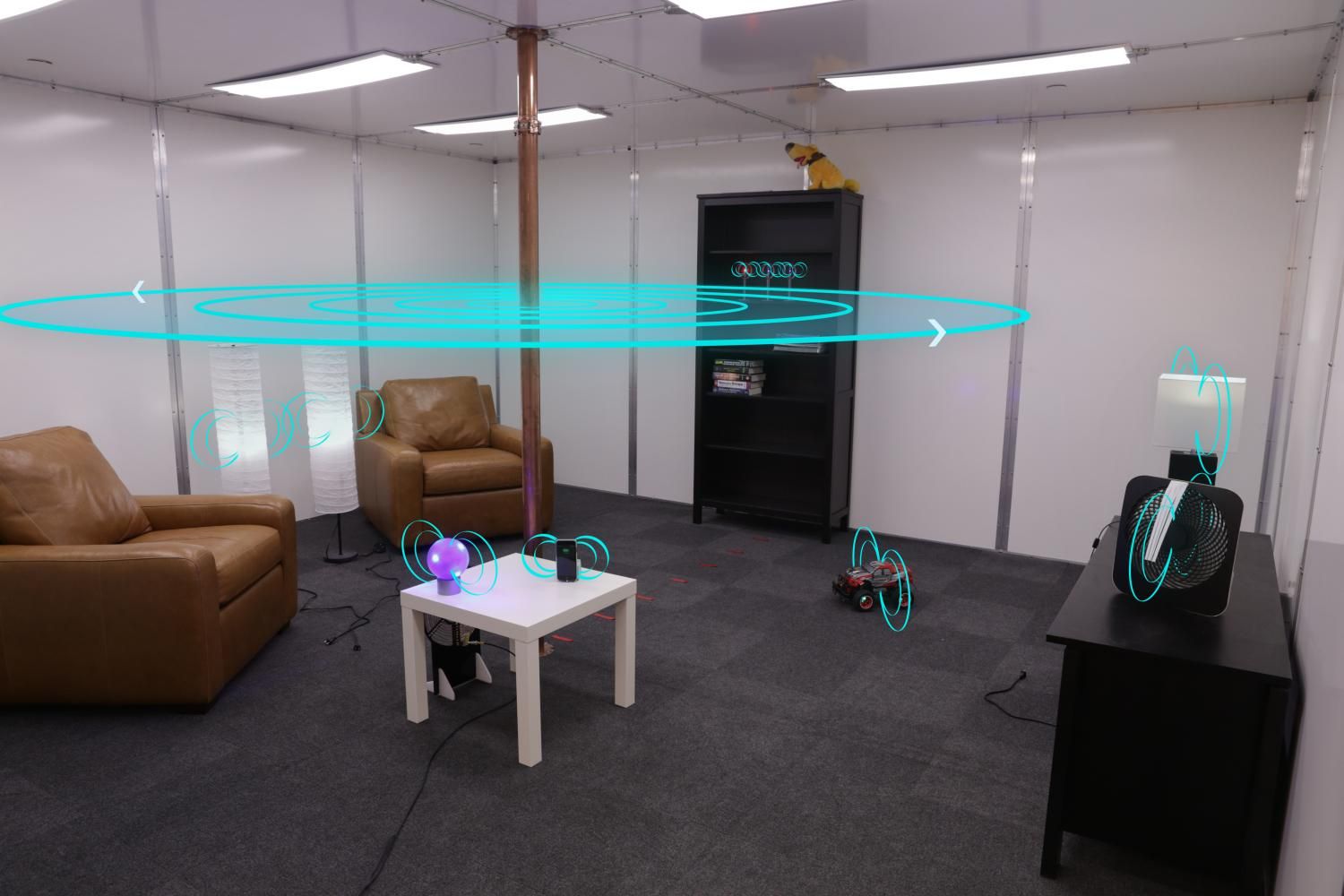
A new method developed by Disney Research for wirelessly transmitting power throughout a room enables users to charge electronic devices as seamlessly as they now connect to WiFi hotspots, eliminating the need for electrical cords or charging cradles.
The researchers demonstrated their method, called quasistatic cavity resonance (QSCR), inside a specially built 16-by-16-foot room at their lab. They safely generated near-field standing magnetic waves that filled the interior of the room, making it possible to power several cellphones, fans and lights simultaneously.
“This new innovative method will make it possible for electrical power to become as ubiquitous as WiFi,” said Alanson Sample, associate lab director & principal research scientist at Disney Research. “This in turn could enable new applications for robots and other small mobile devices by eliminating the need to replace batteries and wires for charging.”
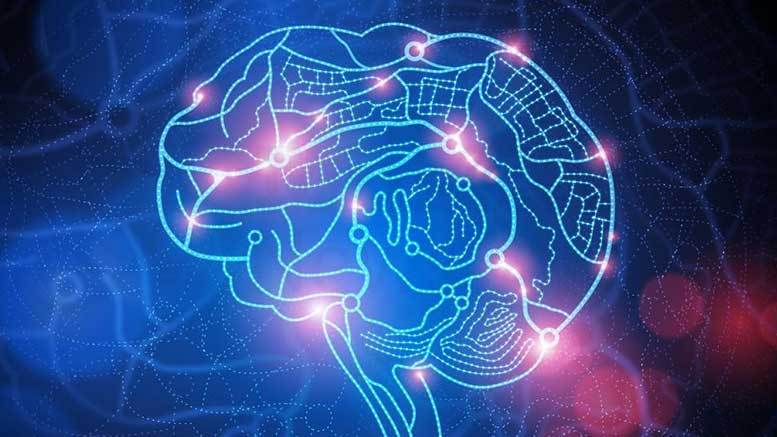
Australian entrepreneur reveals brain-controlled telepresence robot. Teleport utilizes brain controlling interface to follow the focal point of a user’s mind and serve various fields of life.
Australian Developer has released a telepresent robot that will let the users attend school or work distantly. People, with a limited mobility of upper limb, will remotely attend tasks through this off-the-shelf mind controlling interface costing 200 UDDs.
Melbourne-based firm Aubot has created the brain controlling robot that is telepresent for doing the user’s task. The dubbed Teleport makes in using the MindWave brain controlling system to track the user’s mind focus. It works on the thinking pattern of the user when he/she focus over a particular entrance, the telepresent assistant moves.