Toggle light / dark theme

Cloud-Brained Humanoid Robots Are Right around the Corner

As much as this article wants to promote that by 2020 that we will have terminator style robots acting as an in home nurse with patients (at least in the US) will be very hard to see. Most elderly as well as young children need more of human or personable interaction in their lives. I do highly suggest researchers (especially those that have studied children in orphanages where limited human interaction was available) to share your own insights of what happens to children who are without human contact at long periods as well as the elderly. I believe folks will rethink somethings and be more pragmatic in what these robots can and can do.


Published on Feb 3, 2016

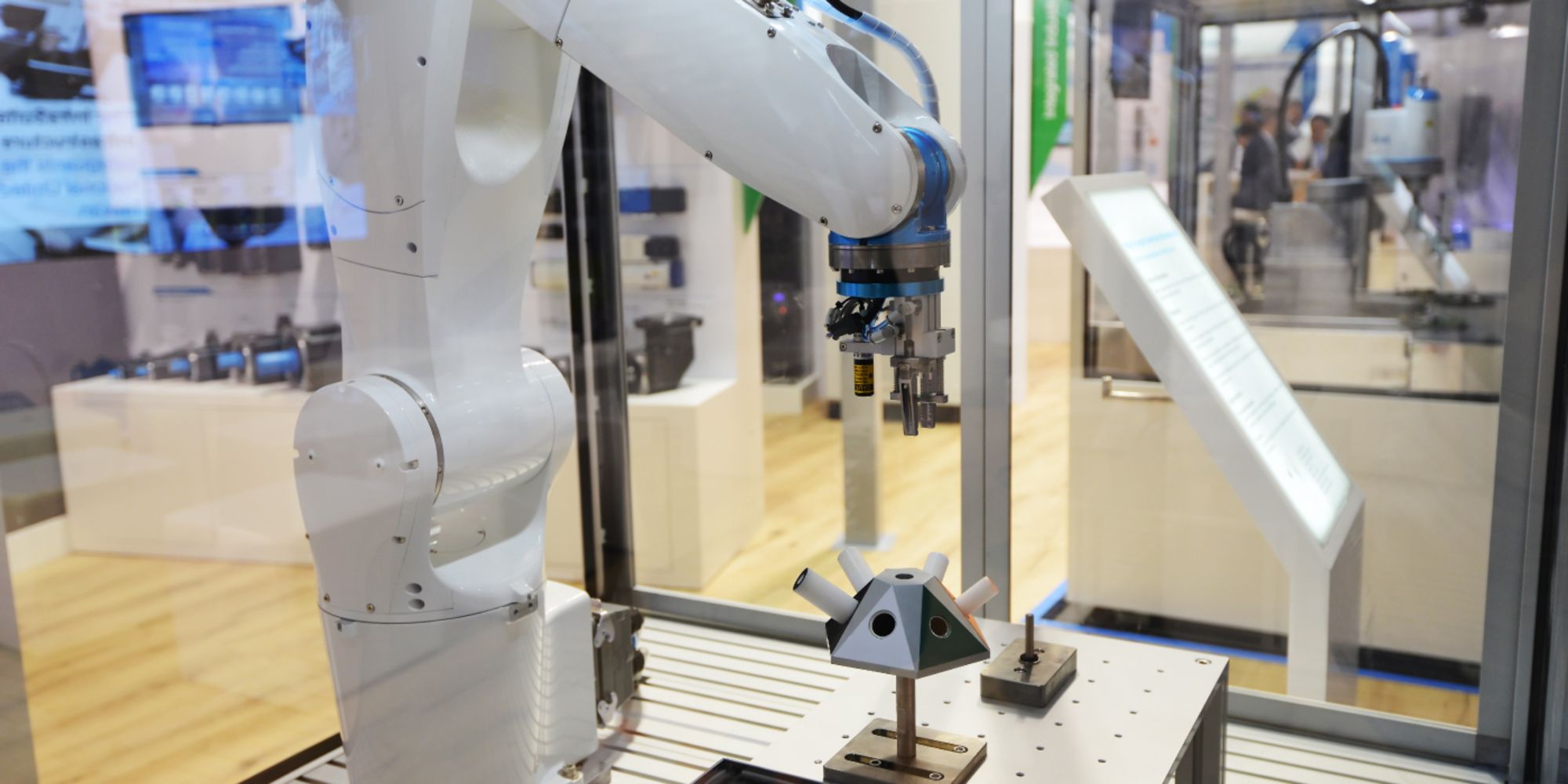
A new generation of humanoid robots are coming in the 2020s, says innovation and industry expert Alec Ross. They will care for our aging populations and revolutionize manufacturing. Ross’ book is “The Industries of the Future The Industries of the Future.

Read more

Brenau aiming to make off-site students more connected through robot computers

This is a excellent use for the robots.


Brenau University students will soon be able to “be in the classroom” even from remote locations thanks to robots the school will be using.

A “Kubi” — a computer with arms for a tablet to be mounted on it — will allow students to control their interaction with a classroom and instructor. Brenau expects to have the technology in its classrooms by August.

“Our goal is to make the online or remote students have the same experience as on-site students,” said Dan Odom, instructional technology support technician at Brenau.

Read more

Artificial intelligence startup Diffbot raises $10 million for ambitious project

I cannot wait to see the results.


Palo Alto-based Diffbot has proclaimed itself the “leading arms dealer in coming AI wars” after raising $10 million in Series A funding.

Diffbot has developed a robot that is working to organize information from all over the Web into the world’s largest database of knowledge. The robot, which works without human oversight, recognizes, reads, understands and monitors product pages, news articles, discussion forums, videos, pictures and more, according to the company. Businesses can gain access to this data when they sign up for Diffbot plans, ranging from $299 to $3,999 per month.

“We’ve developed a business model for AI that works and I’m excited with this new investment to accelerate our mission even further,” founder and CEO Mike Tung wrote in a company news release Thursday. “Structuring the world’s knowledge is within sight.”

Read more

US highway authorities concede that artificial intelligence can legally ‘drive’ a car

In a major step forward for self-driving cars and the industry seeking to manufacture them, US highway authorities have informed Google that its autonomous vehicle systems could qualify as a “driver” in the eyes of the law.

A letter addressed to the company from the National Highway Traffic Safety Administration (NHTSA) last week suggests that if self-driving vehicles (SDVs) can satisfy a number of safety standards, the fact that artificial intelligence (AI) is controlling the car – in the absence of any human controls – would not be a barrier to the car legally driving on US roads.

“We agree with Google its SDV will not have a ‘driver’ in the traditional sense that vehicles have had drivers during the last more than one hundred years,” writes chief counsel for the NHTSA, Paul A. Hemmersbaugh. “If no human occupant of the vehicle can actually drive the vehicle, it is more reasonable to identify the ‘driver’ as whatever (as opposed to whoever) is doing the driving. In this instance, an item of motor vehicle equipment, the [SDS Self-Driving System], is actually driving the vehicle.”

Read more

Curious AI Wants To Make The Singularity A Reality

Over the last few years tech companies both large and small have developed programs that can “dream”; and understand and process information; and even write articles; but nothing has come close to the holy grail of artificial intelligence — developing software that can learn independently.

At least, not until now.

Helsinki might seem like an unlikely potential birthplace for this new era of intelligent machines. Yet it’s there — on a side street blocks from the central train station — that a team of roboticists, neuroscientists, and graphics programmers planted the seed that would become the new artificial intelligence software developer, The Curious AI Company.

Read more

Electronic luggage tag lets travelers check-in bags from home

Expensive travel bags should do more than look good, and German high-end luggage manufacturer Rimowa would seem to agree. The company has developed an electronic luggage tag which displays baggage info in the same format, size and appearance of typical paper labels, but on a digital screen built into the unit and located near the handle.

The Rimowa e-tag is similar to a device tested by British Airways in 2013, which allowed travelers to attach it to any piece of luggage.

Travelers these days can easily check into a flight and secure a boarding pass, printed or digital, before they step foot in the airport. Despite that convenience, they’re often forced to stand in line to check their bags. Those with a Rimowa electronic tag-enabled bag can send their digital boarding info via Bluetooth from their smartphone to check their bag before they leave home, with details appearing on the bag’s electronic display. After arriving at the airport, they simply hand it off at the airline’s automated check-in station, avoiding at least one line.

Read more

Yes, robots will steal our jobs — but don’t worry, we’ll get new ones

Again, I see too many gaps that will need to be address before AI can eliminate 70% of today’s jobs. Below, are the top 5 gaps that I have seen so far with AI in taking over many government, business, and corporate positions.

1) Emotion/ Empathy Gap — AI has not been designed with the sophistication to provide personable care such as you see with caregivers, medical specialists, etc.
2) Demographic Gap — until we have a more broader mix of the population engaged in AI’s design & development; AI will not meet the needs for critical mass adoption; only a subset of the population will find will connection in serving most of their needs.
3) Ehtics & Morale Code Gap — AI still cannot understand at a full cognitive level ethics & empathy to a degree that is required.
4) Trust and Compliance Gap — companies need to feel that their IP & privacy is protected; until this is corrected, AI will not be able to replace an entire back office and front office set of operations.
5) Security & Safety Gap — More safeguards are needed around AI to deal with hackers to ensure that information managed by AI is safe as well as ensure public saftey from any AI that becomes disruptive or hijacked to cause injury or worse to the public

Until these gaps are addressed; it will be very hard to eliminate many of today’s government, office/ business positions. The greater job loss will be in the lower skill areas like standard landscaping, some housekeeping, some less personable store clerk, some help desk/ call center operations, and some lite admin admin roles.


The U.S. economy added 2.7 million jobs in 2015, capping the best two-year stretch of employment growth since the late ‘90’s, pushing the unemployment rate down to five percent.

But to listen to the doomsayers, it’s just a matter of time before the rapid advance of technology makes most of today’s workers obsolete – with ever-smarter machines replacing teachers, drivers, travel agents, interpreters and a slew of other occupations.

Read more

/* */