China may have the clear lead in the development of artificial intelligence (AI) systems in the region, but Japan’s government, realising how vital the sector is to its economic future, has intervened in the hopes of levelling the playing field.
Japan announced in late August that it is planning to invest billions of yen to fund next-generation semiconductors and other technologies critical to AI development.
Billions of yen in public investment could help firms innovate, but analysts say the nation may never catch up with China and the US, global tech leaders that show no signs of slowing down.
MouseAGE is working to develop the first photographic biomarker of aging in mice to help validate potential anti-aging interventions, save animal lives, and greatly speed up the pace of longevity research.
To create it we will harness the power of an area of artificial intelligence called Machine Learning, and in particular Deep Learning.
Machine Learning, where a computer system can train itself to become better at a task without explicit programming, has already showed great performance in areas such as human facial recognition, autonomous driving, medical image processing, recommendation engines and many others. While these results are powerful, building up the necessary Neural Networks, or algorithms inspired by the human brain, requires a large dataset of images to use for training: thousands of them.
Due to this, the first stage of the project will be to build a simple instrument for data collection, implemented in a mobile application. This will be distributed among numerous mouse breeding facilities and research universities all over the world to rapidly collect and properly annotate image data for analysis.
Like so many other new technologies, however, AI has generated lots of unrealistic expectations. We see business plans liberally sprinkled with references to machine learning, neural nets, and other forms of the technology, with little connection to its real capabilities. Simply calling a dating site “AI-powered,” for example, doesn’t make it any more effective, but it might help with fundraising. This article will cut through the noise to describe the real potential of AI, its practical implications, and the barriers to its adoption.
What it can — and cannot — do for your organization.
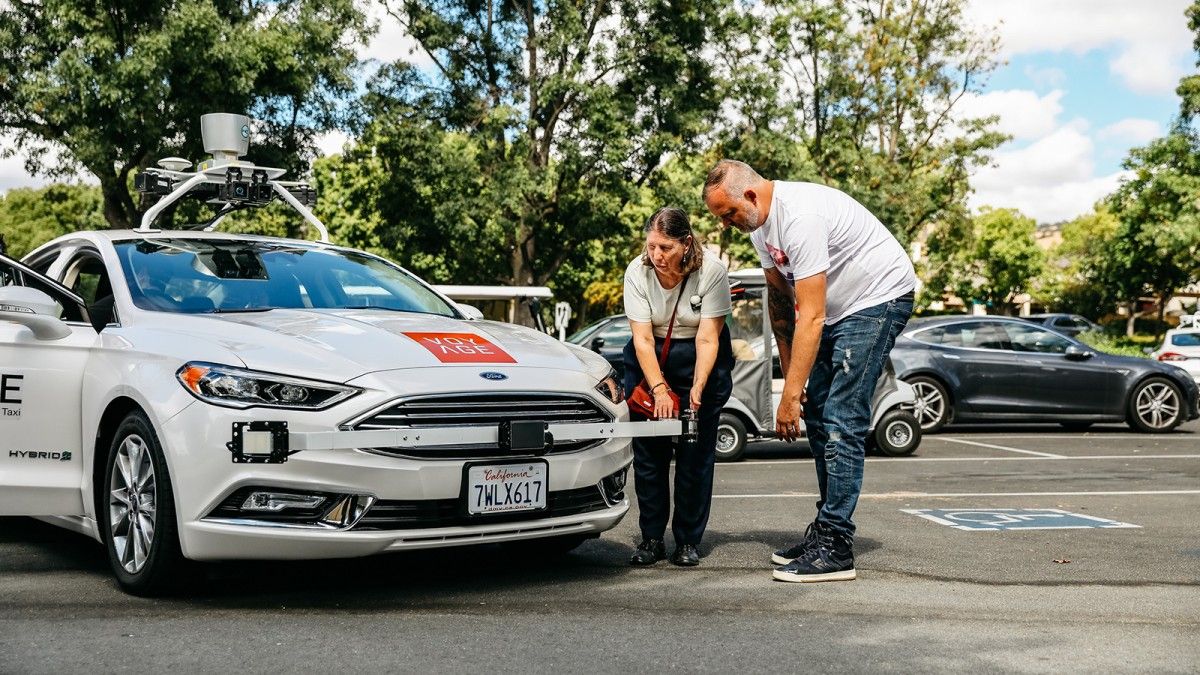
Plenty of obstacles, no regulations, and nobody in a huge rush—sounds like an ideal proving ground for autonomous cars. Self-driving startup Voyage certainly thinks so, because it’s just kicked off a trial at the Villages Golf and Country Club, a 4,000-resident retirement community with 15 miles of roads located in San Jose, California.
Speeds on the roads at the Villages are limited to 25 mph, but most autonomous car tests in cities and suburbs don’t go a great deal faster than that anyway. Still, the roads are full of the same kinds of obstacles you’d find in most suburbs: pedestrians, animals, golf buggies. Okay, maybe the golf buggies are a new hazard to most driverless cars.
But the biggest draw for the move is secrecy. As the New York Times points out, because the community is a private residence, Voyage doesn’t need to comply with the whims of regulators, which means it can try out new things without anyone finding out. And perhaps it can even explore using entirely driver-free vehicles sooner than it could on real roads.
In its secretive R&D department, Honda has been developing a bipedal disaster robot designed to climb through crumbled buildings.
Honda unveiled the prototypical E2-DR robot last week at the 2017 International Conference on Intelligent Robots and Systems in Vancouver, reports IEEE Spectrum. As the Honda video shows, the E2-DR robot can climb ladders, ascend stairs, crawl through tight spaces, and manipulate its body to squeeze through cracks.
Have you ever had the perfect photo ruined by someone with their eyes closed in the shot? You could fix the problem with a bit of cloning from an alternate shot using a photo editing app—but Adobe is making the process much easier in the new 2018 version of Photoshop Elements with a dedicated ‘Open Closed Eyes’ feature.
You can spend an entire career using Photoshop and still not master the software’s every last feature, but that complexity can be intimidating to the millions of amateur photographers born from the advent of affordable digital-SLRs, and even smartphones. That’s where Photoshop Elements comes in. It’s a lighter version of Photoshop with training wheels that simplifies many popular photo editing techniques. A better way to describe it might be as a version of Photoshop your parents could stumble their way through with minimal phone calls to you.
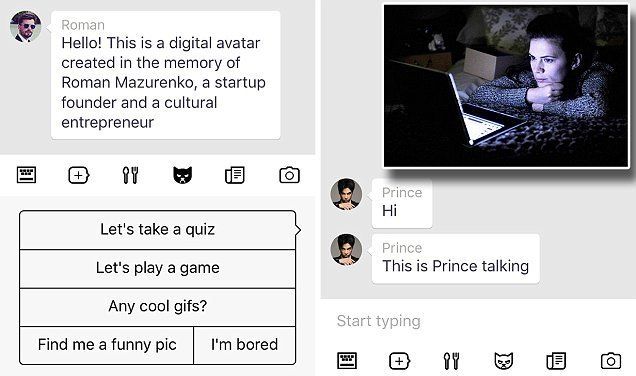
According to Eugenia Kuyda, co-founder of the AI startup Luka, memorial bots are ‘the future.’ The CEO recently unveiled the ‘digital monument’ to her deceased friend Roman Mazurenko, feeding thousands of text messages to a neural network to create a Luka chatbot in his image.
In the App Store, Luka is described as ‘a new messenger with AI-powered chatbots. They help you find GIFs and funny videos, make plans together, pick places to eat, play trivia games and have fun.’
Payne and another Google employee demonstrated a conversation between someone speaking Swedish and another person responding in English.
During the demonstration, one employee, speaking Swedish, had Pixel Buds and the Pixel phone. When the phone was addressed in English, the earbuds translated the phrase into Swedish in her ear. The Swedish speaker then spoke back in Swedish through the earbuds by pressing on the right bud to summon Google Assistant translated that Swedish reply back into an English phrase, which was played through the phone’s speakers so the English speaker could hear.
While this idea might sound far-fetched, Google CEO Sundar Pichai told investors in January that Google Translate was set to make big leaps this year.
The use of artificial intelligence and, in particular, machine learning is becoming increasingly popular in research. Such systems excel at high-speed data analysis, interpretation, and laborious research tasks, such as image assessment. One of the areas in which machine learning has been enjoying success is image recognition. Now, researchers have begun to use machine learning to analyze brain tumors.
One of the areas in which machine learning has been enjoying success is image recognition. Now, researchers have begun to use machine learning to analyze brain tumors.
These are a tiny fraction of the examples of how our economy differs from the 20th century industrial economy. Similar changes are under way in the developing world, as labor gives way to robotics and basic goods become affordable and accessible to the planet’s billions. Given those changes, why would 20th century models of prices and rates and money supply work as they used to work?
We like to believe that there are “laws of economics” and past patterns to guide us, but, as Yellen indicated, there is now “considerable uncertainty.” It may feel safer to trust that past patterns will reassert themselves. But maybe policymakers should weigh more heavily the chance that the patterns have changed.
The Federal Reserve takes a 20th-century approach to managing a 21st-century economy.