Toggle light / dark theme

Privacy fears over artificial intelligence as crimestopper

Washington (AFP) — Police in the US state of Delaware are poised to deploy “smart” cameras in cruisers to help authorities detect a vehicle carrying a fugitive, missing child or straying senior.

The video feeds will be analyzed using artificial intelligence to identify vehicles by license plate or other features and “give an extra set of eyes” to officers on patrol, says David Hinojosa of Coban Technologies, the company providing the equipment.

“We are helping officers keep their focus on their jobs,” said Hinojosa, who touts the new technology as a “dashcam on steroids.”

On the quest for the holy grail for as long as we live

This sort of thing is rapidly going mainstream, and de Grey, if still a fringe thinker, seems increasingly less so. At the very least, medical science has progressed to the point where “negligible senescence” — eternal youth, more or less — is something it might be a good idea to start talking about before it is suddenly upon us without our having thought through the implications. As with most of the other miracle technologies that have turned our lives inside out over the past 100 years — rampant automation, nuclear power, virtual reality, artificial intelligence and so on — this one, as Shukan Gendai points out, has its dark side.


Is death inevitable? True, everyone born before Aug. 4, 1900, has proved mortal (the world’s oldest-known living person, a Japanese woman named Nabi Tajima, was born on that date). But the past is only an imperfect guide to the future, as the effervescent present is ceaselessly teaching us.

Must we die? We ourselves probably must. But our children, our grandchildren — or if not them, theirs — may, conceivably, be the beneficiaries of the greatest revolution ever: the conquest of death.

A flexible material that generates electricity when stressed

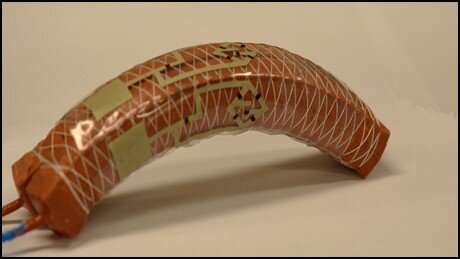
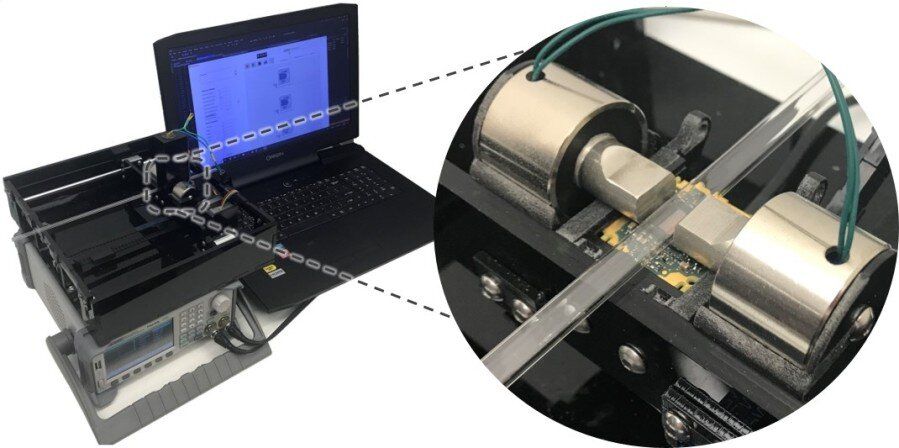
Researchers from Empa have developed a flexible material that generates electricity when stressed. In future, it might be used as a sensor, integrated into clothing or even implanted in the human body, for instance, to power a pacemaker.

Flexible, organic, thin – properties that aren’t usually associated with power plants or sensors. But a new material developed by Empa researchers is exactly that: a thin, organic, flexible film that generates if stretched and compressed. This film could be incorporated into control buttons, clothing, robots or even people, and monitor activities, record touches or generate electricity when stressed to power implanted devices such as pacemakers, for example.

Dear Future (Trailer)

WATCH THE FIRST EPISODE NOW: http://bit.ly/2yuwDPF

Check out CNET’s channel: http://bit.ly/2gpeXdr

Dear Future is Motherboard and CNET’s new documentary series built on the premise that technology and science are still capable of wowing us. Fusion energy, DIY off-grid energy systems, decentralized mesh networks, the search for life on other planets, and humanoid robots aren’t far-off science fiction, they’re breakthroughs that are happening right now.

Follow MOTHERBOARD
Facebook: http://www.facebook.com/motherboardtv
Twitter: http://twitter.com/motherboard
Tumblr: http://motherboardtv.tumblr.com/
Instagram: http://instagram.com/motherboardtv
More videos from the VICE network: https://www.fb.com/vicevideo

U.S. officials are having a ‘Sputnik moment’ over AI innovation in China

Today’s Sputnik moment is China’s rapid growth as an economic and technological superpower. In 2017 alone, China has outpaced the United States in renewable energy efforts and has become the standard-bearer in combating climate change and advocacy for globalization. Similarly, China is rapidly moving towards taking the lead in technology from the United States and is looking at quantum computing and artificial intelligence as areas for growth to do so.

The Verge recently published an article citing Alphabet chief executive officer Eric Schmidt’s perspective that the United States is falling behind when it comes to research and development in artificial intelligence, particularly compared to the rapid pace of innovation that China has set in the field. Schmidt, who is also the chair of the Defense Innovation Advisory Board, gave those remarks as part of a discussion at The Artificial Intelligence and Global Security Summit held by The Center for a New American Security (CNAS), a nonprofit think tank dedicated to research and analysis on how the United States can make informed policy-making decisions on national security and defense.

Self-driving shuttle hits Las Vegas streets

Las Vegas’ newest tourist attraction has nothing to do with casinos, neon lights or Cirque du Soleil. It’s a driverless shuttle that will make a half-mile loop all day long on city streets in the downtown Fremont East district, starting Wednesday.

AAA of Northern California, Nevada & Utah is sponsoring the yearlong pilot program along with two French companies: Keolis, a global transportation company that already runs Las Vegas’ public bus system, and Navya, which manufactures the driverless shuttle. The goal is twofold: to expose the public to the futuristic technology and gain insights on how people view it.

“Las Vegas prides itself on being first, getting out there and trying out new things,” said city spokesman Jace Radke.

/* */