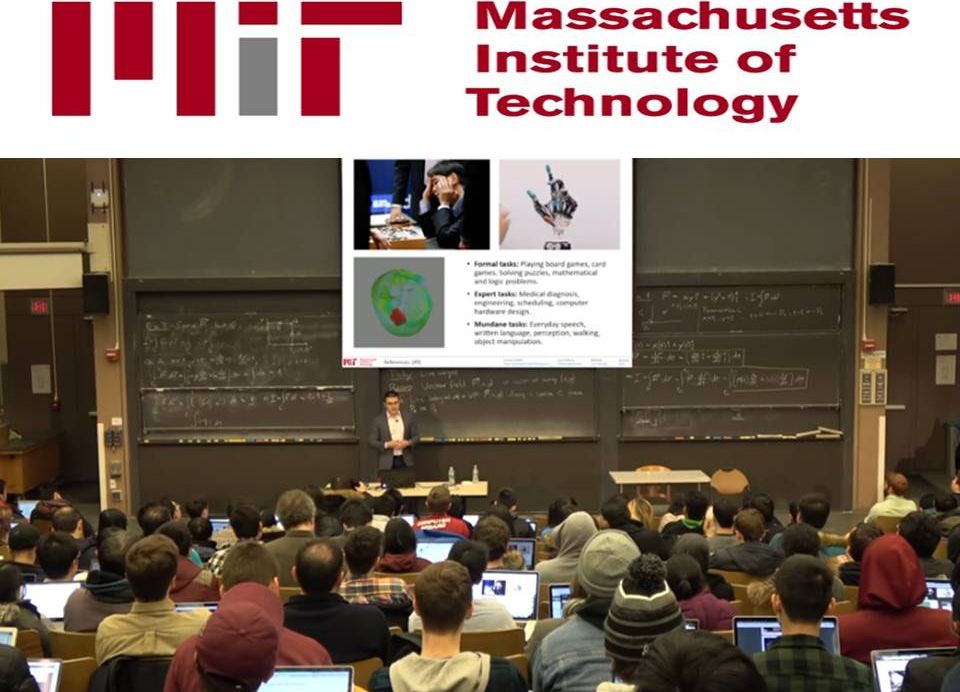
It doesn’t matter if you are a beginner or new to machine learning or advanced researcher in the field of deep learning methods and their application, everybody can benefit from Lex Fridman’s course on Deep Learning for Self-Driving Cars.
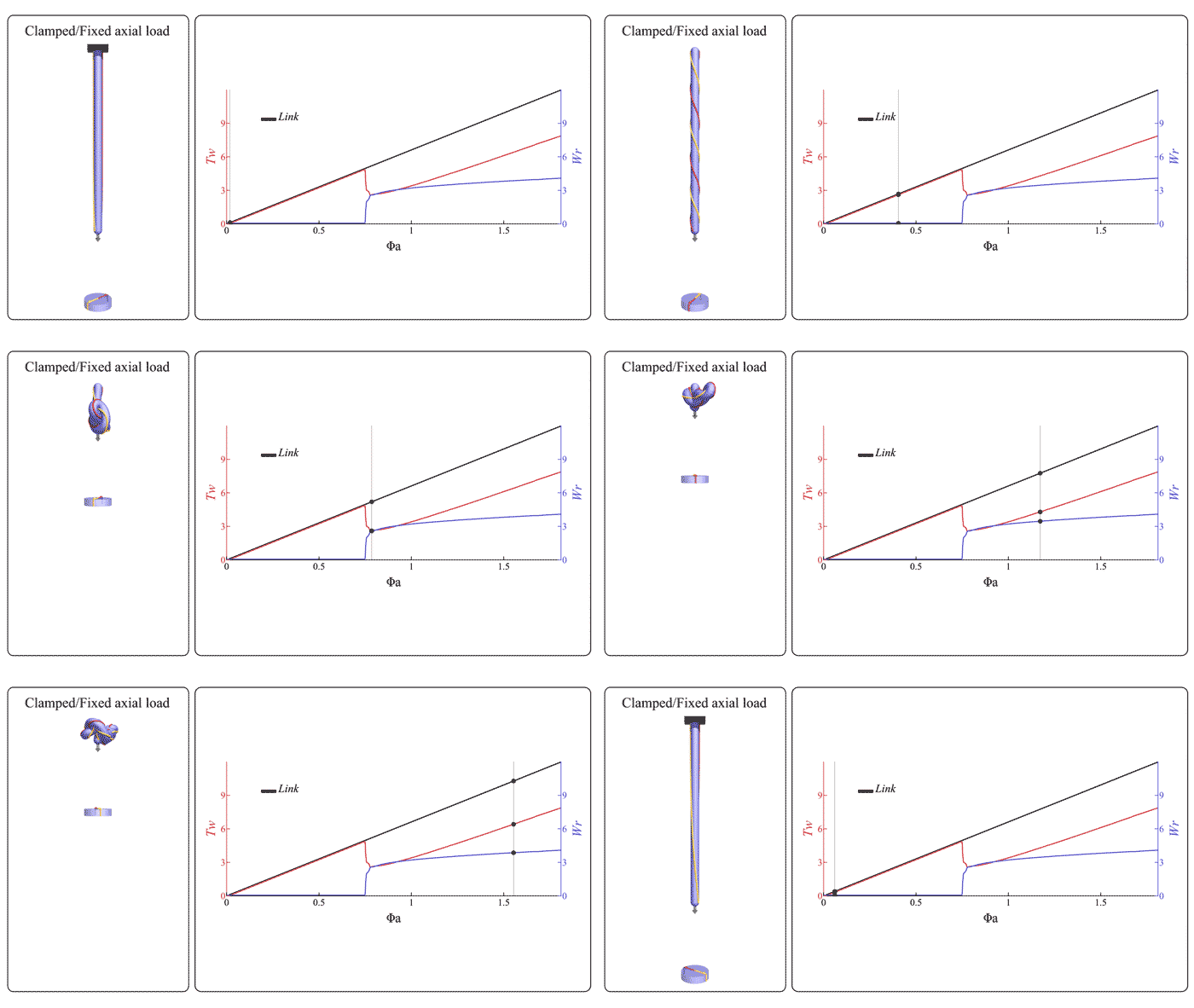
Artificial muscles will power the soft robots and wearable devices of the future. But more needs to be understood about the underlying mechanics of these powerful structures in order to design and build new devices.
Now, researchers from the Harvard John A. Paulson School of Engineering and Applied Sciences (SEAS) have uncovered some of the fundamental physical properties of artificial muscle fibers.
“Thin soft filaments that can easily stretch, bend, twist or shear are capable of extreme deformations that lead to knot-like, braid-like or loop-like structures that can store or release energy easily,” said L. Mahadevan, the Lola England de Valpine Professor of Applied Mathematics, of Organismic and Evolutionary Biology, and of Physics. “This has been exploited by a number of experimental groups recently to create prototypical artificial muscle fibers. But how the topology, geometry and mechanics of these slender fibers come together during this process was not completely clear. Our study explains the theoretical principles underlying these shape transformations, and sheds light on the underlying design principles.”


Merging of human biological arrangements with nonbiological machine hardware is perhaps not fairy at all. Futurist Ray Kurzweil mentioned his fairy dream over again that the historic Homo sapiens are not so far remote to the fifth epoch revolution. They human species is cramped to leave their biological genes and sluggish brain circuitry to merging them with the electrified hardware and fastest machine intelligence. Merging with electrified intelligence is unavoidable because of the slow computation power of human brain circuitry. Information processing and its exchanging ratio of a biological brain are extremely sluggish compared to the nonbiological brain. Despite its amazing innovative capacity of thinking, envision or consciousness, the human brain looks crawler if a goosey person even observes the current computation pace of nonbiological machine-brain for instance.
… Daniel Kahneman’s evidential works help readers summate the conclusion that the battle amid desire and choice is not an episodic whiff of latter, nor anybody can consider it a consequent tethering of modernity, rather the prehistoric beginning was also alluring by this in a bit different context. Memory-preserver neuron cells how to make a deep impact on human happiness levels have appeared crucial in Kahneman’s investigation. … …
Harari’s conversation with Kahneman echoed his historical findings that how human species manipulate Nature in an excuse to achieve individuality and happiness. He put forward statistical references to establish his findings of the behavioral shifting of human civilization; that is,— the personification of Naturebond life then diverts human species to a different track. They missed the integrity of taking Holistic View that a ‘piece or segment’ is ultimately the part of a ‘whole’ and any partial piece or segment never sustains long if it failed attached itself to the whole. Lil bit reminder of Chief Seattle’s Letter may relevant here. It is said that the native leader once wrote a letter to the President of the United States addressing the burning land settlement issues against his tribe:
How can you buy or sell the sky, the warmth of the land? The idea is strange to us… If we do not own the freshness of the air and the sparkle of the water, how can you buy them?… So, when the Great Chief in Washington sends word that he wishes to buy our land, he asks much of us… The air is precious to the red man for all things share the same breath, the beast, the tree, the man, they all share the same breath. The white man does not seem to notice the air he breathes. Like a man dying for many days, he is numb to the stench. But if we sell you our land, you must remember that the air is precious to us, that the air shares its spirit with all the life it supports… This we know; the earth does not belong to man; man belongs to the earth. This we know. All things are connected like the blood which unites one family. All things are connected. [See: Chief Seattle’s Letter to the President of the United States: Ted Perry’s version from the movie ‘Home’ ].
This video was made possible by Squarespace. Sign up with this link and get 10% off your purchase of a website or domain after your free trial! https://squarespace.com/singularity
In the last video in this series, we discussed the biologically inspired structure of deep leaning neural networks and built up an abstracted model based on that. We then went through the basics of how this model is able to form representations from input data.
The focus of this video then will continue right where the last one left off, as we delve deeper into the structure and mathematics of neural nets to see how they form their pattern recognition capabilities!
Thank you to the patron(s) who supported this video ➤
Wyldn pearson garry ttocsra brian schroeder
Become A Channel Member, Patron or Make A Donation ➤.
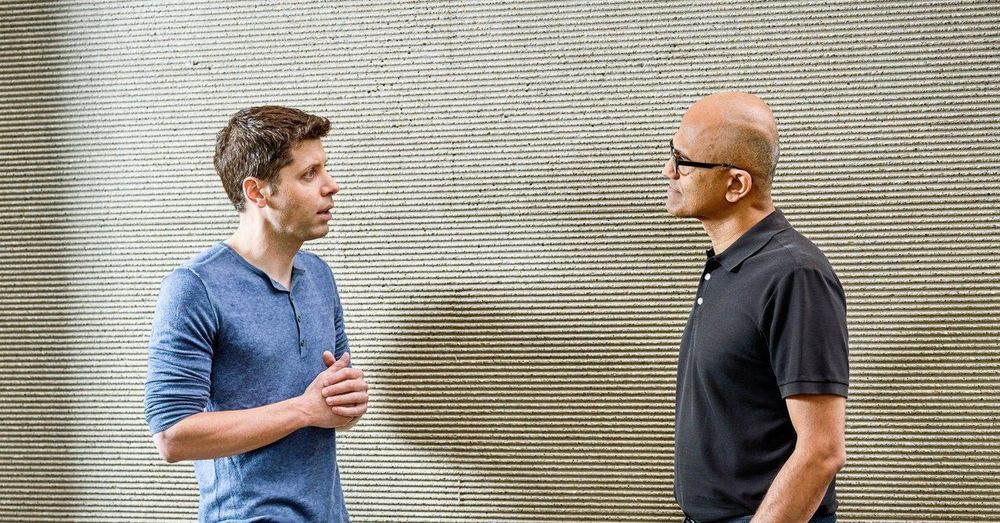
There’s reason to think fruits of the collaboration may interest the military. The Pentagon’s cloud strategy lists four tenets for the JEDI contract, among them the improvement of its AI capabilities. This comes amidst its broader push to tap tech-industry AI development, seen as far ahead of the government’s.
Microsoft’s $10 billion Pentagon contract puts the independent artificial-intelligence lab OpenAI in an awkward position.
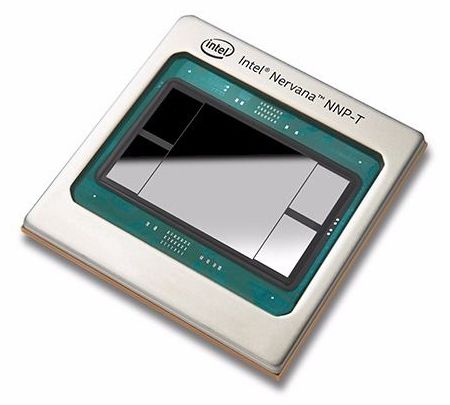
At this year’s Intel AI Summit, the chipmaker demonstrated its first-generation Neural Network Processors (NNP): NNP-T for training and NNP-I for inference. Both product lines are now in production and are being delivered to initial customers, two of which, Facebook and Baidu, showed up at the event to laud the new chippery.
The purpose-built NNP devices represent Intel’s deepest thrust into the AI market thus far, challenging Nvidia, AMD, and an array of startups aimed at customers who are deploying specialized silicon for artificial intelligence. In the case of the NNP products, that customer base is anchored by hyperscale companies – Google, Facebook, Amazon, and so on – whose businesses are now all powered by artificial intelligence.
Naveen Rao, corporate vice president and general manager of the Artificial Intelligence Products Group at Intel, who presented the opening address at the AI Summit, says that the company’s AI solutions are expected to generate more than $3.5 billion in revenue in 2019. Although Rao didn’t break that out into specific products sales, presumably it includes everything that has AI infused in the silicon. Currently, that encompasses nearly the entire Intel processor portfolio, from the Xeon and Core CPUs, to the Altera FPGA products, to the Movidius computer vision chips, and now the NNP-I and NNP-T product lines. (Obviously, that figure can only include the portion of Xeon and Core revenue that is actually driven by AI.)
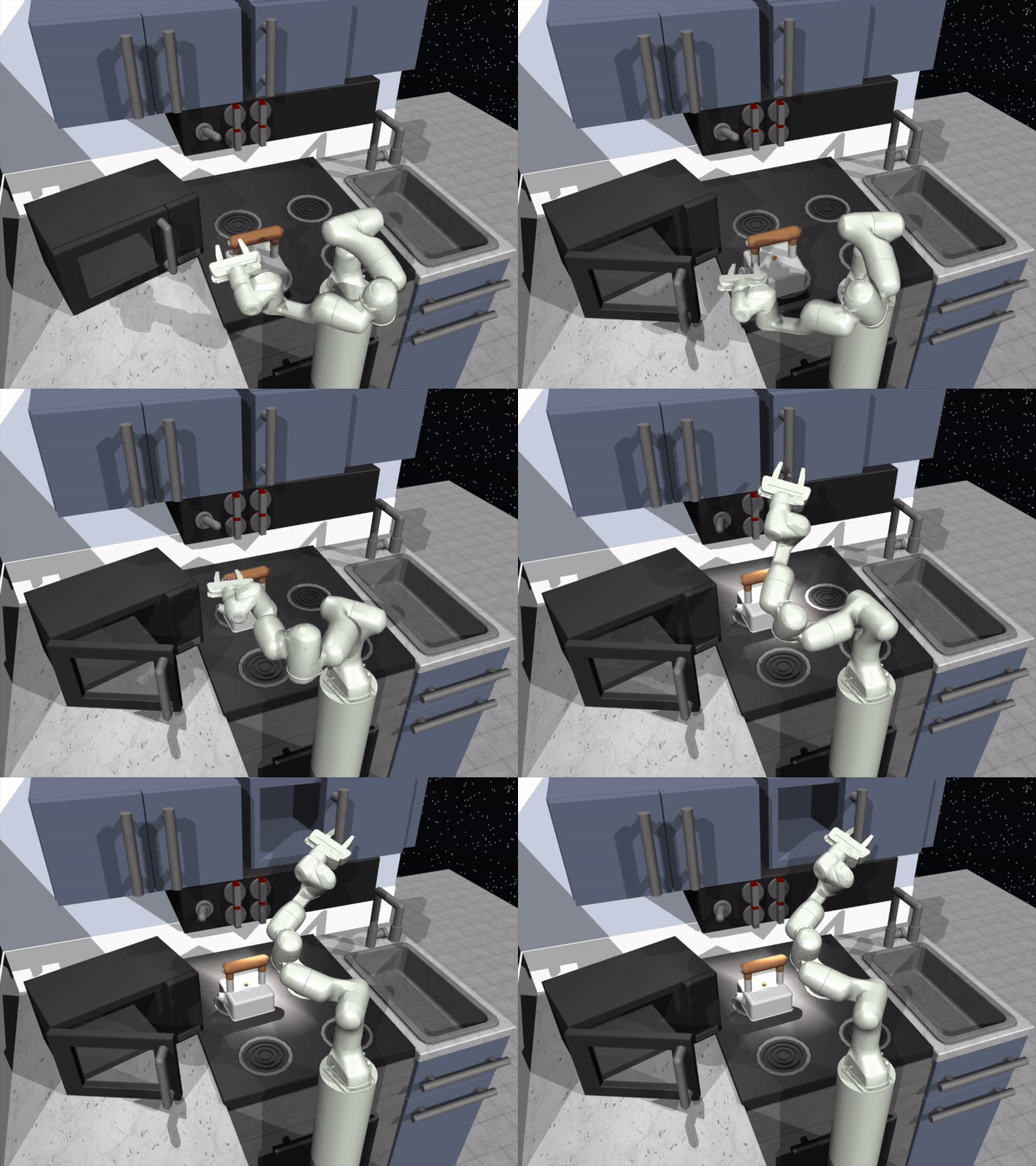
Reinforcement learning (RL) is a widely used machine-learning technique that entails training AI agents or robots using a system of reward and punishment. So far, researchers in the field of robotics have primarily applied RL techniques in tasks that are completed over relatively short periods of time, such as moving forward or grasping objects.
A team of researchers at Google and Berkeley AI Research has recently developed a new approach that combines RL with learning by imitation, a process called relay policy learning. This approach, introduced in a paper prepublished on arXiv and presented at the Conference on Robot Learning (CoRL) 2019 in Osaka, can be used to train artificial agents to tackle multi-stage and long-horizon tasks, such as object manipulation tasks that span over longer periods of time.
“Our research originated from many, mostly unsuccessful, experiments with very long tasks using reinforcement learning (RL),” Abhishek Gupta, one of the researchers who carried out the study, told TechXplore. “Today, RL in robotics is mostly applied in tasks that can be accomplished in a short span of time, such as grasping, pushing objects, walking forward, etc. While these applications have a lot value, our goal was to apply reinforcement learning to tasks that require multiple sub-objectives and operate on much longer timescales, such as setting a table or cleaning a kitchen.”