Toggle light / dark theme

Science fiction becomes science fact as researchers create liquid metal heartbeat

In a breakthrough discovery, University of Wollongong (UOW) researchers have created a “heartbeat” effect in liquid metal, causing the metal to pulse rhythmically in a manner similar to a beating heart.

Their findings are published in the 11 July issue of Physical Review Letters, the world’s premier journal for fundamental physics research.

The researchers produced the heartbeat by electrochemically stimulating a drop of liquid gallium, causing it to oscillate in a regular and predictable manner. Gallium (Ga) is a soft silvery metal with a low melting point, becoming liquid at temperatures greater than 29.7C.

Physicists Think the Weather Can Trigger Blackouts in an Unexpected Way

Renewable resources are great, but they bring a new element of uncertainty to a power grid. This element can lead to failure in surprising ways, according to a new paper.

A team of researchers built a model of power grids that transport electricity from solar and wind power. That means that there are places where the grid receives fluctuating inputs of power, since levels of sunlight and wind and vary.

Did Scientists Just Find a Missing Piece of the Universe?

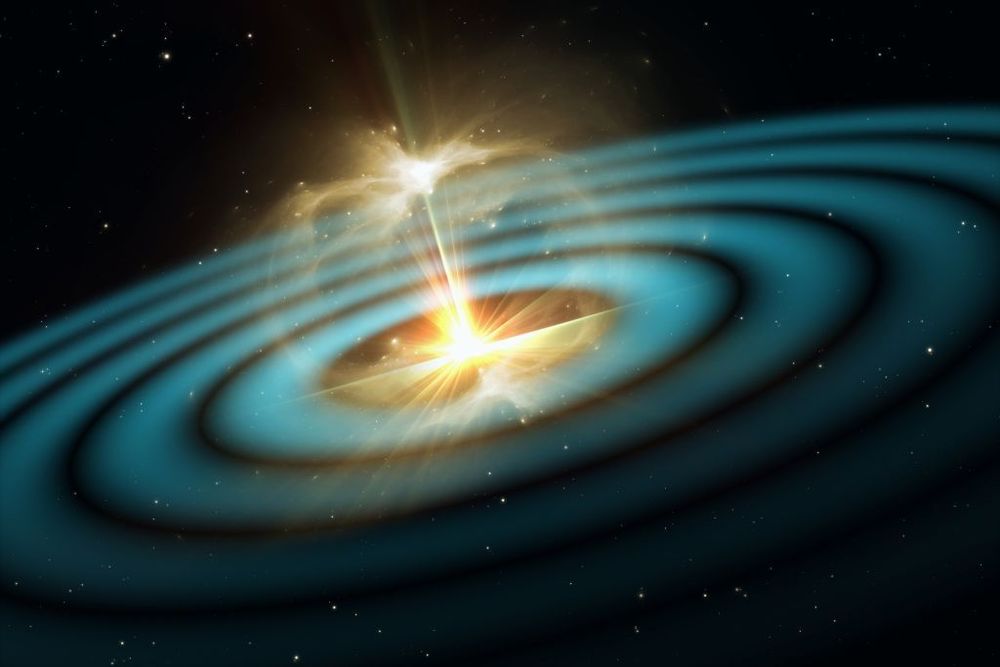
It would be silly to think we completely understand our universe, given how small the Earth is compared to the vastness of the cosmos. But from here on our tiny planet, it appears that much of the universe is missing. And I’m not just talking about dark matter. Regular stuff seems to be missing, too.

Astronomy fans probably know that as far as humans can tell, the universe is composed mostly of some mysterious, unexplained energy called dark energy that pushes it apart. The remaining piece, about a quarter, is dark matter, another unexplained thing that seems to build the universe’s skeleton. Just 4 percent is the regular matter that we can see: stars, planets, and interstellar and intergalactic gas. But the observed amount of this regular matter still falls perhaps a third short of the amount of stuff that physicists think should exist based on their models of the universe.

Rutgers physicists create new class of 2D artificial materials

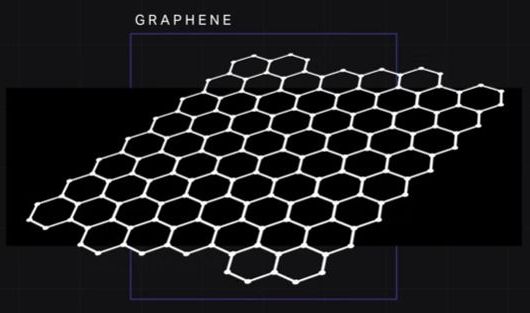
In 1965, a renowned Princeton University physicist theorized that ferroelectric metals could conduct electricity despite not existing in nature.

For decades, scientists thought it would be impossible to prove the theory by Philip W. Anderson, who shared the 1977 Nobel Prize in physics. It was like trying to blend fire and water, but a Rutgers-led international team of scientists has verified the theory and their findings are published online in Nature Communications.

“It’s exciting,” said Jak Chakhalian, a team leader of the study and Professor Claud Lovelace Endowed Chair in Experimental Physics at Rutgers University-New Brunswick. “We created a new class of two-dimensional artificial materials with ferroelectric-like properties at room temperature that don’t exist in nature yet can conduct electricity. It’s an important link between a theory and an experiment.”

MIT fed an AI data from Reddit, and now it thinks of nothing but murder

The point of the experiment was to show how easy it is to bias any artificial intelligence if you train it on biased data. The team wisely didn’t speculate about whether exposure to graphic content changes the way a human thinks. They’ve done other experiments in the same vein, too, using AI to write horror stories, create terrifying images, judge moral decisions, and even induce empathy. This kind of research is important. We should be asking the same questions of artificial intelligence as we do of any other technology because it is far too easy for unintended consequences to hurt the people the system wasn’t designed to see. Naturally, this is the basis of sci-fi: imagining possible futures and showing what could lead us there. Issac Asimov gave wrote the “Three Laws of Robotics” because he wanted to imagine what might happen if they were contravened.

Even though artificial intelligence isn’t a new field, we’re a long, long way from producing something that, as Gideon Lewis-Kraus wrote in The New York Times Magazine, can “demonstrate a facility with the implicit, the interpretive.” But it still hasn’t undergone the kind of reckoning that causes a discipline to grow up. Physics, you recall, gave us the atom bomb, and every person who becomes a physicist knows they might be called on to help create something that could fundamentally alter the world. Computer scientists are beginning to realize this, too. At Google this year, 5,000 employees protested and a host of employees resigned from the company because of its involvement with Project Maven, a Pentagon initiative that uses machine learning to improve the accuracy of drone strikes.

Norman is just a thought experiment, but the questions it raises about machine learning algorithms making judgments and decisions based on biased data are urgent and necessary. Those systems, for example, are already used in credit underwriting, deciding whether or not loans are worth guaranteeing. What if an algorithm decides you shouldn’t buy a house or a car? To whom do you appeal? What if you’re not white and a piece of software predicts you’ll commit a crime because of that? There are many, many open questions. Norman’s role is to help us figure out their answers.

/* */