New research helps make existing tech actually become feasible.
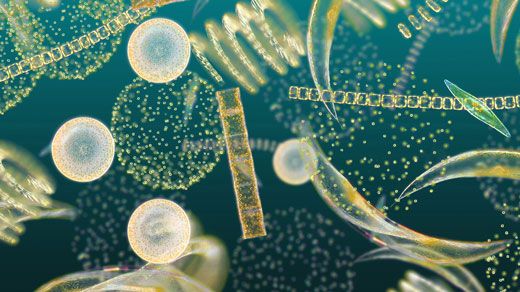
‘’But they noticed an unrealistic defect in the calculations that had traditionally been used in models to validate the KTW idea: They “described populations as if individuals did not exist. It’s as if we described a liquid without acknowledging atoms,” Goldenfeld explained by email.’’
Modelers find evidence that a combination of competition, predation and evolution will push ecosystems toward species diversity anywhere in the universe.

The concept of teleportation comes primarily from science fiction literature throughout human history, but things are changing. It’s 2015 and developments in quantum theory and general relativity physics have been successful in exploring the concept of teleportation for quite some time now.
Today, numerous teleportation breakthroughs have been made. One example is the work of Professor Rainer Blatt, at the University of Innsbruck. They were successfully able to perform teleportation on atoms for the first time, their work was published in the journal Nature. They were able to transfer key properties of one particle to another without using any physical link. In this case, teleportation occurred in the form of transferring quantum states between two atoms, these include the atom’s energy, motion, magnetic field and other physical properties. This is possible due to the strange behavior that exists at the atomic scale, known as entanglement. It’s what Einstein referred to as a “spooky action.”
Another study was published by a team of University of Queensland physicists in the journal Nature in 2013 demonstrating the successful teleportation with solid state systems. A process by which, again, quantum information can be transmitted from one place to another without sending a physical carrier of information. This is the same concept, and is made possible through the phenomenon of entanglement.
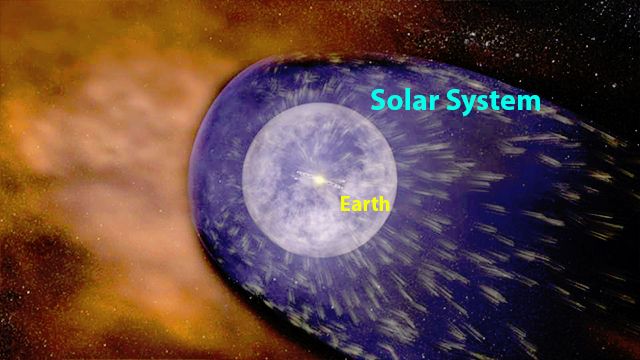
Nearly 100 times farther from the Sun than the Earth is, there’s a point where the charged particles from the Sun no longer reach into the uncharged particles of interstellar space, or the pockets of space that exist between the various star systems of the universe.
This point, known as a heliopause, marks the very edge of the solar system where human beings themselves live.
The heliopause border around the solar system was first “discovered” by scientists using NASA’s Voyager 1 and 2 spacecraft as far back as 30 years ago. But recently, a newer NASA spacecraft, the New Horizons space probe, has found actual evidence of that point in space.
A startup based in Maryland has released and tested an impressive new quantum computer that demonstrates the power of an occasionally overlooked quantum computing architecture.
Companies like IBM, Google, and Rigetti are developing new kinds of computer processors that rely on the mathematics of subatomic particles to potentially perform calculations difficult for classical computers to do. These devices use superconductors as the basis for their qubits. A company called IonQ, however, has now announced a state-of-the-art system that relies on the quantum nature of atoms themselves, and it’s one of the best-performing quantum computers yet.
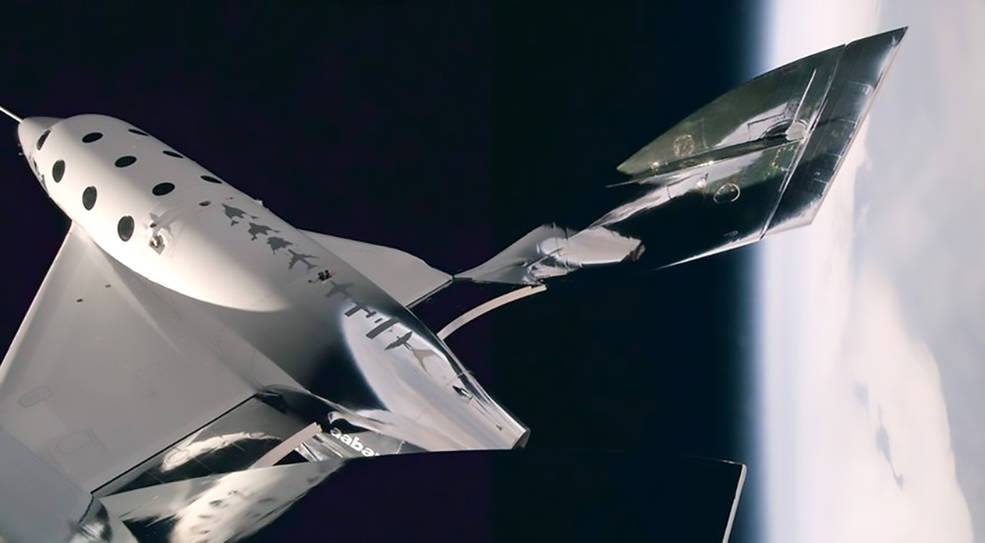
Payloads on the flight will collect valuable data to improve technologies for future exploration missions. This flight will be specifically be used to study how dust disperses in microgravity. Understanding dust dynamics can help abate the damage that is caused by particles contaminating hardware and habitats. Swoop in: https://go.nasa.gov/2Gr79YT
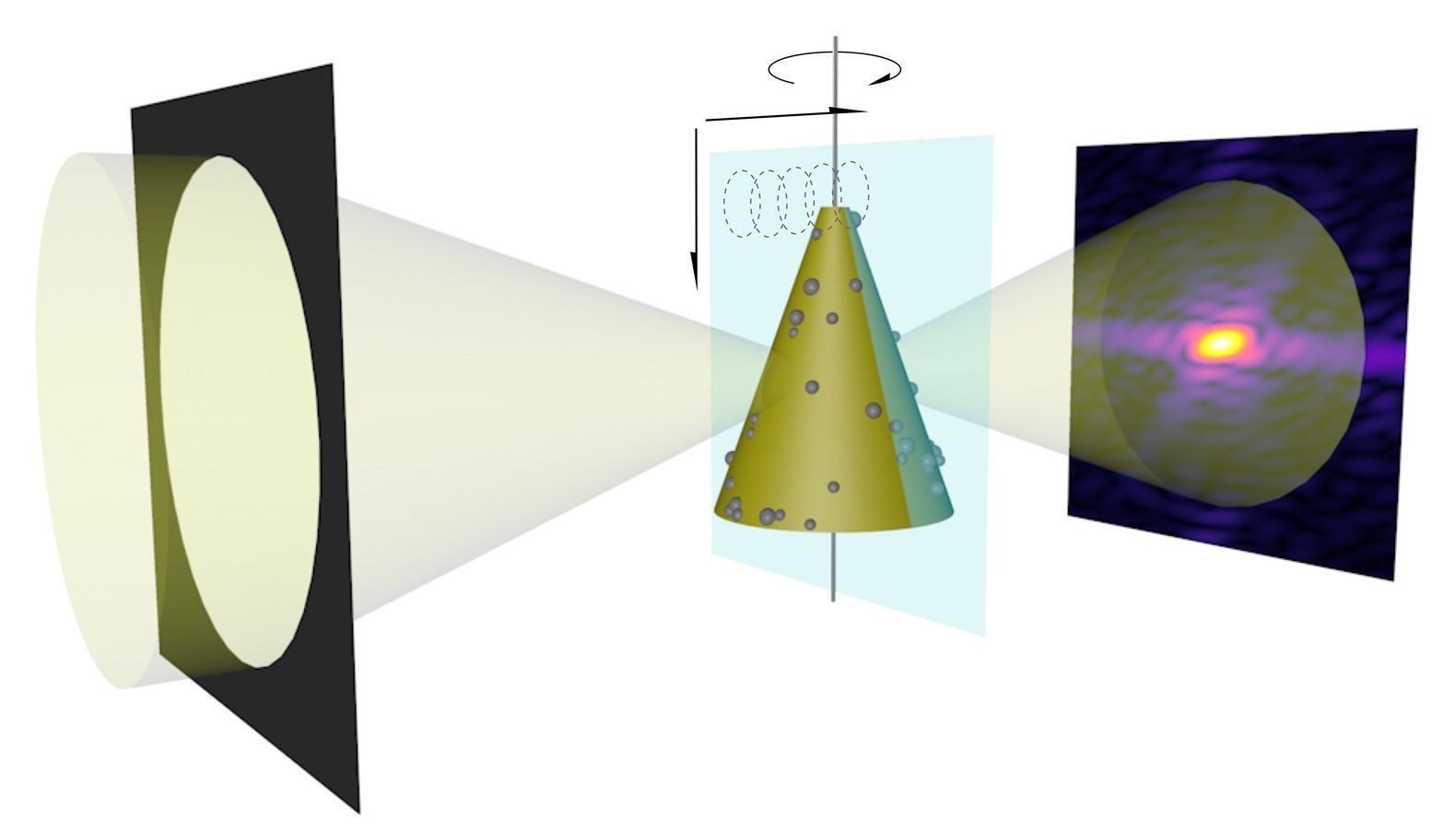
A longstanding problem in optics holds that an improved resolution in imaging is offset by a loss in the depth of focus. Now, scientists are joining computation with X-ray imaging as they develop a new and exciting technique to bypass this limitation.
The upcoming Advanced Photon Source Upgrade (APS-U) project at Argonne will put this problem under one of the brightest spotlights imaginable. The upgrade will make the APS, a Department of Energy Office of Science User Facility, 500 times brighter than it is today, further enhancing the capabilities of its X-rays to study the arrangements of atoms and molecules in a wide range of biological and technological materials.
“A whole variety of X-ray imaging experiments ultimately will need something like this as they all push the resolution to finer length scales in the future,” said Chris Jacobsen, an Argonne Distinguished Fellow and professor of physics at Northwestern University. With the Upgrade in place, the APS’s X-rays could allow scientists to study systems like the brain’s full network of synaptic connections, or the entire volume of an integrated circuit down to its finest details.

by Eloisa Marchesoni
Today, I will talk about the recent creation of really intelligent machines, able to solve difficult problems, to recreate the creativity and versatility of the human mind, machines not only able to excel in a single activity but to abstract general information and find solutions that are unthinkable for us. I will not talk about blockchain, but about another revolution (less economic and more mathematical), which is all about computing: quantum computers.
Quantum computing is not really new, as we have been talking about it for a couple of decades already, but we are just now witnessing the transition from theory to realization of such technology. Quantum computers were first theorized at the beginning of the 1980s, but only in the last few years, thanks to the commitment of companies like Google and IBM, a strong impulse has been pushing the development of these machines. The quantum computer is able to use quantum particles (imagine them to be like electrons or photons) to process information. The particles act as positive or negative (i., the 0 and the 1 that we are used to see in traditional computer science) alternatively or at the same time, thus generating quantum information bits called “qubits”, which can have value either 0 or 1 or a quantum superposition of 0 and 1.
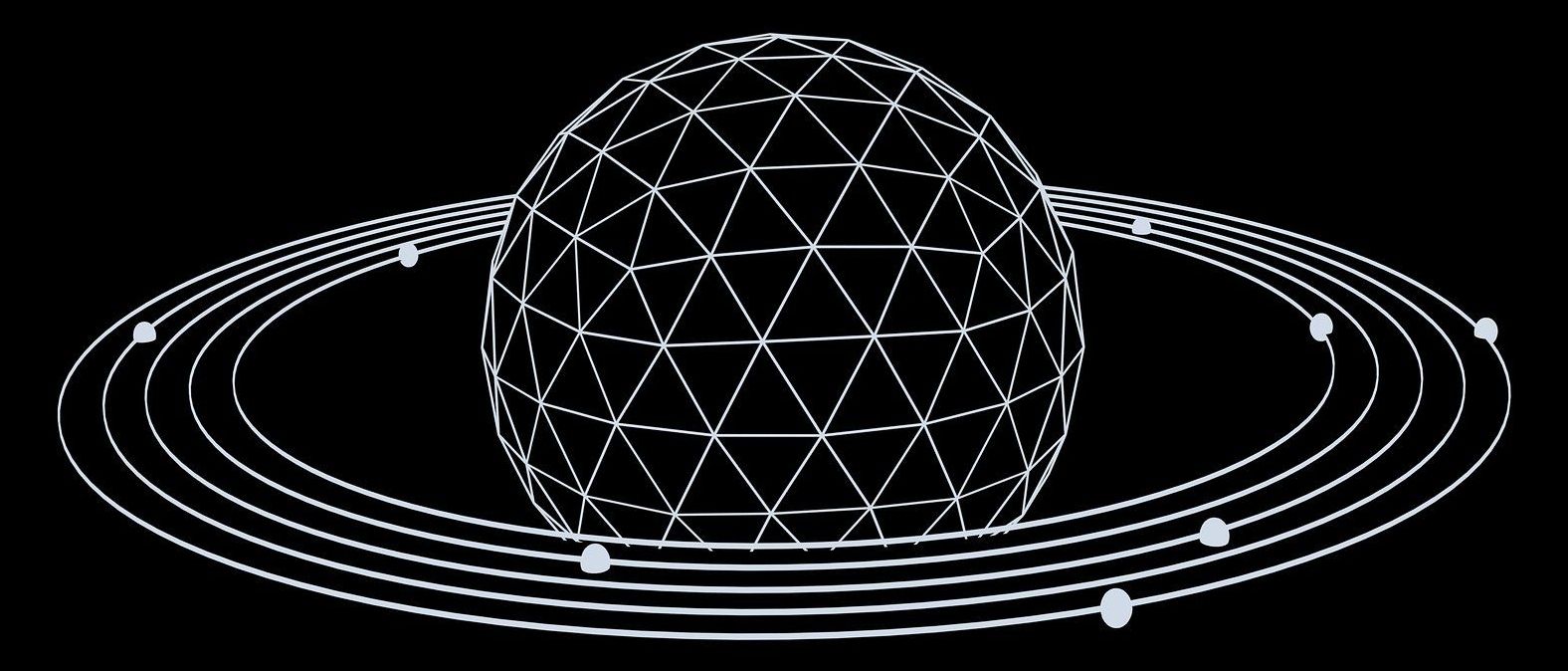
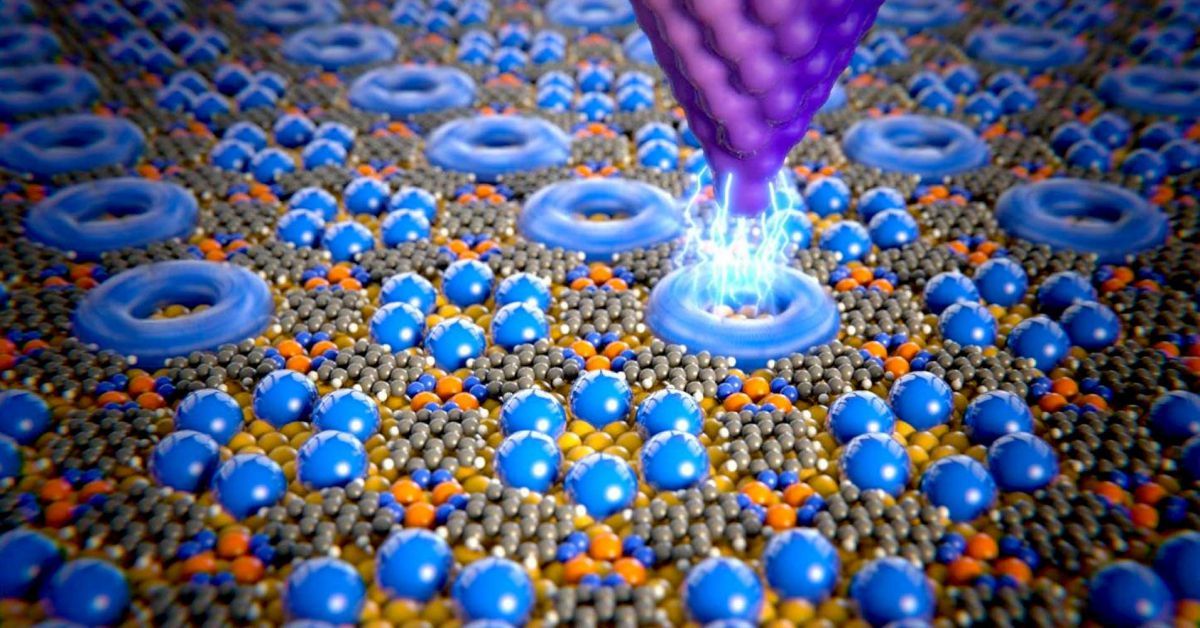
How atoms arrange themselves at the smallest scale was thought to follow a ‘drum-skin’ rule, but mathematicians have now found a simpler solution.
Atomic arrangements in different materials can provide a lot of information about the properties of materials, and what the potential is for altering what they can be used for.
However, where two materials touch – at their interface – complex interactions arise that make predicting the arrangement of atoms difficult.
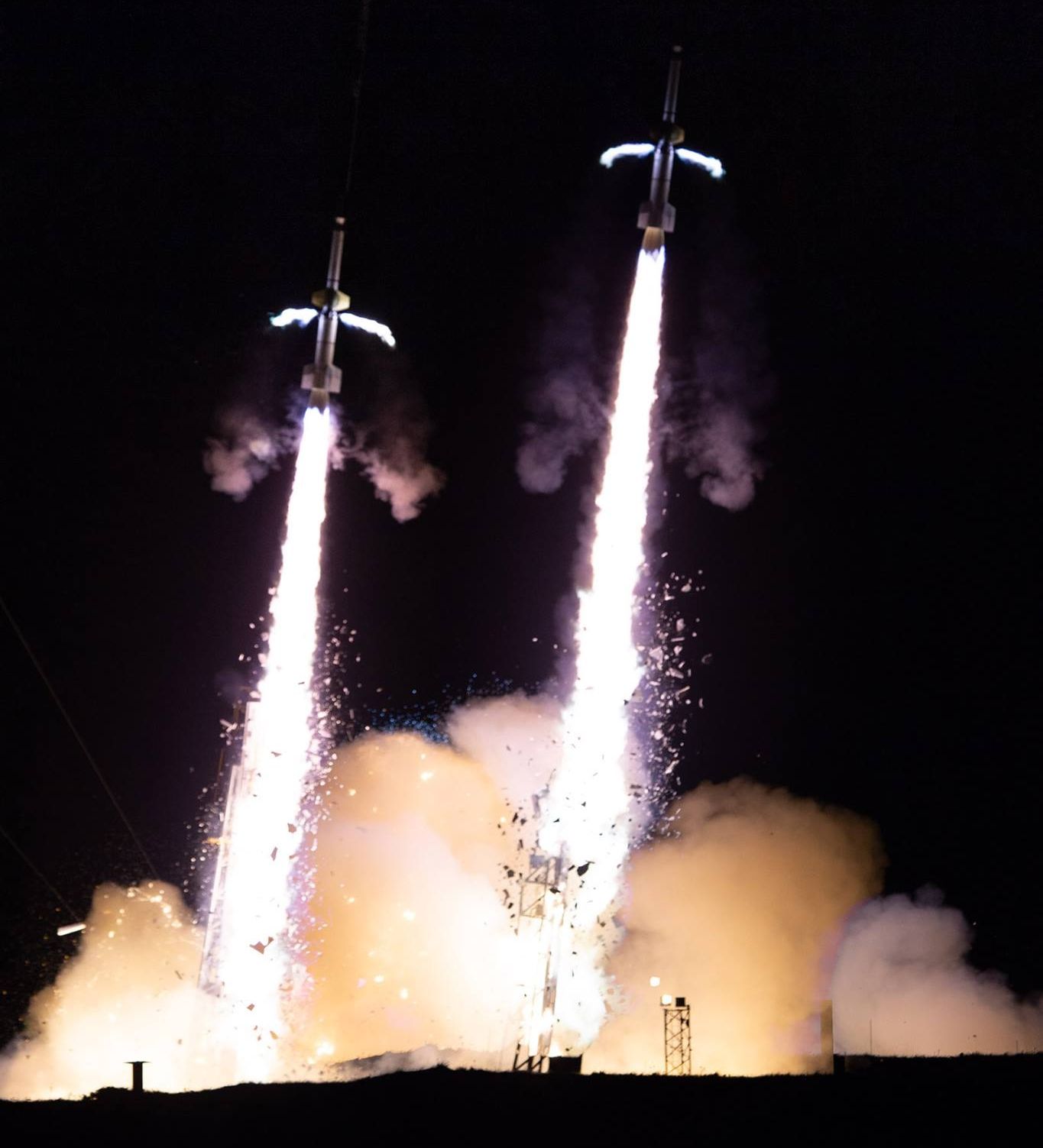
The results promise to shed light on this and, in the long run, help us better predict how and when Earth’s magnetic shield can suddenly become porous to let outside particles in. Details: https://go.nasa.gov/2G8lTeX&h=AT0CScAabrNYUB0DKGANhglZ-EihhF…51Yf7jUjKw
