‘Revolutionary breakthrough’ could allow for smartphone-free Google searches


From health monitors and smartwatches to foldable phones and portable solar panels, demand for flexible electronics is growing rapidly. But the durability of those devices—their ability to stand up to thousands of folds, flexes and rolls—is a significant concern.
New research by engineers from Brown University has revealed surprising details about how cracks form in multilayer flexible electronic devices. The team shows that small cracks in a device’s fragile electrode layer can drive deeper, more destructive cracks into the tougher polymer substrate layer on which the electrodes sit. The work overturns a long-held assumption that polymer substrates usually resist cracking.
“The substrate in flexible electronic devices is a bit like the foundation in your house,” said Nitin Padture, a professor of engineering at Brown and corresponding author of the study published in npj Flexible Electronics. “If it’s cracked, it compromises the mechanical integrity of the entire device. This is the first clear evidence of cracking in a device substrate caused by a brittle film on top of it.”
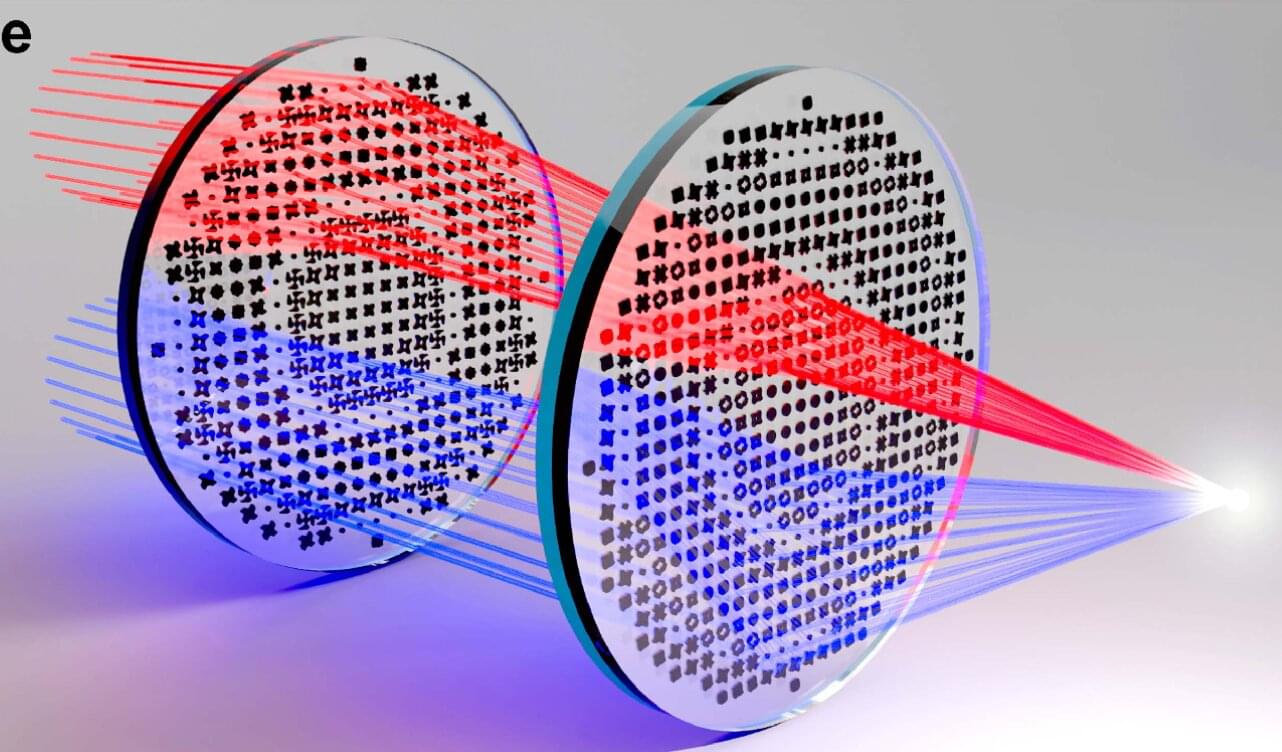
A new approach to manufacturing multicolor lenses could inspire a new generation of tiny, cheap, and powerful optics for portable devices such as phones and drones.
The design uses layers of metamaterials to simultaneously focus a range of wavelengths from an unpolarized source and over a large diameter, overcoming a major limitation of metalenses, said the first author of the paper reporting the design, Joshua Jordaan, from the Research School of Physics at the Australian National University and the ARC Center of Excellence for Transformative Meta-Optical Systems (TMOS).
“Our design has a lot of nice features that make it applicable to practical devices.”
Imagine a clock that doesn’t have electricity, but its hands and gears spin on their own for all eternity. In a new study, physicists at the University of Colorado Boulder have used liquid crystals, the same materials that are in your phone display, to create such a clock—or, at least, as close as humans can get to that idea. The team’s advancement is a new example of a “time crystal.” That’s the name for a curious phase of matter in which the pieces, such as atoms or other particles, exist in constant motion.
The researchers aren’t the first to make a time crystal, but their creation is the first that humans can actually see, which could open a host of technological applications.
“They can be observed directly under a microscope and even, under special conditions, by the naked eye,” said Hanqing Zhao, lead author of the study and a graduate student in the Department of Physics at CU Boulder.

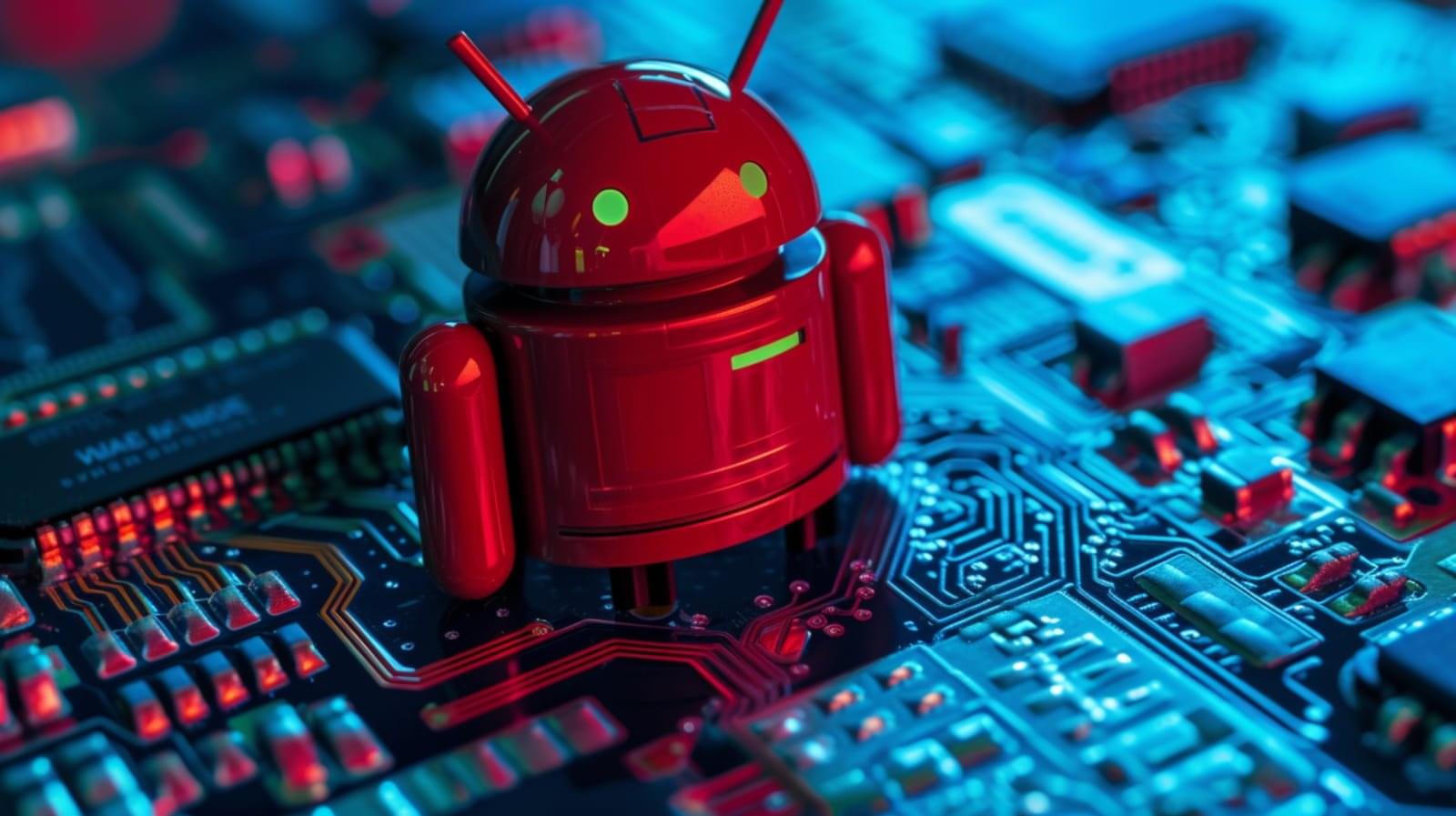
Google has released the September 2025 security update for Android devices, addressing a total of 84 vulnerabilities, including two actively exploited flaws.
The two flaws that were detected as exploited in zero-day attacks are CVE-2025–38352, an elevation of privilege in the Android kernel, and CVE-2025–48543, also an elevation of privilege problem in the Android Runtime component.
Google noted in its bulletin that there are indications that those two flaws may be under limited, targeted exploitation, without sharing any more details.


The nostalgic “glow-in-the-dark” stars that twinkle on the ceilings of childhood bedrooms operate on a phenomenon called phosphorescence. Here, a material absorbs energy and later releases it in the form of light. However, recent demand for softer, phosphorescent materials has presented researchers with a unique challenge, as producing organic liquids with efficient phosphorescence at room temperature is considered difficult.
Now, researchers at the University of Osaka have attempted to tackle this problem by producing an organic liquid that phosphoresces in the ambient environment. This discovery is published in Chemical Science.
Traditional materials that can phosphoresce at room temperature contain heavy metal atoms. These phosphors are used to create the colored electronic displays we utilize every day, such as those in our smartphones. Organic materials, which contain carbon and hydrogen atoms (similar to materials found in nature), are more environmentally friendly.


Creativity is the ability to generate original, useful, and meaningful ideas or solutions by combining imagination with knowledge and experience. It involves flexible, divergent thinking and seeing connections that others might overlook.
Artistic creativity refers to expressing ideas, emotions, or concepts through mediums such as painting, music, writing, or performance, emphasizing aesthetic and emotional impact.
Scientific creativity, on the other hand, involves problem-solving, hypothesis generation, and innovative experimentation that can advance knowledge or technology.
The Different Relationships Between Mobile Phone Dependence and Adolescents’ Scientific and Artistic Creativity: Self-Esteem and Creative Identity as Mediators.
Creativity is an essential skill that is at the heart of 21st-century education. Mobile phone use occupies considerable amounts of time in people’s lives and may influence creativity. However, few studies have linked mobile phone dependence (MPD) to adolescents’ domain-specific creativity (science and art). This study investigated the relationship between MPD and the scientific and artistic creativity of 2,922 adolescents (10–15 years old) by using the Test of Mobile Phone Dependence, the Middle School Students’ Everyday Creativity Questionnaire, the Rosenberg Self-Esteem Scale, and the Short Scale of Creative Self, all self-reported measures. Specifically, linear regression analysis and segmented regression analysis were conducted to explore the relationships between MPD and scientific and artistic creativity.