Toggle light / dark theme

Microscopy breakthrough paves the way for atomically precise manufacturing

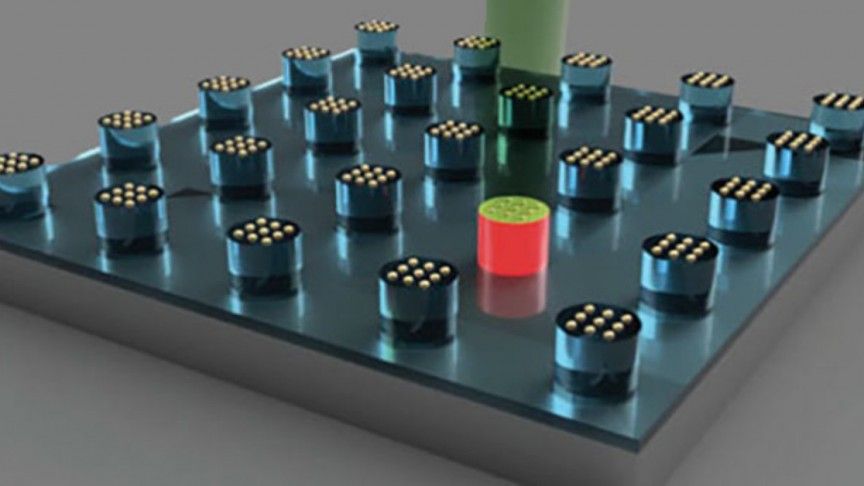
A University of Texas at Dallas graduate student, his advisor and industry collaborators believe they have addressed a long-standing problem troubling scientists and engineers for more than 35 years: How to prevent the tip of a scanning tunneling microscope from crashing into the surface of a material during imaging or lithography. Details of the group’s solution appeared in the January issue of the journal Review of Scientific Instruments, which is published by the American Institute of Physics. Scanning tunneling microscopes (STMs) operate in an ultra-high vacuum, bringing a fine-tipped p…

SpaceX’s Falcon Heavy Launch Was a Smashing Success—What’s Next for Space Travel?

Moreover, the launch accomplished SpaceX’s overarching goal of making access to space travel affordable, with a price tag of $90 million per launch, compared to roughly $500 million for the second most powerful rocket, the United Launch Alliance’s Delta IV Heavy. Now that the Falcon Heavy ’ s abilities have been demonstrated, it can be used to send satellites, payloads, and potentially tourists into space.

Days since the historic launch, this surreal image of a Tesla Roadster and Starman cruising away from Earth has become a symbol and foreshadowing of humanity’s exciting future as a space-faring species. After all, SpaceX’s massive transformative purpose is not simply to make space travel affordable, but rather to allows humans to become a multi-planetary species. Ultimately, Tuesday’s launch left many speechless because it brought us closer to accomplishing this aspirational goal.

Given the hefty cost of space exploration, it’s natural to wonder why we should explore space. Sure, space exploration and travel can also expand our technological abilities as a nation or even as a species. There have been many inventions that would not have occurred without space travel. But that’s not the real reason we explore space.

Activating a single gene is sufficient to change skin cells into stem cells

In a scientific first, researchers have turned skin cells from mice into stem cells by activating a specific gene in the cells using CRISPR technology. The innovative approach offers a potentially simpler technique to produce the valuable cell type and provides important insights into the cellular r…

/* */