Scientists might have found a cure for allergies.
Category: health – Page 524

Playing a musical instrument could help restore brain health, research suggests
A study by neuroscientists at Toronto-based Baycrest Rotman Research Institute and Stanford University involving playing a musical instrument suggests ways to improve brain rehabilitation methods.
In the study, published in the Journal of Neuroscience on May 24, 2017, the researchers asked young adults to listen to sounds from an unfamiliar musical instrument (a Tibetan singing bowl). Half of the subjects (the experimental group) were then asked to recreate the same sounds and rhythm by striking the bowl; the other half (the control group) were instead asked to recreate the sound by simply pressing a key on a computer keypad.
Zoltan Istvan: How Basic Income Can Work In California
I’m super excited to share a (via NowThis Op-Ed) video of my bipartisan plan to fund a Basic Income, which I call a Federal Land Dividend. This is a main platform issue of my California Libertarian Governor run. This plan can forever end poverty and lack of health care in California and America—and perhaps even end poverty and lack of health care around the world if adopted by foreign governments.
This futurist has a plan to bring basic income to America.
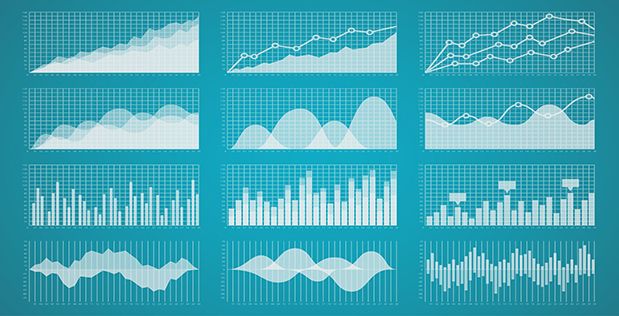
Extracting Insight from the Data Deluge is a Hard-to-Do Must-Do
A mantra of these data-rife times is that within the vast and growing volumes of diverse data types, such as sensor feeds, economic indicators, and scientific and environmental measurements, are dots of significance that can tell important stories, if only those dots could be identified and connected in authentically meaningful ways. Getting good at that exercise of data synthesis and interpretation ought to open new, quicker routes to identifying threats, tracking disease outbreaks, and otherwise answering questions and solving problems that previously were intractable.
Now for a reality check. “Today’s hardware is ill-suited to handle such data challenges, and these challenges are only going to get harder as the amount of data continues to grow exponentially,” said Trung Tran, a program manager in DARPA’s Microsystems Technology Office (MTO). To take on that technology shortfall, MTO last summer unveiled its Hierarchical Identify Verify Exploit (HIVE) program, which has now signed on five performers to carry out HIVE’s mandate: to develop a powerful new data-handling and computing platform specialized for analyzing and interpreting huge amounts of data with unprecedented deftness. “It will be a privilege to work with this innovative team of performers to develop a new category of server processors specifically designed to handle the data workloads of today and tomorrow,” said Tran, who is overseeing HIVE.
The quintet of performers includes a mix of large commercial electronics firms, a national laboratory, a university, and a veteran defense-industry company: Intel Corporation (Santa Clara, California), Qualcomm Intelligent Solutions (San Diego, California), Pacific Northwest National Laboratory (Richland, Washington), Georgia Tech (Atlanta, Georgia), and Northrop Grumman (Falls Church, Virginia).

These 14 billionaires just promised to give away more than half of their money like Bill Gates and Warren Buffett
Started in 2010 by Bill and Melinda Gates, worth $88.5 billion, and Warren Buffett, worth $74.2 billion, the Giving Pledge is a commitment by wealthy individuals and families to give away more than half of their wealth to causes including including poverty alleviation, refugee aid, disaster relief, global health, education, women and girls’ empowerment, medical research, arts and culture, criminal justice reform and environmental sustainability.
Started in 2010, the Giving Pledge now includes 168 wealthy individuals and couples from 21 countries.
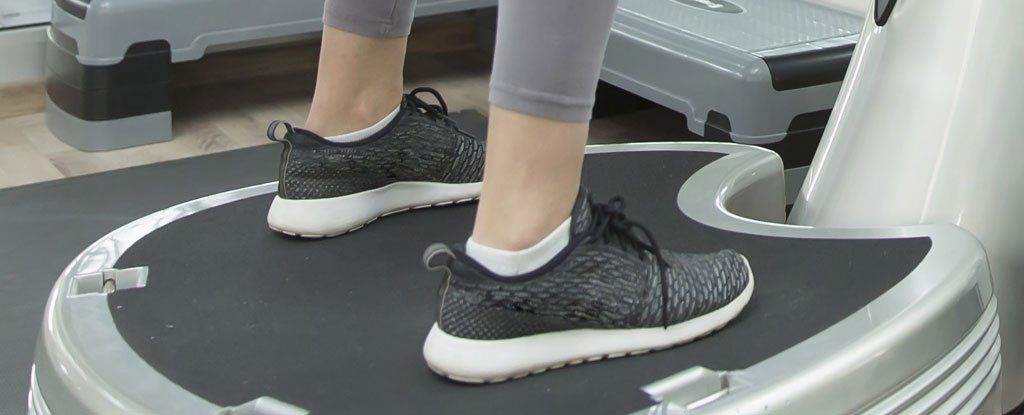
Whole Body Vibration Offers Many of The Benefits of Exercise
Vibration platforms, belts, and accessories have been touted on late-night infomercials for decades as a simple, convenient alternative to actual exercise, but do they really work?
According to a recent study looking at the effects of whole body vibration on mice, yes, they actually do, by mimicking the benefits of exercise on muscle and bone health, and the researchers think the technique could help treat human health conditions too.
“Our study is the first to show that whole body vibration may be just as effective as exercise at combating some of the negative consequences of obesity and diabetes,” says cellular biologist Meghan E. McGee-Lawrence from Augusta University.
The Exercise Pill?
Scientists are working on a pill that could replace exercise.

What is Plant-Based Meat?
A type of food that has been around for centuries, but is primed to be increasingly relevant to the future: Plant-Based “Meat.”
In this video series, the Galactic Public Archives takes bite-sized looks at a variety of terms, technologies, and ideas that are likely to be prominent in the future. Terms are regularly changing and being redefined with the passing of time. With constant breakthroughs and the development of new technology and other resources, we seek to define what these things are and how they will impact our future.

Proxima B: Our closest neighbouring exoplanet could host ‘alien life’ climate models suggest
Exoplanet Proxima B, which was recently discovered orbiting our closest neighbouring star, may have the potential to support life, new climate simulations have revealed.
Ever since it was identified in August 2016, Proxima B, which stands 4.2 light years away from Earth and close to the Proxima Centauri star, has intrigued scientists. The tantalising prospect that the planet could be habitable has led many to undertake in-depth investigations.
Trending: Who is David Nabarro, the UK candidate to lead the World Health Organisation?