Category: futurism – Page 933

Aquas, a flying ship that moves passengers and cargo at speed up to 200 km/h
These kinds of seaplanes will be mainly used for passenger transport but could also improve search and rescue operations at sea, thanks to the advantage of offering versatile loading and unloading. This multi-purpose flying vessel concept was inspired by the new needs and demands of potential operators worldwide.
History, however, shows that – like everything – the ground-effect marine crafts also have their drawbacks. The ship hovering just above the water is not able to tilt too much during the flight (so as not to hit the water), so any change of flight direction must be planned early enough because its execution takes quite a long time.
RDC Aqualines boasts of being a multinational company specializing in the design, development, and future production of a new generation of marine transportation vessels, using mainly ground effect technology. The “flying ship,” as they call it, is offered in various sizes, from a 3-seater to an ekranoplan-like bike, a hydrofoil speedboat, and the ekranoplan-like ferry described above.




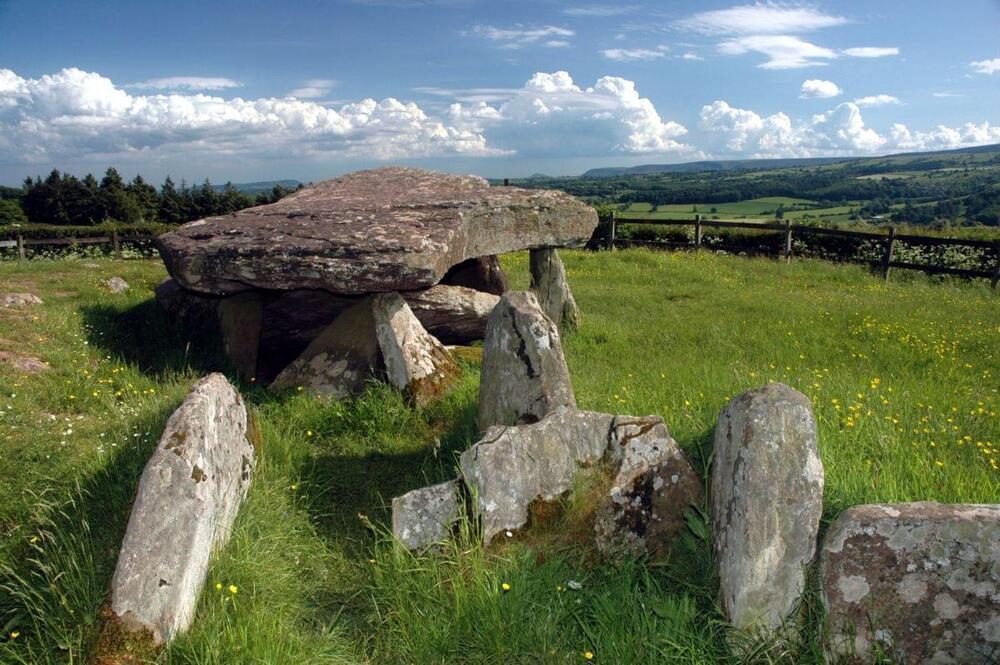
Ancient monument linked to King Arthur is older than Stonehenge, research finds
A mysterious stone tomb in western England — known as Arthur’s Stone because of its links to the mythical King Arthur — originated almost 6,000 years ago as part of an elaborate “ceremonial landscape” across the whole area, according to archaeologists.
Excavations this year near the ancient stone structure in rural Herefordshire, just east of the River Wye between England and Wales, show that the site was first occupied by an earthen mound pointing to another ancient structure nearby; but that a few hundred years later, it was rebuilt and realigned to point to hills much farther south, project leader Julian Thomas, a professor of archaeology at the University of Manchester in the U.K., told Live Science in an email.
“This is a ceremonial landscape like those around Stonehenge or Avebury, but rather earlier,” Thomas said. “It certainly implies that this is a location that was politically or spiritually important at the start of the Neolithic.”