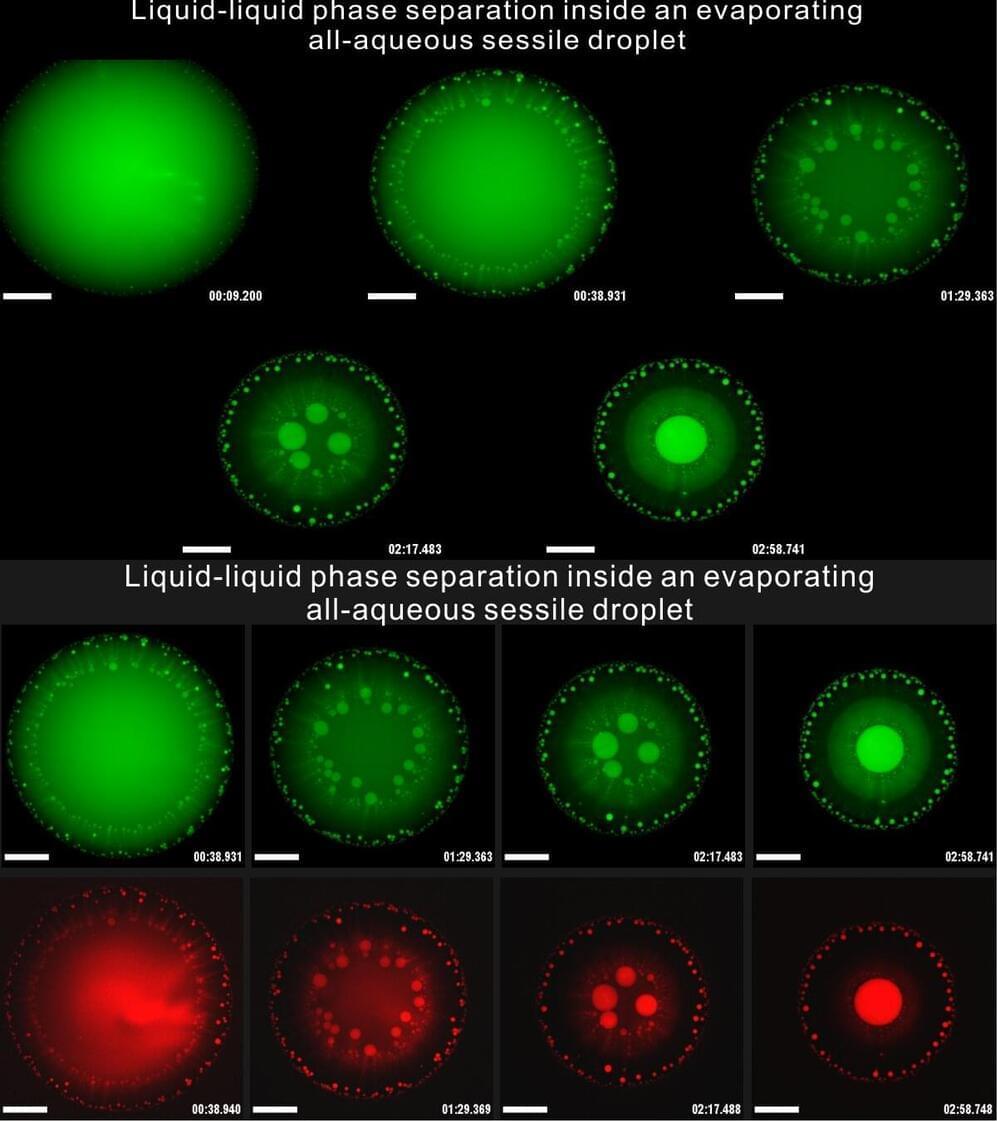
A new study on thin films of glass shows how they can be fabricated to be denser and more stable, providing a framework for new applications and devices through better design.
torre faro by ACPV will connect milan’s historic center and periphery by reviving a north-south axis that runs from the city center through via crema and piazza trento all the way to ACPV’s symbiosis business district, located just across the disused railway yard. ‘the a2a headquarters project creates a new vertical village for the firm’s operations. it is designed for people to enjoy working in the company of their colleagues and to encourage spontaneous professional and personal interactions,’ says antonio citterio, architect and co-founder of ACPV.
the new tower can accommodate 1,500 people in spaces that are flexible, open, and are complemented by a green courtyard shared with the museum of energy – located inside the existing buildings that will be revitalized with the project. vertically, the tower is centrally divided into two sets of office floors framed by the spacious entrance hall on the first floor, the sky garden in the middle, and the belvedere on top. the architecture of the building addresses future professional needs by integrating flexible spaces – including co-working lounges and informal meeting rooms – that can be reconfigured for multiple uses.
Hotel of the future in Singapore.
Staying at a furturistic smart Hotel that has robotsWe take a room tour at their Premium Queen View Cabin and order room service for lunch, dinner and breakfast.
The Nemetschek Group’s Open BIM technologies have played a crucial role in the development of Brisbane’s $3.8 billion-dollar Queen’s Wharf project.
An electric propulsion specialist and a supercar designer have partnered up on an eye-catching three-seat eVTOL, claiming 250-mph (400 km/h) top speeds and extraordinary 300-mile (483-km) range figures, as well as some extreme flight dynamics and some nifty ideas.
Pete Bitar has been working on vertical propulsion systems for decades now. He’s got a DARPA contract to develop his electric jetpack designs, his Verticycle is a competitor in the GoFly personal flight challenge, and he’s just won one of nine NASA “Future-Scaping Our Skies” awards for his work on ground infrastructure and air traffic control for the coming eVTOL age.
Now he’s partnered up with automotive designer Carlos Salaff to start an eVTOL company. Salaff was behind the outrageous Mazda Furai concept, and has in more recent years been showing his own outrageous coach-built creations at events such as Pebble Beach.
We’re heading northwest for the 11th flight of NASA’s Ingenuity Mars Helicopter, which will happen no earlier than Wednesday night, Aug. 4. The mission profile is designed to stay ahead of the rover – supporting its future science goals in the “South Séítah” region, where it will be able to gather aerial imagery in support of future Perseverance Mars rover surface operations in the area.
Here is how we plan to do it: On whatever day the flight takes place, we will start at 12:30 p.m. local Mars time (on Aug. 4, this would be 9:47 p.m. PDT/Aug. 5, 12:47 a.m. EDT). Ingenuity wakes up from its slumber and begins a pre-programmed series of preflight checks. Three minutes later, we’re off – literally – climbing to a height of 39 feet (12 meters), then heading downrange at a speed of 11 mph (5 meters per second).
And while Flight 11 is primarily intended as a transfer flight – moving the helicopter from one place to the other — we’re not letting the opportunity go to waste to take a few images along the way. Ingenuity’s color camera will take multiple photos en route, and then at the end of the flight, near our new airfield, we’ll take two images to make a 3D stereo pair. Flight 11 – from takeoff to landing –- should take about 130 seconds.