Marco Alverà made his remarks during an interview with “Squawk Box Europe”.
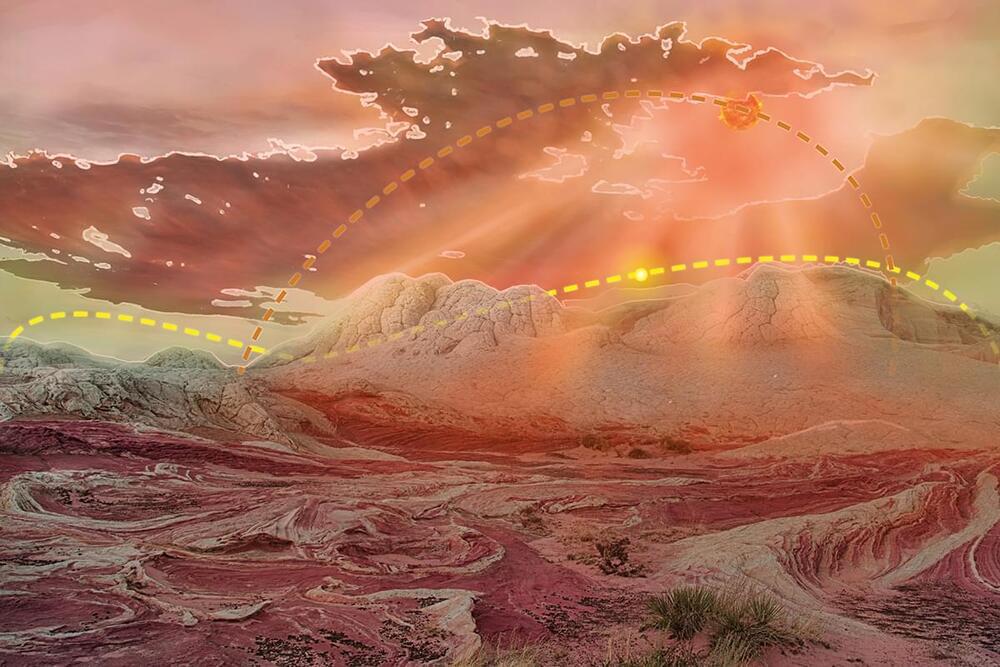
“There’s been a lot of speculation about what charge might do to cloud droplets, but there’s been very little practical and detailed investigation,” says Keri Nicoll, one of the core investigators on the project. The aim is to determine if the technology can increase rainfall rates in water-stressed regions.
Nicoll’s team started by modelling the behavior of clouds. They found that when cloud droplets have a positive or negative electrical charge, the smaller droplets are more likely to merge and grow to become big raindrops.
The size of the raindrops is important, says Nicoll, because in places like the UAE which has high clouds and high temperatures, droplets often evaporate as they fall.
Insulin prices have risen exponentially over the last decade. Learn about the team of volunteer scientists working to make it affordable again.
Intel is matching foundry rival, TSMC, node-for-node with its new process naming convention, but has also fired the first shot in the race for sub-nanometer terminology. Below 1nm, we’re moving into what it’s now calling the ‘angstrom era of semiconductors’.
At the Intel Accelerated event CEO, Pat Gelsinger, has unveiled a detailed process roadmap for its future nodes, all tied into a new way to reference them. “We are accelerating our innovation roadmap to ensure we are on a clear path to process performance leadership by 2025,” he says.
An “unusually large” meteor illuminated the night sky over southern Scandinavia early Sunday morning before at least some of it came rumbling down near Oslo, the capital of Norway.
The meteor “lit up the sky for a brief time as if broad daylight,” just after 1 a.m., Steinar Midtskogen, a spokesperson for the Norwegian Meteor Network, told CNN.
“A minute later or more a loud rumbling sound could be heard over a large area, perhaps up to 100 km (about 62 miles) away from where the meteor was seen straight overhead,” Midtskogen said in an email.
The Pacific basin is thought to contain more than 30 billion tons of so-called polymetallic nodules, rocks that are rich with cobalt, copper, manganese, nickel, rare-earth elements and titanium. Scientists and entrepreneurs have been researching methods of extracting them since the 1960s. In 1994, the International Seabed Authority was established to regulate mining efforts and protect the seabed environment. Any of the group’s 167 member-states can stake claims to mining concessions on the ocean floor and sponsor private companies to explore them. But the ISA has not yet completed, much less approved, any regulations. So far, it’s only handed out permits for exploration.
Despite the potential riches, more time is needed to study the potential impact on the least resilient ecosystem on the planet.