More humans are being born with a third arm artery, an example of microevolution happening right before our eyes.
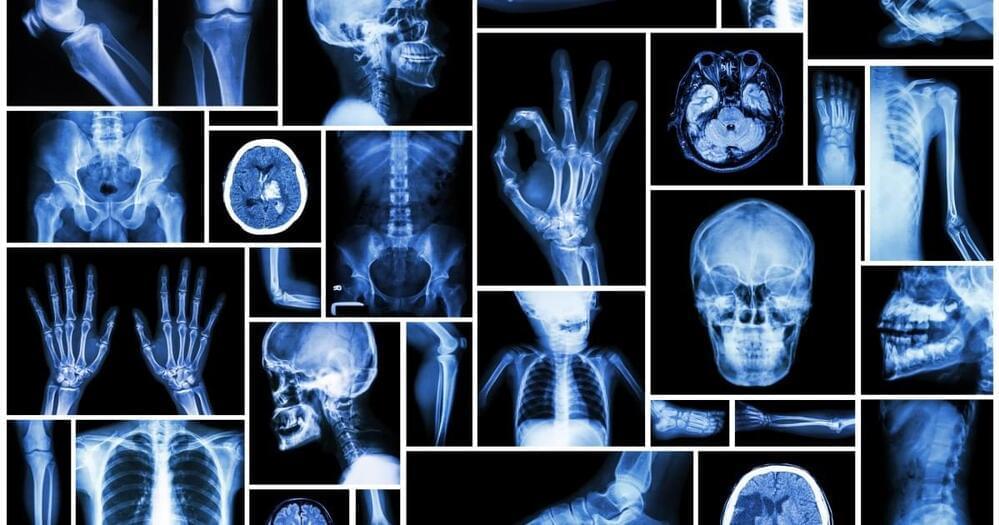
So you thought 2022 was bad, you ain’t seen nothin’ yet! Check out today’s insane new video on why 2023 will be the worst year EVER!
🔔 SUBSCRIBE TO THE INFOGRAPHICS SHOW ►
🔖 MY SOCIAL PAGES
TikTok ► https://www.tiktok.com/@theinfographicsshow.
Discord ► https://discord.gg/theinfoshow.
Facebook ► https://www.facebook.com/TheInfographicsShow.
Twitter ► https://twitter.com/TheInfoShow.
💭 Find more interesting stuff on:
https://www.theinfographicsshow.com.
📝 SOURCES: https://pastebin.com/AF9eYzMu.
All videos are based on publicly available information unless otherwise noted.
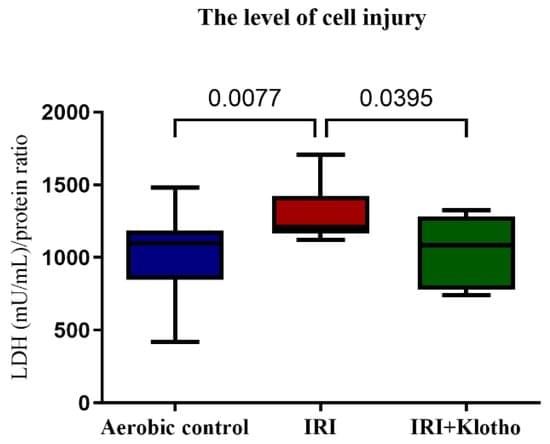
Olejnik, A.; Krzywonos-Zawadzka, A.; Banaszkiewicz, M.; Bil-Lula, I. Int. J. Mol. Sci. 2022, 23, 15450. https://doi.org/10.3390/ijms232415450
AMA Style
Olejnik A, Krzywonos-Zawadzka A, Banaszkiewicz M, Bil-Lula I. International Journal of Molecular Sciences. 2022; 23(24):15450. https://doi.org/10.3390/ijms232415450
Year 1990 😗
The radiation from small amplitude waves on straight strings is calculated. The result is applied to a string with colliding kinks, and the power spectrum and total power obtained. The rate of rounding of the kinks due to gravitational damping is found, which enables one to show that the backreaction causes the average separation between kinks on infinite strings to scale with the horizon in an expanding universe.
David C. Van Essen is the Alumni Endowed Professor in the Anatomy & Neurobiology Department at Washington University in St. Louis. He has pioneered the use of surface-based analysis methods to characterize the structure, function, development, and connectivity of the cerebral cortex. He is Principal Investigator for the NIH Human Connectome Project, a large-scale effort to map brain circuitry and its relationship to behavior in healthy adults. His physiological and anatomical studies have provided deep insights into cortical functional organization. He has served as Editor-in-Chief of the Journal of Neuroscience, President of the Society for Neuroscience, and Head of the Anatomy & Neurobiology Department for 20 years. He is a fellow of the AAAS and received the Raven Lifetime Achievement Award from the St. Louis Academy of Sciences and the Krieg Cortical Discoverer Award from the Cajal Club.
In the spirit of ideas worth spreading, TEDx is a program of local, self-organized events that bring people together to share a TED-like experience. At a TEDx event, TEDTalks video and live speakers combine to spark deep discussion and connection in a small group. These local, self-organized events are branded TEDx, where x = independently organized TED event. The TED Conference provides general guidance for the TEDx program, but individual TEDx events are self-organized.* (*Subject to certain rules and regulations)
On January 18, 2013, Caltech hosted TEDxCaltech: The Brain, a forward-looking celebration of humankind’s quest to understand the brain, by exploring the past, present and future of neuroscience. Visit TEDxCaltech.com for more details.


The sites include ceremonial centers, sporting facilities, roads, and reservoirs.
Vittoria Benzine, December 22, 2022.
