Toggle light / dark theme

Cultured meat is now being mass-produced In Israel

Israeli startup Future Meat Technologies has opened what it says is the first industrial-scale cultured meat production facility — a move designed to finally get lab-grown meat onto consumers’ plates.

“Our goal is to make cultured meat affordable for everyone,” CSO Yaakov Nahmias said in a press release, “while ensuring we produce delicious food that is both healthy and sustainable, helping to secure the future of coming generations.”

Why it matters: Demand for meat is higher than ever before, but the traditional means of producing it — by raising and slaughtering animals — is bad for the environment and arguably unethical.

Coral levels in some parts of the Great Barrier Reef are at the highest in 36 years

The area surveyed represents two-thirds of the Great Barrier Reef.

Almost half of the reefs studied had between 10% and 30% hard coral cover, while about a third of the reefs had hard coral cover levels between 30% and 50%, the report said.

While higher water temperatures led to a coral bleaching event in some areas in March, the temperatures did not climb high enough to kill the coral, the agency said.

MHD Propulsion — What Is It?

What is it? MHD PROPULSION EXPLAINED

Special thanks to all our patrons and volunteers!
Thank you for your support!

Blender.
For all their hard work in making an amazing and.
professional program.

Scientists all over the Globe For providing much scientific data.
and working hard to give all of us a bright and amazing future.

Music:

All songs are from the YouTube audio library.

Unusual Microcrystals Discovered in Meteorite Dust

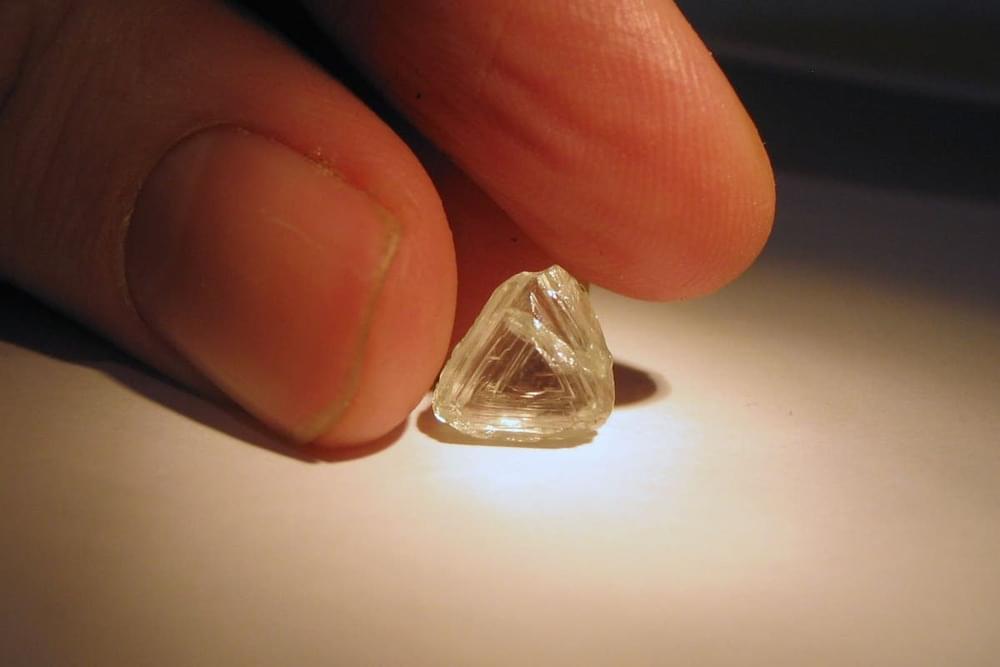
On February 15, 2013, above Chelyabinsk in Russia’s Southern Urals, the biggest meteorite that was ever seen this century entered the Earth’s atmosphere. Unusually, the meteorite’s surface dust survived its impact and is now the subject of in-depth research. Some carbon microcrystals in this dust have odd shapes. A group led by Sergey Taskaev and Vladimir Khovaylo from Chelyabinsk State University in Russia has recently published a paper on the morphology and simulations of the formation of these crystals in the European Physical Journal Plus.

A meteor’s surface develops meteorite dust as it enters the atmosphere and is subjected to very high temperatures and tremendous pressures. The Chelyabinsk meteor was exceptional in terms of its size, the intensity of the air burst it created as it exploded, the size of the biggest pieces that fell to Earth, and the destruction it caused. More importantly, it landed on snowy terrain, and the snow helped keep the dust intact.

Taskaev, Khovaylo, and their team first observed micrometer-sized carbon microcrystals in this dust under a light microscope. They, therefore, examined the same crystals using scanning electron microscopy (SEM) and found that they took up a variety of unusual shapes: closed, quasi-spherical shells and hexagonal rods. Further analysis using Raman spectroscopy and X-ray crystallography showed that the carbon crystals were, actually, exotically-shaped forms of graphite.

Marijuana use is outpacing cigarette use for the first time on record

More people in the U.S. are now smoking marijuana than cigarettes, according to a Gallup poll.

Cigarette use has been trending downward during the past decades, with only 11% of Americans saying they smoke them in a poll conducted July 5 to 26, compared to 45% in the mid-1950s.

Sixteen percent of Americans say they smoke marijuana, with 48% saying they have tried it at some point in their lives. In 1969, only 4% of Americans said they smoked marijuana.

/* */