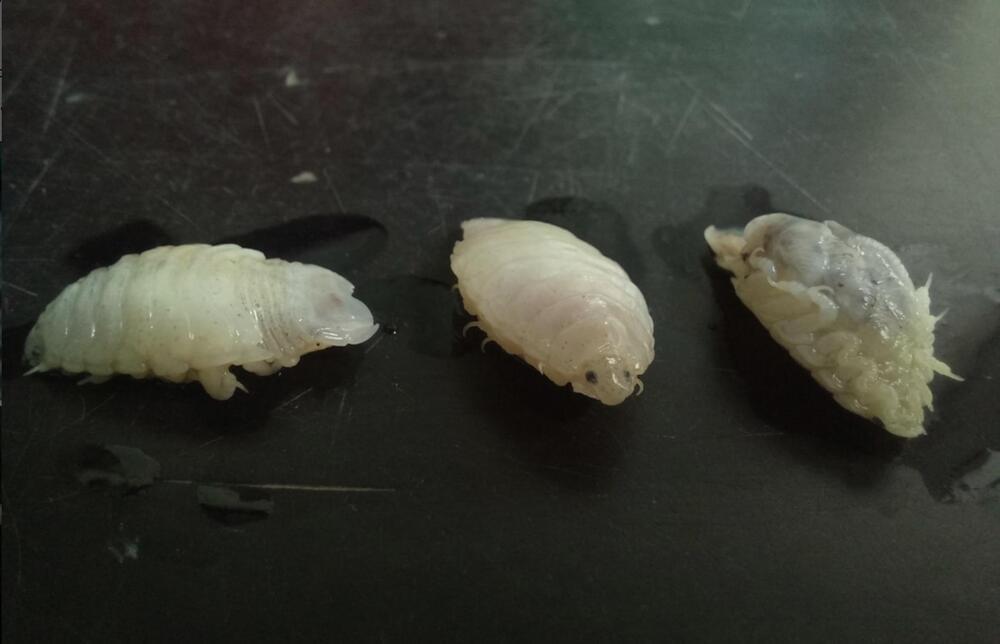
Remember the creatures in the “Alien” universe that feed off your face and burst out of your chest? Learn more about the closest thing we have to them.
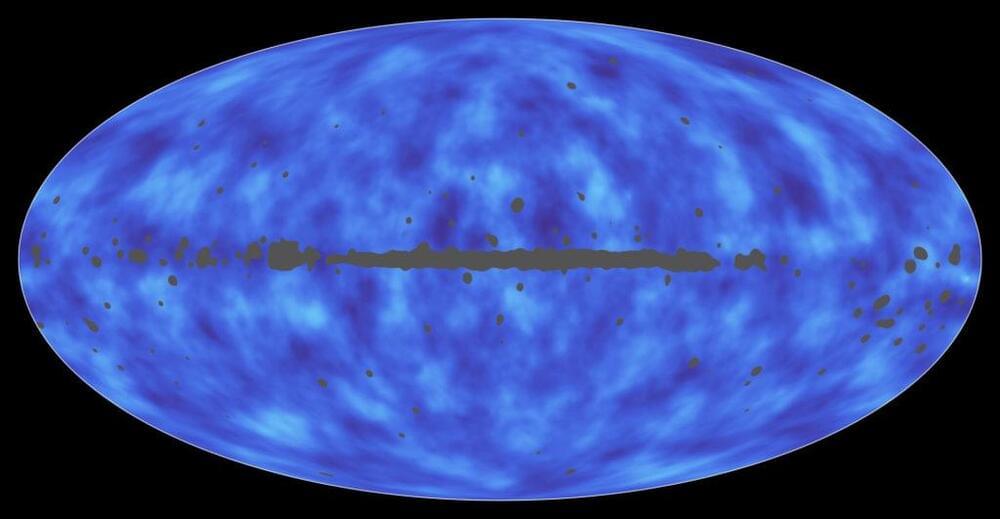
The wave dimension is crucial. Without the time-binding wave of consciousness established by actual entities remembering their past instant(s), experiencing, choosing, and acting in their present instants, and anticipating and then passing their inheritance on to their future instant(s), it would not be possible to begin a sentence and then go on to complete it in a way that has meaning. It would not be possible to interact with ourselves or other people in a way that has meaning. We couldn’t begin, continue, and complete a meal. We would forget where we were and what we were doing. We couldn’t begin, continue, and complete a walk. We would forget where we were and what we were doing. We couldn’t undertake any complex task and remember what we were doing. We certainly couldn’t drive a car or even cross a street.
If we pay attention to our own consciousnesses closely, we find that, as each moment of our experience transpires, we take in sensations from outside in the world and inside in our bodies and then we layer feelings and thoughts and images on top of these sensations to form a moment of experience with some coherence and meaning. And this moment of experience passes its sensations and feelings and thoughts and images on to the next moment of experience with some relative coherence.
Now, with an untrained mind, our sensations and feelings and thoughts and images kind of jump around outside of our control. But with a relatively trained mind, we can focus in a way that allows us to maintain a constant stream of sensations and feelings and thoughts and images and choose what we want to focus that stream on in an expansion of our consciousnesses. That is the gift of mindfulness and meditation. Using Whitehead’s language, we can say that we can work to shift our mental prehensions to embrace a different and more powerful form or idea of what it is to be human.
As crazy or stupid as it may sound to some people there are some dreams and ideas I will never Give up no matter how impossible it may seem now.
One account stated that Clarke’s laws were developed after the editor of his works in French started numbering the author’s assertions. [ 2 ] All three laws appear in Clarke’s essay “Hazards of Prophecy: The Failure of Imagination”, first published in Profiles of the Future (1962); [ 3 ] however, they were not all published at the same time. Clarke’s first law was proposed in the 1962 edition of the essay, as “Clarke’s Law” in Profiles of the Future.
The second law is offered as a simple observation in the same essay but its status as Clarke’s second law was conferred by others. It was initially a derivative of the first law and formally became Clarke’s second law where the author proposed the third law in the 1973 revision of Profiles of the Future, which included an acknowledgement. [ 4 ] It was also here that Clarke wrote about the third law in these words: “As three laws were good enough for Newton, I have modestly decided to stop there”

A geology professor from the University of South Florida discovered a 5600-year-old stone bridge in an ancient cave that proves humans were present on the island of Mallorca much earlier than previously believed.
This discovery will change everything we thought and knew about early human history in the Western Mediterranean.
The question confounded archaeologists for decades. Logically, being so close to the mainland, the first signs of human settlement offshore should be on Mallorca. Instead, smaller islands farther out to sea suggest that humans skipped this island.
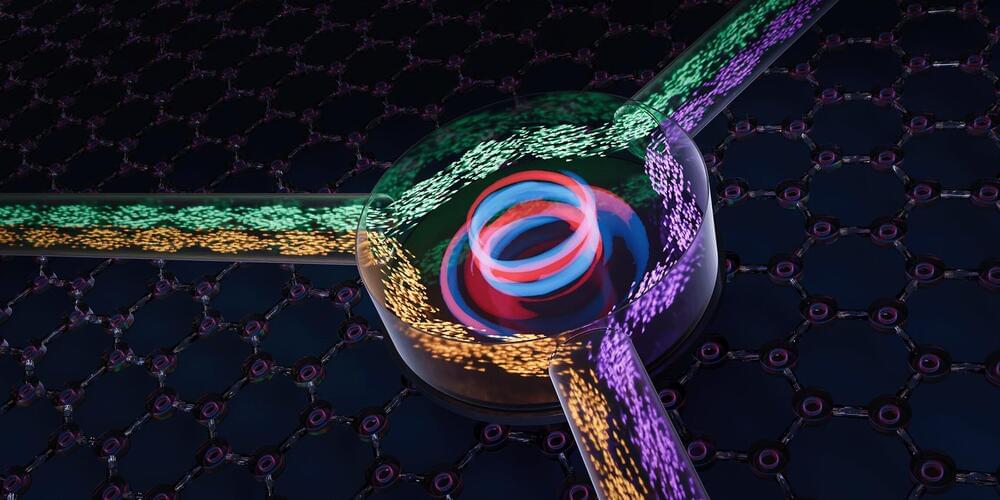
Ten years ago, researchers succeeded in suppressing sound wave propagation in the backward direction; however, this also attenuated the waves traveling forwards.
A team of researchers at ETH Zurich led by Nicolas Noiray, professor for Combustion, Acoustics and Flow Physics, in collaboration with Romain Fleury at EPFL, has now developed a method for preventing sound waves from traveling backward without deteriorating their propagation in the forward direction.
In the future, this method, which has recently been published in Nature Communications, could also be applied to electromagnetic waves.
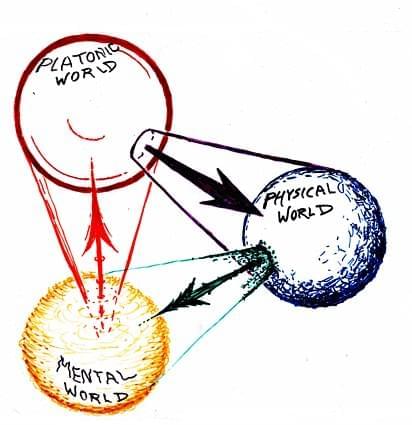
1 or 2? Is Roger Penrose’s theory of three worlds the result of Penrose’s understanding of the physical world? 1. understands it correctly or 2. misunderstands it? — You can find explanations e.g. under the following link:
Es gibt praktische Fragen, die mit unseren konkreten Leben zu tun haben, und theoretische Fragen, die damit scheinbar nichts zu tun haben. Es gibt aber auch theoretische Überlegungen, die durchaus mit unserem praktischen Alltag zu tun haben. Eine davon ist die Drei-Welten-Theorie, die sich damit beschäftigt, in welchen Welten wir konkret leben.
Introducing Tesla Actually Smart Summon, part of the FSD package.
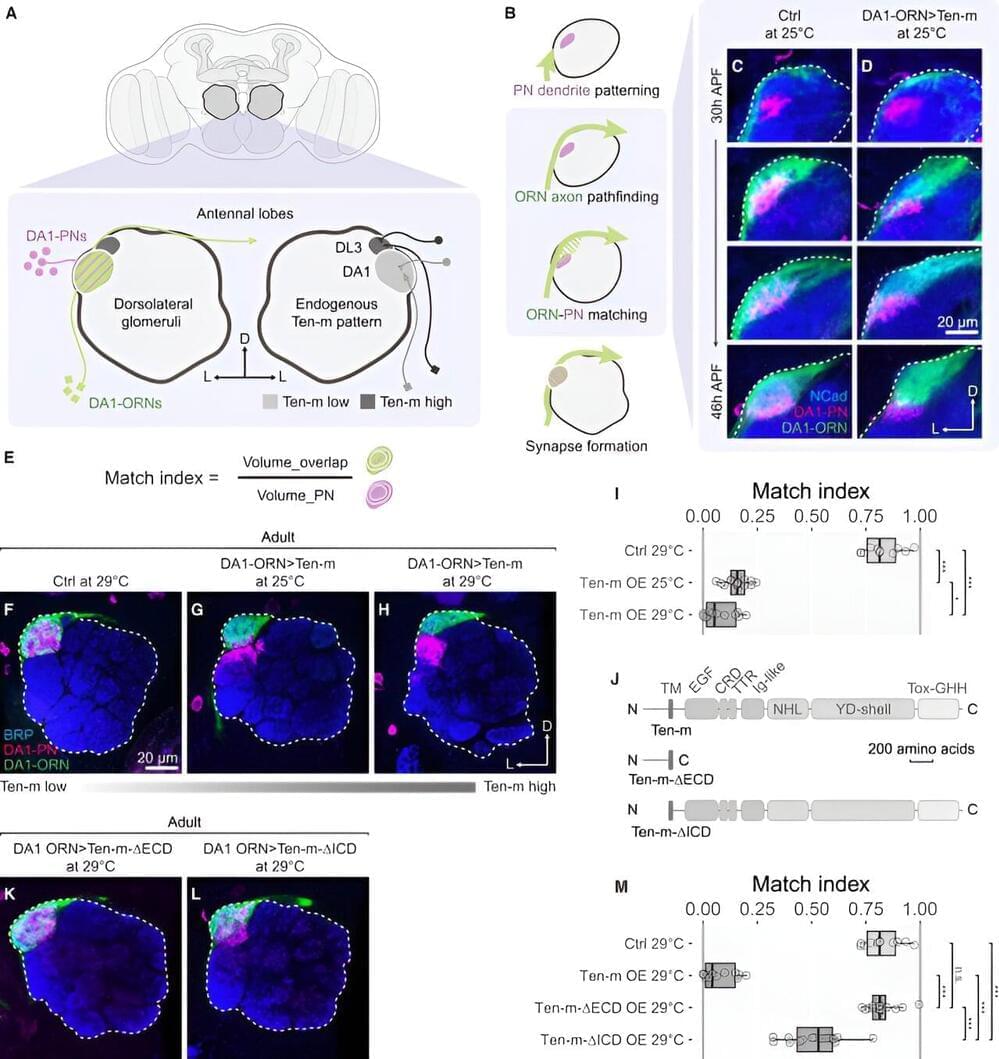
Hundreds of millions of years ago, single cells joined forces to become multicellular organisms. At the foundation of this multicellular world is the cell surface: the plasma membrane surrounding each cell, where individual units meet and communicate with one another using a language made up of molecules and proteins.
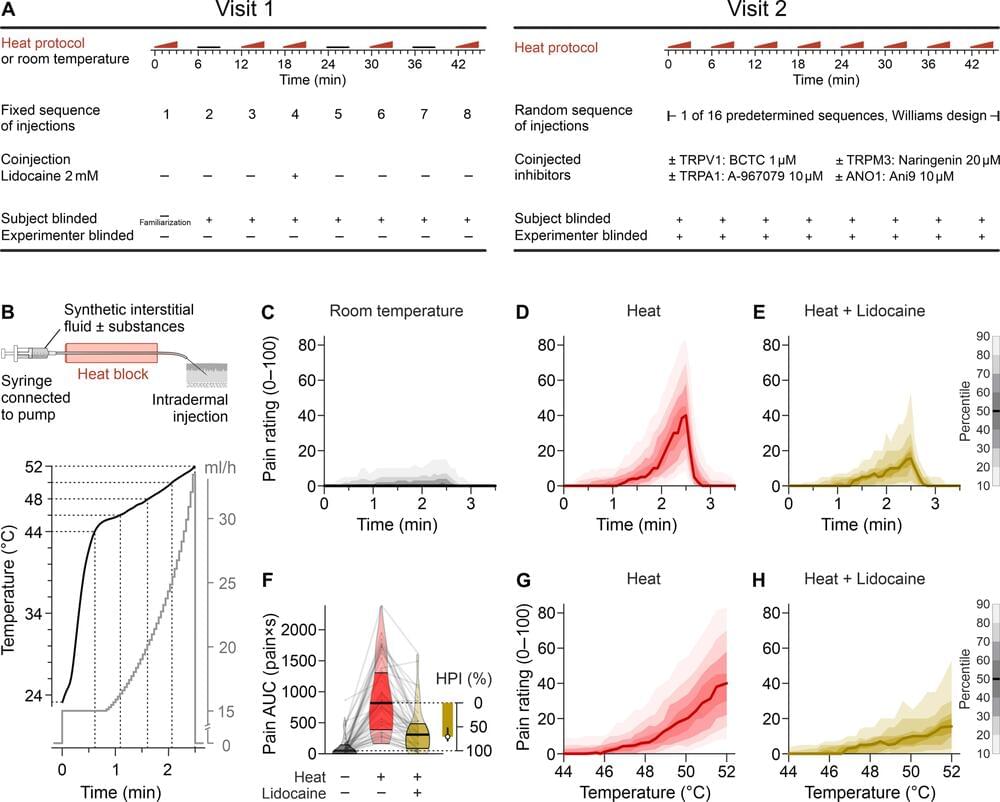
A study by the Medical University of Vienna has made important progress in understanding heat perception in humans. The research team was able to identify a specific cell structure that plays a role in recognizing heat. However, most of the protective recognition of heat in everyday life depends on other, as yet unknown structures.
About the Episode
What if it were possible to generate tissues and cells that replicate the functions of human organs, and then use them to study and treat human conditions?
It’s an area of research Dr. Thomas Hartung has been extensively involved with for decades. As the former head of the European Commission Center, he was in tune with all the ways researchers tried to study diseases through alternative methods. He strongly believes organoids have the intelligence necessary to accelerate research and therapeutic development without the need for animal models.