Join the discussion on this paper page.


Microdrop Technologies is the leading provider of dispensing equipment, software and services for advanced microdispensing and inkjet printing applications.
Our team of scientists, engineers and technicians has more than 30 years of experiences in inkjet-technology and microfluidics. We focus on high quality products and services for Life Science and industrial applications as well as R&D purposes. For the best benefit, we provide our customers a number of services. microdrop is in involved in several R&D projects with industrial partners or by public funding.
Presenting the history of the brachistochrone problem, its role in the discovery and development of the Calculus of Variations and demonstrating how to solve the brachistochrone problem using the method of the Calculus of Variations.
Download notes for THIS video HERE: https://bit.ly/3sKXUGA
Download notes for my other videos: https://bit.ly/37OH9lX
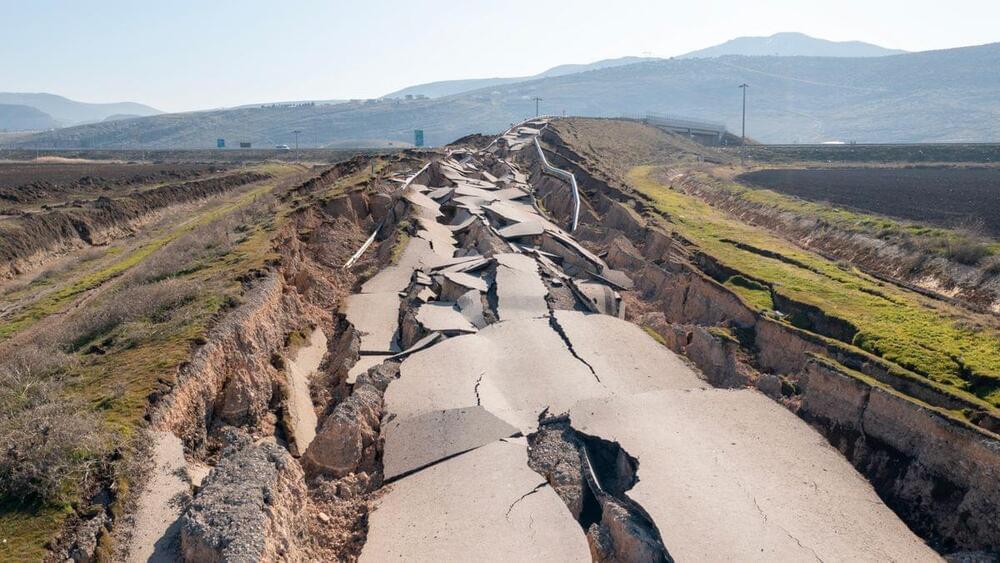
Seismic imaging has revealed two colossal regions deep within Earth’s mantle that could reshape our understanding of the planet’s composition and history. These continent-sized anomalies, known as large low-velocity provinces (LLVPs), lie near the core, beneath Africa and the Pacific Ocean.
LLVPs are notable for their unusual makeup and their ability to slow seismic waves, making them mysterious features of Earth’s interior.
Their origins have long baffled geologists, but a groundbreaking study has introduced a bold hypothesis: these subterranean giants might be remnants of Theia, a lost planet that collided with Earth billions of years ago.

Oregon’s Cascade Range is not just a scenic landscape of volcanic peaks – it also hides a massive underground aquifer filled with water.
Scientists from the University of Oregon and their collaborators have mapped this extensive water storage beneath the central Oregon Cascades and found it to be at least 81 cubic kilometers in size.
This discovery is significant because it reveals a water resource nearly three times the capacity of Lake Mead and more than half the volume of Lake Tahoe, reshaping our understanding of regional water supplies and volcanic processes.

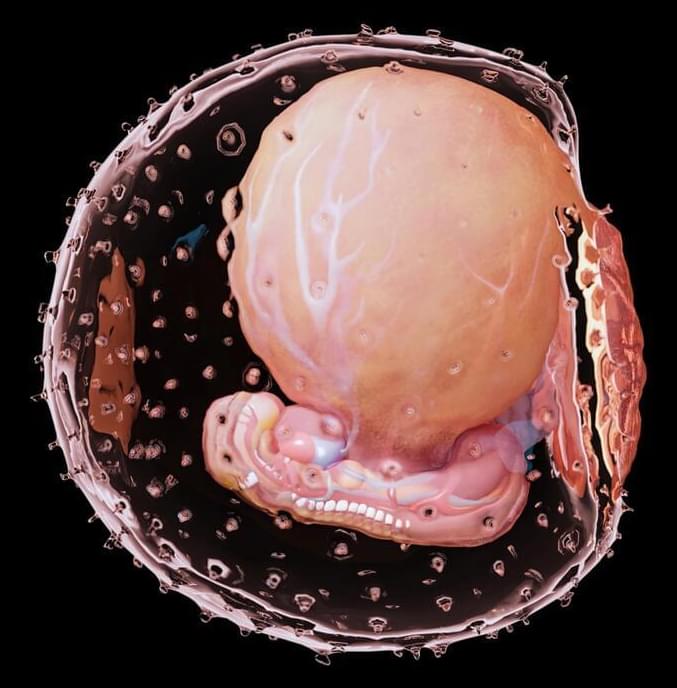
Berzerker hypothesis dark forest all higher forms of life become postbiological and wipe each other out.
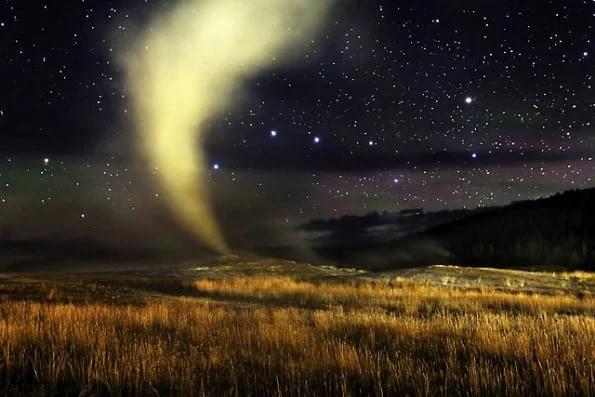
The Big Dipper is an asterism formed by seven bright stars in the constellation Ursa Major, the Great Bear. It is one of the most recognizable star patterns in the night sky. The asterism is well-known in many cultures and goes by many other names, including the Plough, the Great Wagon, Saptarishi, and the Saucepan.
The seven stars that form the Big Dipper are: Alkaid (Eta Ursae Majoris), Mizar (Zeta Ursae Majoris), Alioth (Epsilon Ursae Majoris), Megrez (Delta Ursae Majoris), Phecda (Gamma Ursae Majoris), Dubhe (Alpha Ursae Majoris), and Merak (Beta Ursae Majoris).
In northern latitudes, the Big Dipper is visible throughout the year. It is one of the first star patterns we learn to identify, along with Orion’s Belt, Cassiopeia’s W, and the Northern Cross in Cygnus.