Debasmita Mitra, Georgina K. Goddard, Sanjana S, Aparna K, Tom H. Millard, and Richa Rikhy (IISER Pune) show that Drosophila Missing-in-Metastasis (DMIM) (also called MTSS1) promotes Rac1 mediated branched actin network formation and endocytosis to drive rapid, cyclical plasma membrane remodeling during syncytial divisions in Drosophila embryos. Actin-rich villous protrusions in the apical caps in interphase are depleted in metaphase, concurrent with furrow extension between adjacent nuclei. MIM depletion results in a loss of furrow extension and in longer, more abundant apical protrusions containing the formin diaphanous. Branched actin networks promoted by MIM are in balance with bundled actin networks induced by RhoGEF2 and diaphanous. Cyclical recruitment of MIM to the cortex promotes localization of active Rac, the WAVE regulatory complex, and the Arp2/3 complex to drive endocytic membrane remodeling. These findings identify MIM as an integrator of actin and endocytic dynamics that enables rapid membrane remodeling during Drosophila syncytial division cycles.
Category: futurism – Page 134

The Pygmalion Effect and Actions for the Future
The Pygmalion effect is a psychological phenomenon where high expectations lead to improved performance. It’s named after the Greek myth of Pygmalion, a sculptor who fell in love with a statue he created and begged the gods to bring it to life. The term was coined by social psychologist Robert Rosenthal, who studied the impact of teacher expectations on student performance. The effect suggests that people work harder to meet the expectations of others.#:~:text=Evidence%20of%20the%20Pygmalion%20Effect:%20Rosenthal%20Effect., Harvard%20University%20conducted%20an%20experiment%20on%20the.
“We See What We Expect”

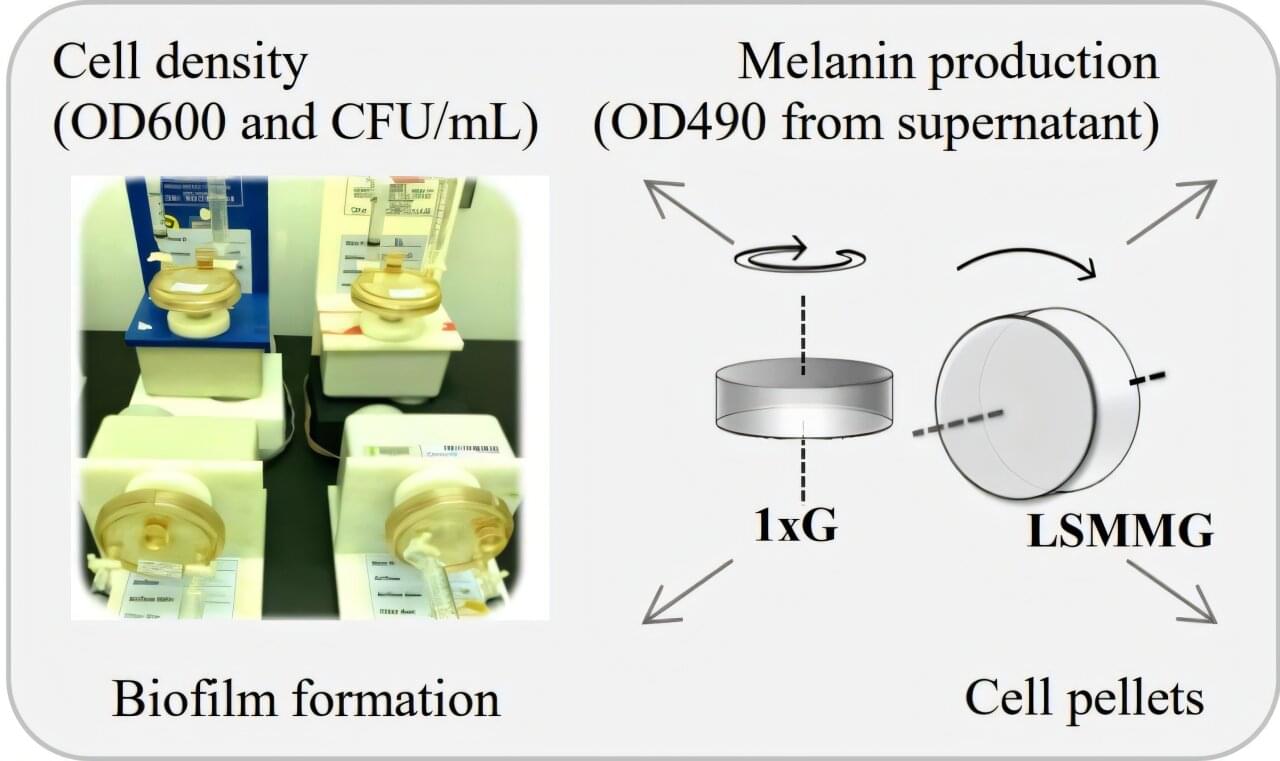
Microgravity rewires microbial metabolism, limiting space-based manufacturing efficiency
Scientists at the U.S. Naval Research Laboratory (NRL) have completed a spaceflight biology investigation aboard the International Space Station (ISS) that reveals how microgravity fundamentally alters microbial metabolism, limiting the efficiency of biological manufacturing processes critical to future long-duration space missions. The findings were recently published in the journal npj Microgravity.
The Melanized Microbes for Multiple Uses in Space Project (MELSP), launched to the space station in November 2023, examined how microgravity affects the ability of engineered microbes to produce melanin, a multifunctional biopolymer known for its radiation-shielding, antioxidant, and thermal stable properties.
Results from the completed mission show that while microbes remain capable of producing melanin in space, microgravity significantly interferes with substrate transport, cellular stress responses, and metabolic balance, ultimately reducing production efficiency.
Sloshing liquefied natural gas in cargo tanks causes higher impact forces than expected
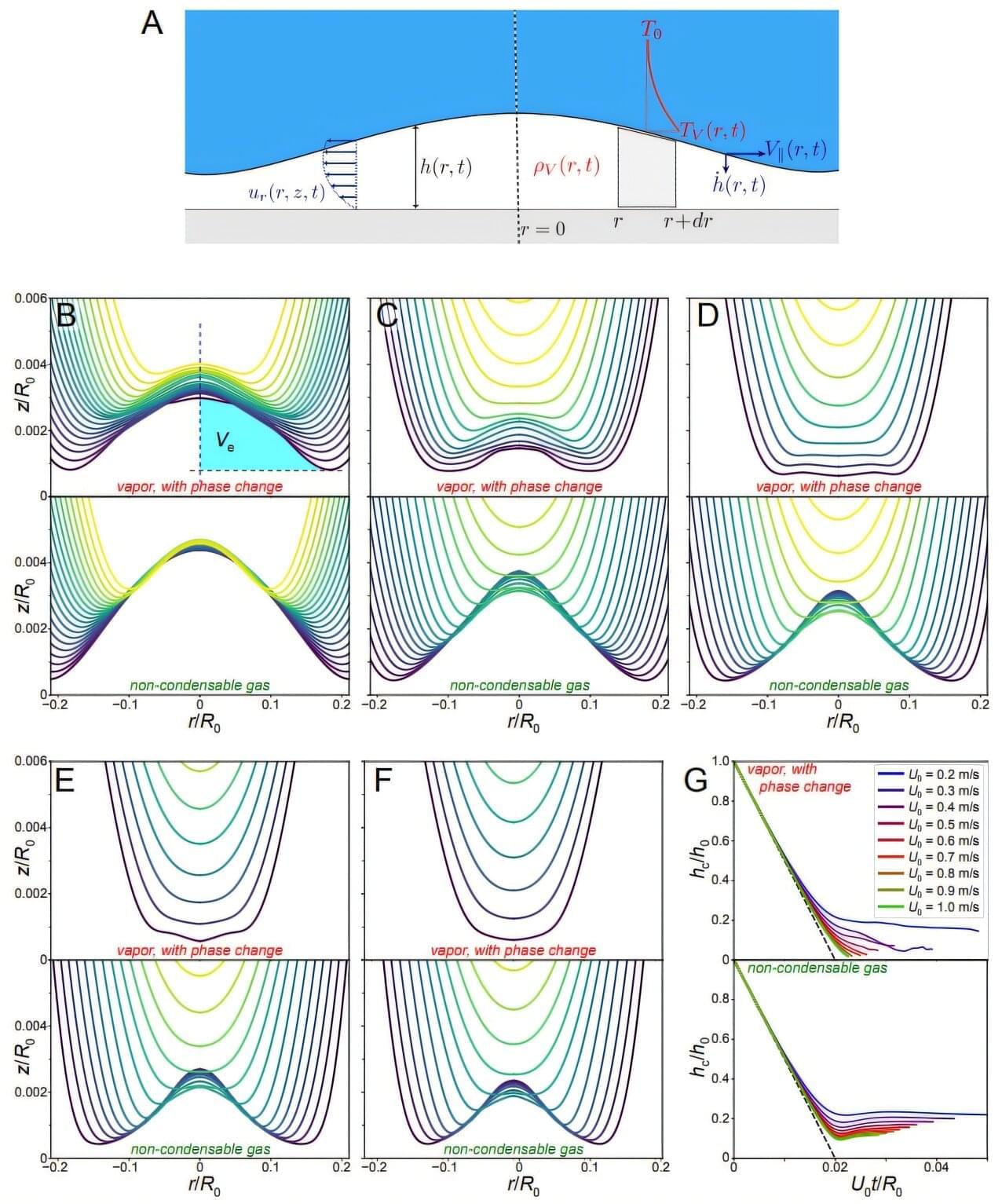
What happens if liquefied natural gas (LNG) hits the wall of the cargo tanks in a ship? New research from the team of physicist Devaraj van der Meer from the University of Twente, published in the Proceedings of the National Academy of Sciences, shows that much higher pressure peaks can occur during impact than previously assumed. This insight is important for the design and safety of LNG ships and future liquid hydrogen transport systems.
Normally, a thin layer of air prevents a liquid from hitting a surface directly. The gas acts as a cushion and dampens the blow. In LNG ships, that air has been replaced by vapor from the LNG itself. And that vapor can condense back into liquid during impact. As a result, the cushion disappears, and the load on the wall increases sharply.




Morphological characteristics of healthy and aneurysmal internal carotid artery bifurcations
Internal carotid artery (ICA) bifurcation (ICAB) aneurysms carry high rupture risk, treatment challenges, and recurrence due to complex morphology and origination patterns. Given their relatively low incidence, research on ICAB morphology is limited. This study analyzed ICAB morphology in aneurysmal, contralateral, and healthy bifurcations, highlighting bilateral differences, anterior cerebral artery (ACA) dominance, and deviations from the vascular optimality principle (VOP).
A total of 194 angiographic volumes (40 aneurysmal, 28 contralateral, 126 healthy) were evaluated. ICAB morphology included parent/daughter vessel diameters and angle between the ICA and middle cerebral artery (MCA; ФMCA), angle between the ICA and ACA (ФACA), total ICAB angle (ФICAB; ФMCA + ФACA). Aneurysm characteristics (size, neck, origination) and VOP parameters (radius ratio [RR] and junction exponent [n]) were evaluated. Bilateral analysis accounted for ACA dominance.
Compared with controls, aneurysmal ICABs exhibited wider ΦMCA (57.22° ± 12.22° vs 43.74° ± 9.41°, p < 0.001; area under the curve [AUC] = 0.83) and ΦICAB (160.27° ± 16.16° vs 143.66° ± 10.74°, p < 0.001; AUC = 0.79), but not ΦACA, in univariate, multivariate (AUC = 0.85), and bilateral analyses. Angle thresholds of 51.7° for ΦMCA and 152.4° for ΦICAB were identified. Aneurysms originated predominantly off the apex (65%) and ACA (30%). Most occurred on ICABs with dominant (31%) and codominant (58%) A1 segments. Aneurysm neck, but not size, correlated with ΦMCA and ΦICAB, but not ΦACA. In controls, ΦMCA was larger and ΦACA smaller on the dominant A1 side, with no ΦICAB difference. There was no statistically significant difference in RR and n values regardless of aneurysm presence and dominance status.