Toggle light / dark theme

Vatican allegedly hacked by Chinese state-backed cyber gang’ ahead of talks intended to improve relations between the two sides

The Vatican and the Catholic Diocese of Hong Kong have been the targets of alleged Chinese state-backed hackers, it has emerged, just weeks before talks intended to improve relations between the two sides.

According to the U.S.-based cyber attack monitoring group Recorded Future, RedDelta, allegedly backed by the Chinese state, began attacking the Vatican in May ahead of upcoming talks in September to renew a landmark 2018 deal that helped thaw diplomatic relations.

Recorded Future said that the Hong Kong Study Mission to China — a key link between the Vatican and China — and the Pontifical Institute for Foreign Missions also were targeted.

Episode 11 — Betelgeuse Dimming Mystery Might Be Solved, Says Edward Guinan

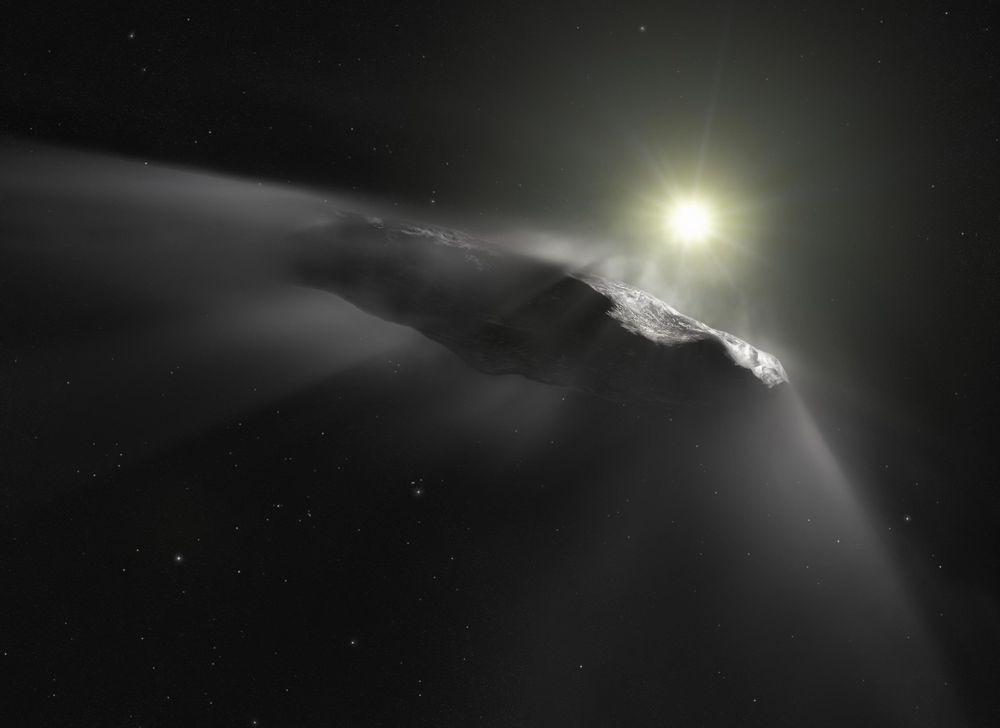
Great interview with Villanova University astronomer Ed Guinan, who explains today’s news of the latest paper on why Betelgeuse experienced such a deep dimming this past Fall and Winter. We cover a lot of territory from how Gene Roddenberry chose the name Guinan for the Whoopi Goldberg character on Star Trek’s Next Generation to the history behind the pole star’s mysterious brightening; to the Dog Star Sirius; to why life might still be possible around red dwarfs; to our Sun’s longterm future. Please listen!


In a stroke of serendipity during a wide-ranging podcast interview, Villanova University astronomer Edward Guinan explains the paper behind today’s news flap about the red supergiant star’s inexplicable dimming. The most recent explanation is that dust generated from cooling plasma spewed forth from the massive star’s interior caused Betelgeuse to appear more dim than usual. While Guinan acknowledges this scenario is a possibility, he remains skeptical. Please listen to this candid and entertaining episode!

X-rays indicate that water can behave like a liquid crystal

Scientists at Stockholm University have discovered that water can exhibit a similar behavior to that of a liquid crystal when illuminated with laser light. This effect originates by the alignment of water molecules, which exhibit a mixture of low- and high-density domains that are more or less prone to alignment. The results, reported in Physics Review Letters, are based on a combination of experimental studies using X-ray lasers and molecular simulations.

Liquid crystals were considered a mere scientific curiosity when they were first discovered in 1888. Over 100 years later, they are one of the most widely used technologies, present in digital displays (LCDs) of watches, TVs and computer screens. Liquid crystals work by applying an , which makes the neighboring of a liquid align, in a way that resembles a crystal. Water too can be distorted towards a , when illuminated with . It is known that the electric field of the laser can align the molecules for less than a billionth of a second. Can this discovery have future technological applications?

An international team of researchers at the Physics Department of Stockholm University carried out experiments at Japan’s X-ray Free-electron laser SACLA and probed for the first time the dynamics of transiently oriented molecules using X-ray pulses. This technique, relies on aligning the molecules with a laser pulse (with wavelength λ = 800 nm) and probing the alignment with X-ray pulses, which allow to see in real time the changes in the structure on a molecular level. By varying the time between the laser and the X-ray pulses, the researchers were able to resolve the aligned state, which lives only for 160 fs.

New dinosaur closely related to the Tyrannosaurus rex discovered in England

Scientists have discovered what they believe to be a new species of theropod dinosaur — making it a close relative of the Tyrannosaurus rex. A group of researchers said they recently uncovered rare bones in the U.K. that appear to be related to the iconic species.

Paleontologists at the University of Southampton said they recently analyzed four bones on the Isle of Wight, off the southern coast of mainland England. The bones are from the neck, back and tail of the new dinosaur, named Vectaerovenator inopinatus.

The Vectaerovenator inopinatus, which is believed to have grown to around 13 feet long, roamed the Earth during the Cretaceous period, about 115 million years ago. Scientists believe it is a theropod, a group of carnivorous dinosaurs that typically walked on two legs rather than four.

Bruce Dorminey

Coming this week on Cosmic Controversy! I’m honored to welcome #Villanova University Professor Edward Guinan, an international expert on stellar astronomy and extrasolar planets, as my guest. We’ll be discussing the red supergiant star #Betelgeuse; our Sun over cosmic time; the mysterious star #Sirius; the North Star #Polaris; and, the potential for finding life around the Sun’s two nearest stellar neighbors. Stay tuned! brucedorminey.podbean.com

Weird ‘boomerang’ earthquake detected under the Atlantic Ocean

This magnitude 7.1 earthquake started deep underground, in a gash on the Atlantic seafloor, a little more than 650 miles off the coast of Liberia, in western Africa. It rushed eastward and upward, then did an about-face and boomeranged back along the upper section of the fault at incredible speeds‑so fast it caused the geologic version of a sonic boom.

The ferocity of shaking from an earthquake is usually focused in the direction the temblor is traveling. But a boomerang quake, or a “back-propagating rupture” in scientific terms, may spread the intense shaking across a wider zone. It remains uncertain how common boomerang earthquakes are—and how many travel at such great speeds. But the new study, published today in the journal Nature Geoscience, is a major step toward untangling the complex physics behind these events and understanding their potential hazards.

“Studies like this help us understand how past earthquakes ruptured, how future earthquakes may rupture, and how that relates to the potential impact for faults near populated areas,” says Kasey Aderhold, a seismologist with the Incorporated Research Institutions for Seismology, via email.

/* */