
From defense contractors to videogame companies, the indictment details an astonishing array of victims.
Category: futurism – Page 1,046

Man stunned by ‘very rare’ two-headed shark: ‘We have never seen anything like this before’
This is potentially the first sighting of a two-headed shark baby off the coast of India.
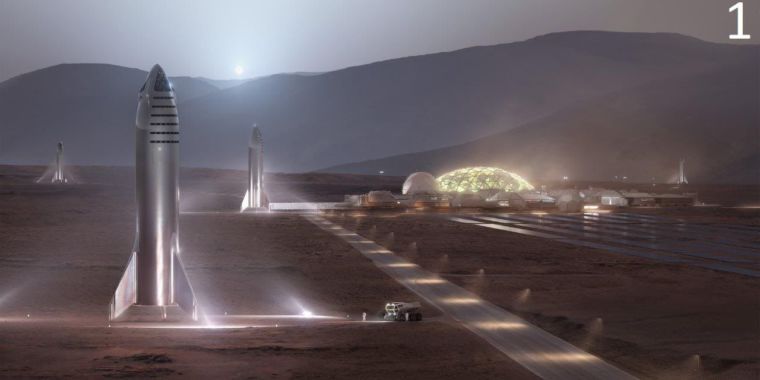
NASA makes a significant investment in on-orbit spacecraft refueling
NASA has reached an agreement with 14 US companies to develop technologies that will enable future modes of exploration in space and on the surface of the Moon. NASA says the value of these awards for “Tipping Point” technologies is more than $370 million.
With these awards, the space agency is leaning heavily into technologies related to the collection, storage, and transfer of cryogenic propellants in space. Four of the awards, totaling more than $250 million, will go to companies specifically for “cryogenic fluid management” tech demonstrations:
Eta Space of Merritt Island, Florida, $27 million. Small-scale flight demonstration of a complete cryogenic oxygen fluid management system. System will be the primary payload on a Rocket Lab Photon satellite and collect critical cryogenic fluid management data in orbit for nine months. Lockheed Martin of Littleton, Colorado, $89.7 million. In-space demonstration mission using liquid hydrogen to test more than a dozen cryogenic fluid management technologies, positioning them for infusion into future space systems. SpaceX of Hawthorne, California, $53.2 million. Large-scale flight demonstration to transfer 10 metric tons of cryogenic propellant, specifically liquid oxygen, between tanks on a Starship vehicle. United Launch Alliance (ULA) of Centennial, Colorado, $86.2 million. Demonstration of a smart propulsion cryogenic system, using liquid oxygen and hydrogen, on a Vulcan Centaur upper stage. The system will test precise tank-pressure control, tank-to-tank transfer, and multiweek propellant storage.

Rapid rescue of buried people
When someone is buried by an avalanche, earthquake or other disaster, a rapid rescue can make the difference between life and death. The Fraunhofer Institute for High Frequency Physics and Radar Techniques FHR has developed a new kind of mobile radar device that can search hectare-sized areas quickly and thoroughly. The new technology combines greater mobility with accurate detection of vital signs.
Japan’s ‘underground temple’ protecting Tokyo from floods
https://sc.mp/subscribe-youtube
The Metropolitan Area Outer Underground Discharge Channel, located in Saitama prefecture of Japan, was built to protect Tokyo from flooding. Constructed in 2016, it measures 30 metres (98ft) in diameter and 70 metres (230ft) in depth.
Support us:
https://subscribe.scmp.com
Follow us on:
Website: https://www.scmp.com
Facebook: https://facebook.com/scmp
Twitter: https://twitter.com/scmpnews
Instagram: https://instagram.com/scmpnews
Linkedin: https://www.linkedin.com/company/south-china-morning-post/

Millions of animals may be missing from scientific studies
O,.o wut!
Analysis at Dutch university suggests researchers are not reporting a large number of animal experiments.
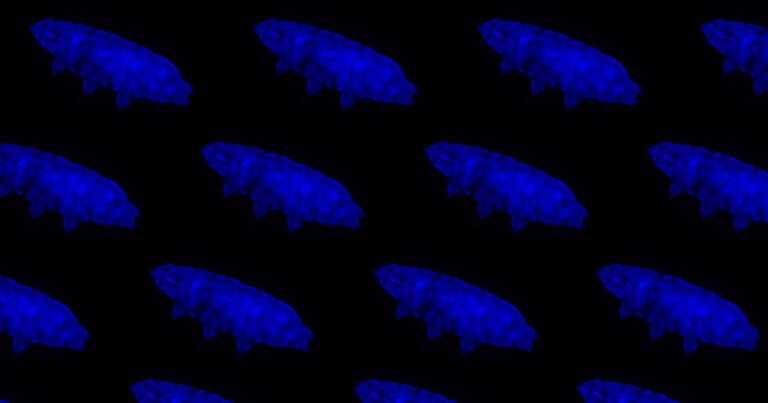
Newly-Discovered Tardigrade Glows Blue to Block Deadly Radiation
The tardigrades went about daily life while scientists blasted them with UV radiation.


Scientists Discover “Unexpected” Structures Near Earth’s Core
This is really exciting.
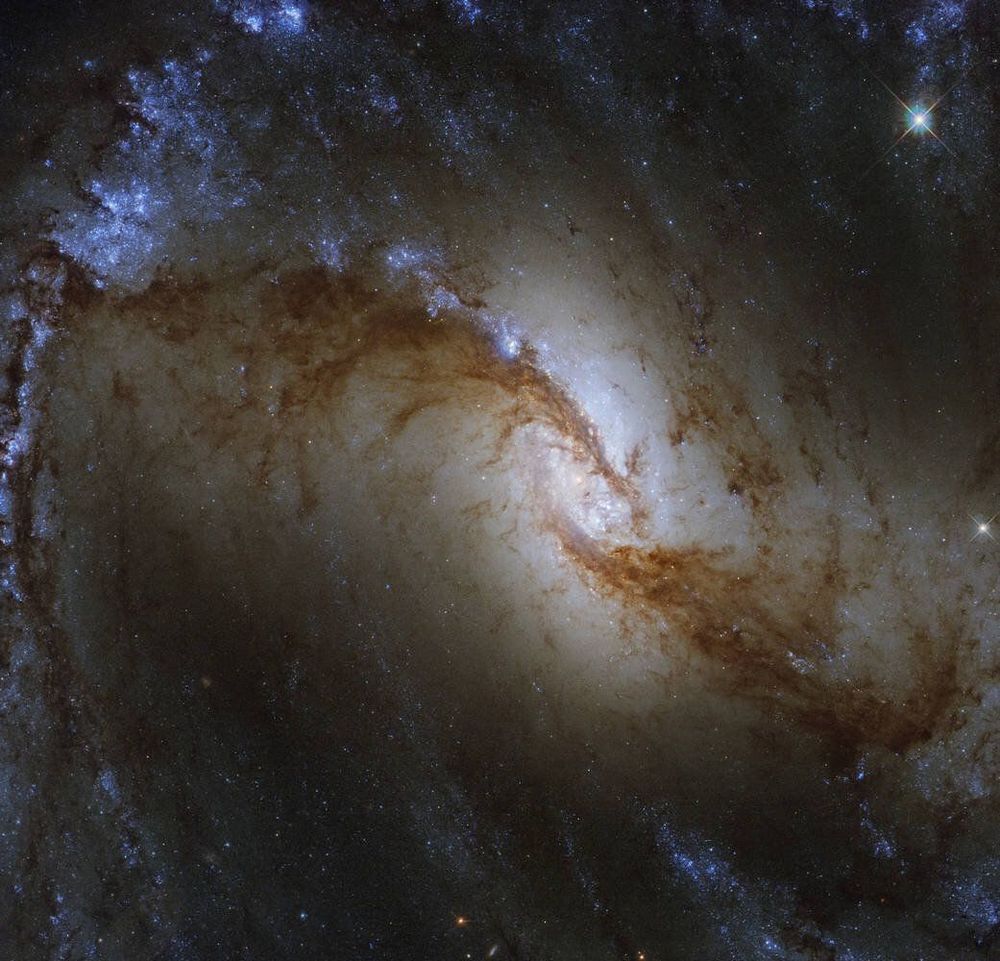
Hubble sees swirls of forming stars
At around 60 million light-years from Earth, the Great Barred Spiral Galaxy, NGC 1365, is captured beautifully in this image by the NASA/ESA Hubble Space Telescope. Located in the constellation of Fornax (the Furnace), the blue and fiery orange swirls show us where stars have just formed and the dusty sites of future stellar nurseries.
At the outer edges of the image, enormous star-forming regions within NGC 1365 can be seen. The bright, light-blue regions indicate the presence of hundreds of baby stars that formed from coalescing gas and dust within the galaxy’s outer arms.
This Hubble image was captured as part of a joint survey with the Atacama Large Millimeter/submillimeter Array (ALMA) in Chile. The survey will help scientists understand how the diversity of galaxy environments observed in the nearby universe, including NGC 1365 and other galaxies such as NGC 2835 and NGC 2775, influence the formation of stars and star clusters. Expected to image over 100,000 gas clouds and star-forming regions beyond our Milky Way, the PHANGS survey is expected to uncover and clarify many of the links between cold gas clouds, star formation, and the overall shape and morphology of galaxies.