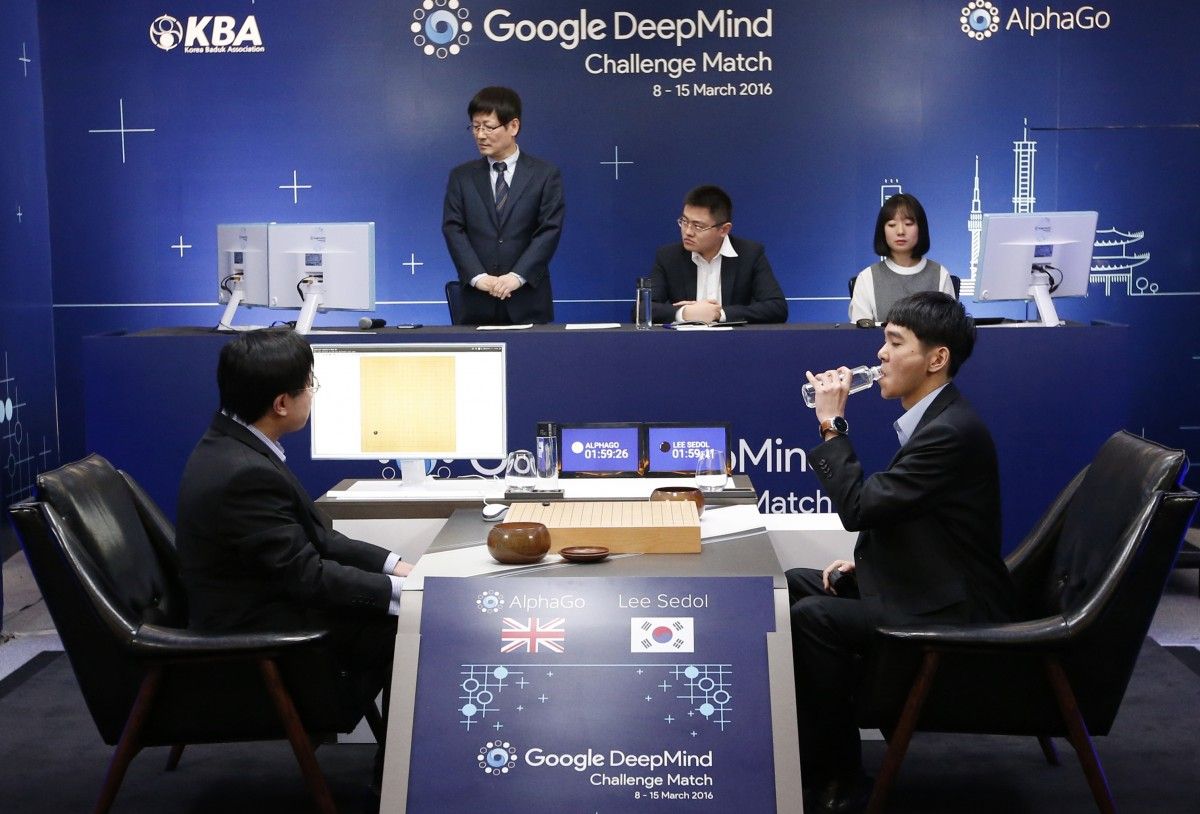
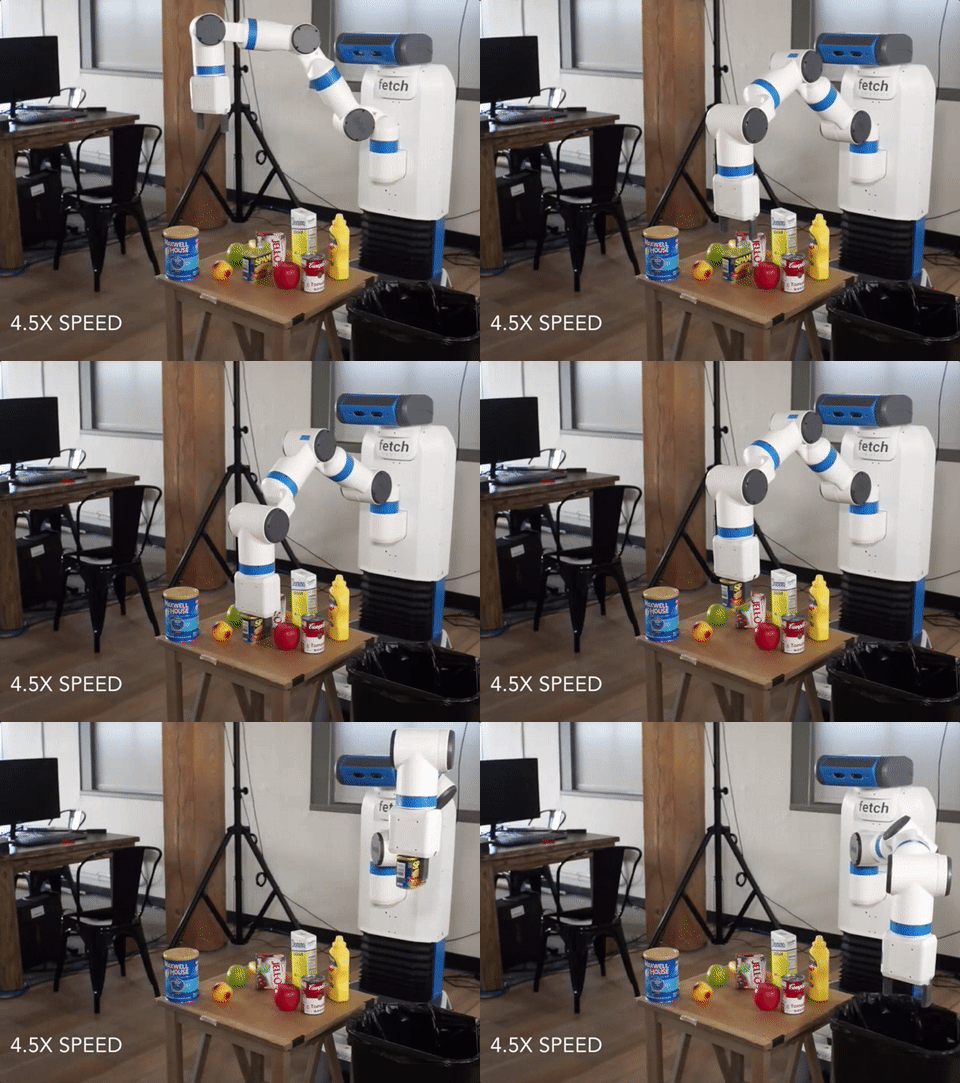
This is a big deal.
Growing enough food to feed 9 billion people by 2050 will require huge amounts of energy and water. Using nanoparticles to boost plant growth and yield could save resources and reduce water pollution.
PlaNet, made by a team led by Google computer vision specialist Tobias Weyand, can determine the location of photos just by studying its pixels.
You can usually tell where a picture was taken by recognizing certain location cues within the photo. Major landmarks like the Great Wall of China or the Tower of London are immediately recognizable and fairly easy to pinpoint, but how about when the photo lacks any familiar location cues, like a photo of food, of pets, or one taken indoors?
People do fairly well on this task by relying on all sorts of knowledge about the world. You could figure out where a photo was taken by looking at any words found on the photo, or by looking at the architectural styles or vegetation.
Tokyo is leading the newest trend: urban agriculture.
Urban Produce High Density Vertical Growing System is a patented technology that was developed taking advanced hydroponic technology and automating it. Urban Produce has the capacity to grow 16 acres of produce on 1/8 of an acre with just one of it’s High Density Vertical Growing Systems. Our mission is to build our patented systems across the U.S. to provide both locally grown sustainable produce to Urban Cities while also stimulating the local economies. We are 21st century growing! www.urbanproduce.com
By 2050, the world will need to feed an additional 2.5 billion people living in cities. Yet as the demand for food rises, the amount of land available for agriculture in developed countries is expected to decline. In Japan, at the Fujitsu factory of Aizu-Wakamatsu which still manufactures semiconductor chips for computers, a different project is underway which may offer a solution to this problem. The company has converted an unused part of the factory into a farm to grow food — and more specifically, to grow lettuce. Fujitsu has focused on growing a low-potassium variety, which is sold to people with kidney problems who cannot process the mineral properly. Join Rachel Mealey in Japan’s Fukushima Prefecture to visit the sun-free and soil-free urban farms of the future.
Food deserts, lack of arable land, and the frozen months of winter are all obstacles we face in our mission to keep people fed. Urban Produce is excelling in this mission by licensing its patented indoor vertical farming technology, which can produce 16 acres of organic, leafy greens in just 1/8 acre of space.
The age of the restaurant self-service kiosks has dawned, and it’s the end of fast food as we know it.
McDonald’s is striding into the 21st century with the rollout of the “Create Your Taste” touchscreen kiosks, on which custom burgers can be built as well as full-menu ordering.
The kiosks are incredibly convenient and improve order accuracy, to which I can personally attest.
Plug & Plant.
Healthy Food Fridge.
You are really starting to see the shape of the Singularity, ever more clearly, in the convergence of so many engineering and scientific discoveries, inventions, and philosophical musings.
I can say, without a doubt, that we are all living in truly extraordinary times!

A University of Washington team of computer scientists and engineers has built what they say is one of the most highly capable five-fingered robot hands in the world. It can perform dexterous manipulation and learn from its own experience without needing humans to direct it.
Their work is described in a paper to be presented May 17 at the IEEE International Conference on Robotics and Automation.
Google and Amazon were quick to put drones to use delivering orders.
But new research suggests delivery is just one small way drones are going to replace humans. The tiny airborne vessels will soon clean windows on skyscrapers, verify insurance claims and spray pesticide on crops.
The global market for drones, valued at around $2 billion today, will replace up to $127 billion worth of business services and human labour over the next four years, according to a new research by consulting firm PwC.