Toggle light / dark theme

Eukaryotic phytoplankton decline due to ocean acidification could significantly impact global carbon cycle

Princeton University and Xiamen University researchers report that in tropical and subtropical oligotrophic waters, ocean acidification reduces primary production, the process of photosynthesis in phytoplankton, where they take in carbon dioxide (CO2), sunlight, and nutrients to produce organic matter (food and energy).

A six-year investigation found that eukaryotic phytoplankton decline under high CO2 conditions, while cyanobacteria remain unaffected. Nutrient availability, particularly nitrogen, influenced this response.

Results indicate that ocean acidification could reduce primary production in oligotrophic tropical and subtropical oceans by approximately 10%, with global implications. When extrapolated to all affected low-chlorophyll ocean regions, this translates to an estimated 5 billion metric tons loss in global oceanic primary production, which is about 10% of the total carbon fixed by the ocean each year.

Inside the world of humanoid robots in Shanghai, China

Shanghai’s robotics revolution is here! At a cutting-edge startup, humanoid robots are being trained to navigate the real world-learning tasks from sorting objects to taking coffee. But how does Al collect and refine the data that powers these machines? We got access to a 2,000-square-meter data factory, where robots are trained through motion capture, human guidance, and real-world simulations. With China’s tech and supply chain advantages, could these humanoids become part of our daily lives sooner than we think? #HumanoidRobots #Al #FutureTech.
__________________
ShanghaiEye focuses on producing top-quality contents.
Nobody knows SHANGHAI better than us.
Please subscribe to us ☻☻☻
__________________
For more stories, please click.

■ What’s up today in Shanghai, the most updated news of the city.
• Playlist.

■ Amazing Shanghai, exploring the unknown corners of the city, learning the people, food and stories behind them.
• Amazing Shanghai and China 淘宝魔都玩转中国

■ What Chinese people’s lives are like during the post COVID-19 period.
• COVID-19 新冠疫情

■ Views of foreign scholars on China and its affairs.
• Voices, Let’s Listen! 听她他说

■ Foreign faces in Shanghai, people living in this city sharing their true feelings.

Study finds soccer teams move as though they are a single person, offering new insights into collective behavior

What do albatrosses searching for food, stock market fluctuations, and the dispersal patterns of seeds in the wind have in common?

They all exhibit a type of movement pattern called Lévy walk, which is characterized by a flurry of short, localized movements interspersed with occasional, long leaps. For living organisms, this is an for balancing the exploitation of nearby resources with the exploration of new opportunities when the distribution of resources is sparse and unknown.

Originally described in the context of particles drifting through liquid, Lévy walk has been found to accurately describe a very wide range of phenomena, from cold atom dynamics to swarming bacteria. And now, a study published in Complexity has for the first time found Lévy walk in the movements of competing groups of organisms: soccer teams.

Novel technique manipulates water waves to precisely control floating objects

A team of international scientists co-led by Nanyang Technological University, Singapore (NTU Singapore) have discovered a way to manipulate water waves, allowing them to trap and precisely move floating objects—almost as if an invisible force were guiding them.

The method involves generating and merging to create complex surface patterns, such as twisting loops and swirling vortices.

Laboratory experiments showed that these patterns can pull in nearby floating objects, like small foam balls the size of rice grains, and trap them within the patterns.

Carbon nanotube sensor efficiently measures oxygen in gas mixtures under light

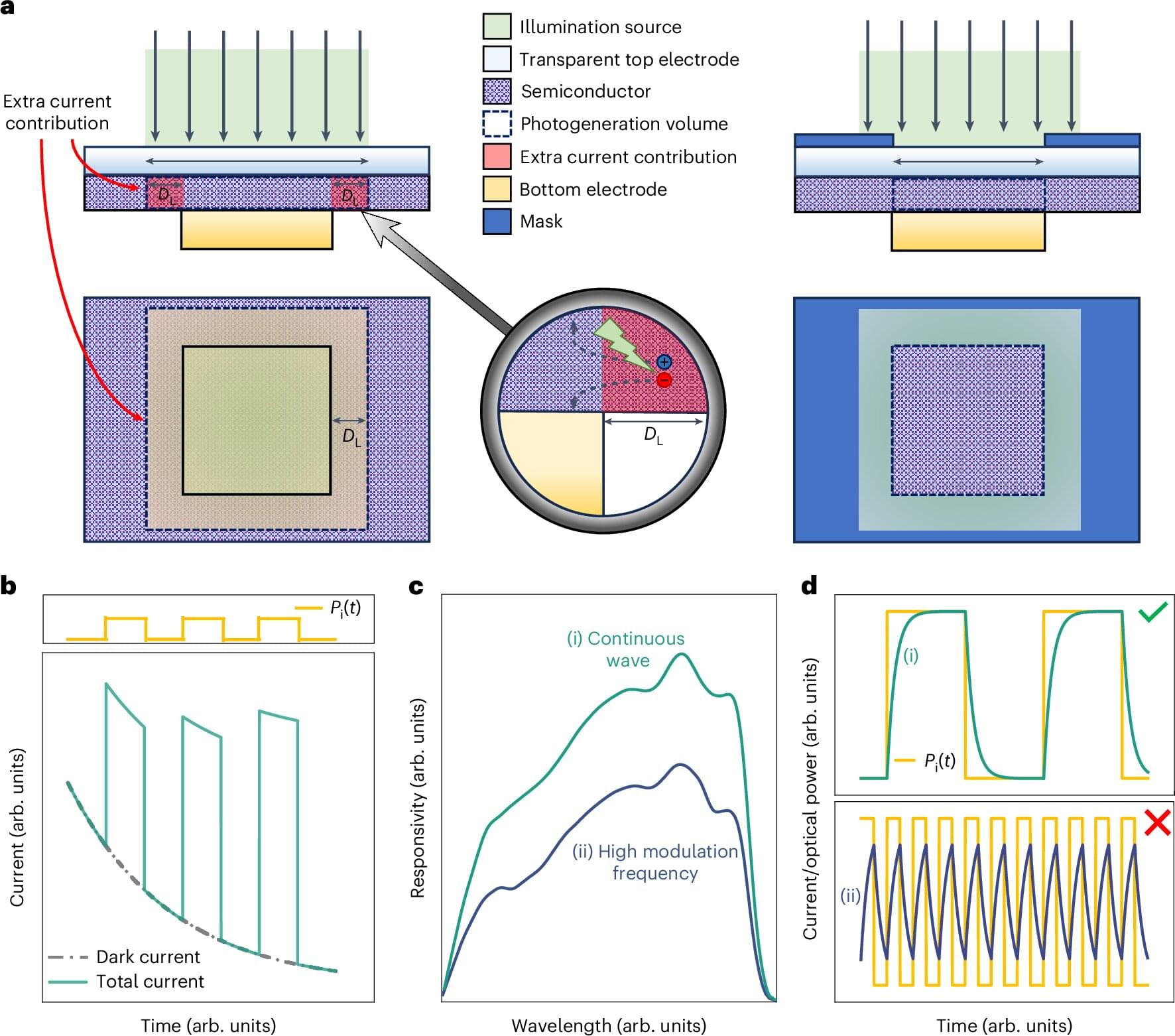
Oxygen is essential for life and a reactive player in many chemical processes. Accordingly, methods that accurately measure oxygen are relevant for numerous industrial and medical applications: They analyze exhaust gases from combustion processes, enable the oxygen-free processing of food and medicines, monitor the oxygen content of the air we breathe or the oxygen saturation in blood.

Oxygen analysis is also playing an increasingly important role in .

“However, such measurements usually require bulky, power-hungry, and expensive devices that are hardly suitable for mobile applications or continuous outdoor use,” says Máté Bezdek, Professor of Functional Coordination Chemistry at ETH Zurich. His group uses molecular design methods to find new sensors for environmental gases.

Microplastics may threaten global food supply by disrupting photosynthesis

A team of environmental researchers, Earth scientists and pollution specialists at Nanjing University, the Chinese Academy of Sciences and colleagues from Germany and the U.S. has found evidence that microplastics have a negative impact on photosynthesis in terrestrial, marine, and freshwater ecosystems.

In their study, published in the Proceedings of the National Academy of Sciences, the group conducted a meta-analysis of data from more than 150 studies involving the impact of microplastics on plants.

Prior research has shown that microplastics have made their way to nearly every ecosystem on the planet, and now contaminate plants and animals, including humans. For this new study, the research team wondered if microplastics might have an unknown impact on plants living in the ocean, in fresh water or growing on land, and they conducted a study of prior research to find out.

A global estimate of multiecosystem photosynthesis losses under microplastic pollution

Understanding how ecosystems respond to ubiquitous microplastic (MP) pollution is crucial for ensuring global food security. Here, we conduct a multiecosystem meta-analysis of 3,286 data points and reveal that MP exposure leads to a global reduction in photosynthesis of 7.05 to 12.12% in terrestrial plants, marine algae, and freshwater algae. These reductions align with those estimated by a constructed machine learning model using current MP pollution levels, showing that MP exposure reduces the chlorophyll content of photoautotrophs by 10.96 to 12.84%. Model estimates based on the identified MP-photosynthesis nexus indicate annual global losses of 4.11 to 13.52% (109.73 to 360.87 MT·y−1) for main crops and 0.31 to 7.24% (147.52 to 3415.11 MT C·y−1) for global aquatic net primary productivity induced by MPs. Under scenarios of efficient plastic mitigation, e.g.

/* */