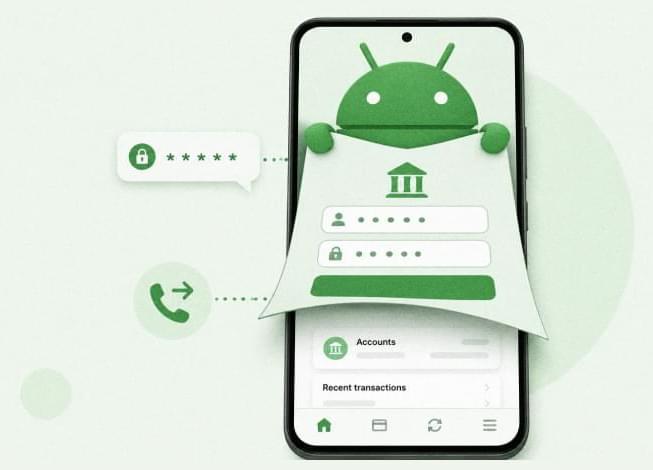
SCMBANKER watches banking windows, captures screenshots, hijacks CLABE and card numbers, and can deploy Remote Utilities for hands-on access.
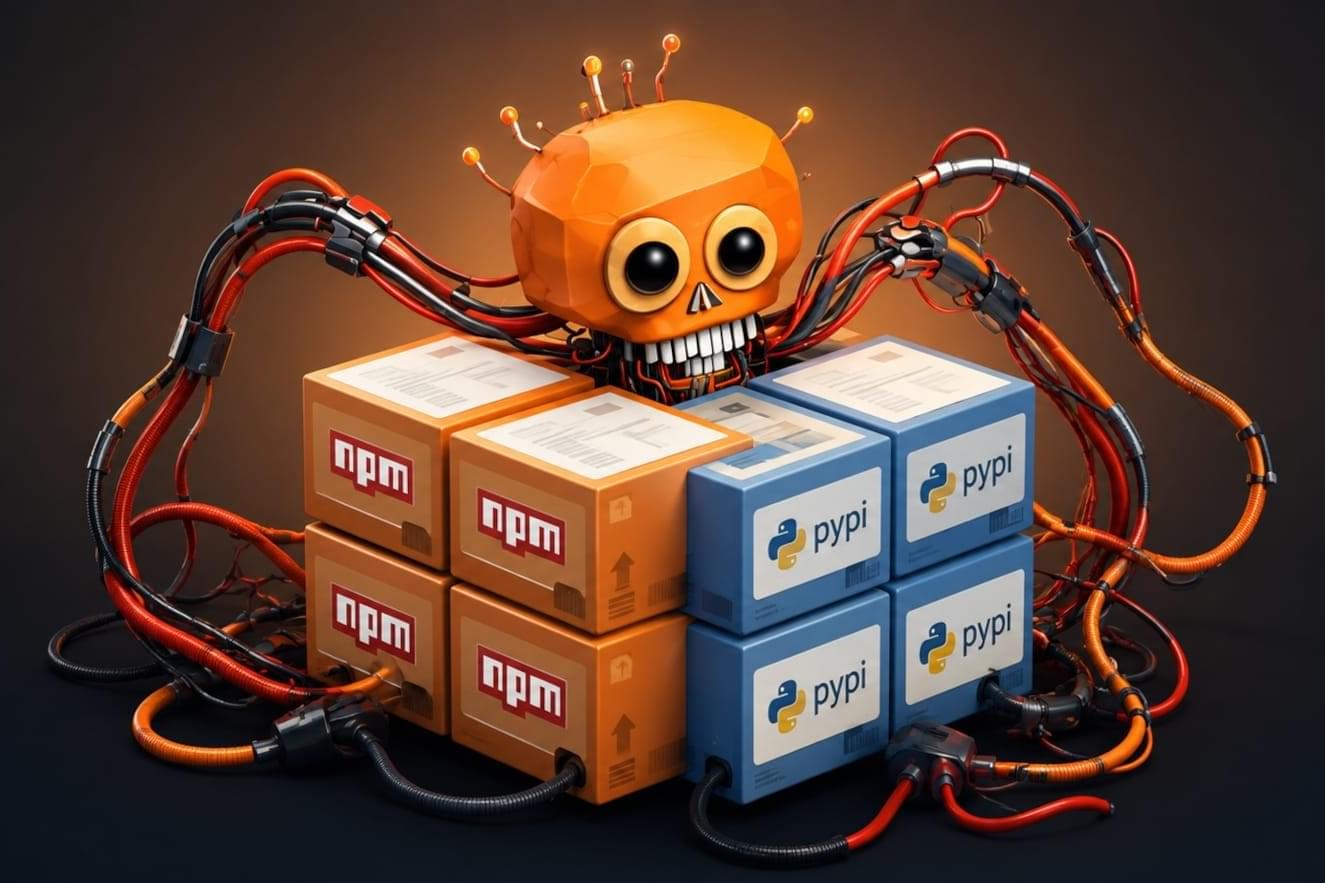
Malicious packages on the Node Package Manager (npm) and the Python Package Index (PyPI) delivered stealer malware to developers and users of Paysafe, Skrill, and Neteller payment applications.
The threat actor published at least 17 malicious packages simultaneously, each tasked to exfiltrate credentials and access tokens to a command-and-control server hosted on Amazon Web Services (AWS).
All three payment platforms are popular, with Paysafe being mostly used by e-commerce sites and online marketplaces, gaming platforms, travel businesses, and financial services or software-as-a-service (SaaS) providers.
Hy3 is a 295B-parameter Mixture-of-Experts model from Tencent (21B active, 192 experts with top-8 routing) built for reasoning, agentic workflows, and real-world production use. It supports a configurable reasoning effort: a direct no-think mode by default, plus low and high chain-of-thought modes for complex math, coding, and multi-step problems. With a 256K context window, Hy3 targets long-horizon tasks, including improved coreference resolution, multi-turn constraint tracking, and stable tool-calling that generalizes across agent scaffoldings.
Tencent positions it as a reliable, cost-effective option across coding, document processing, financial analysis, game development, and frontend design, with a strong emphasis on grounded, anti-hallucination behavior that answers when grounded and flags when evidence is missing rather than fabricating.
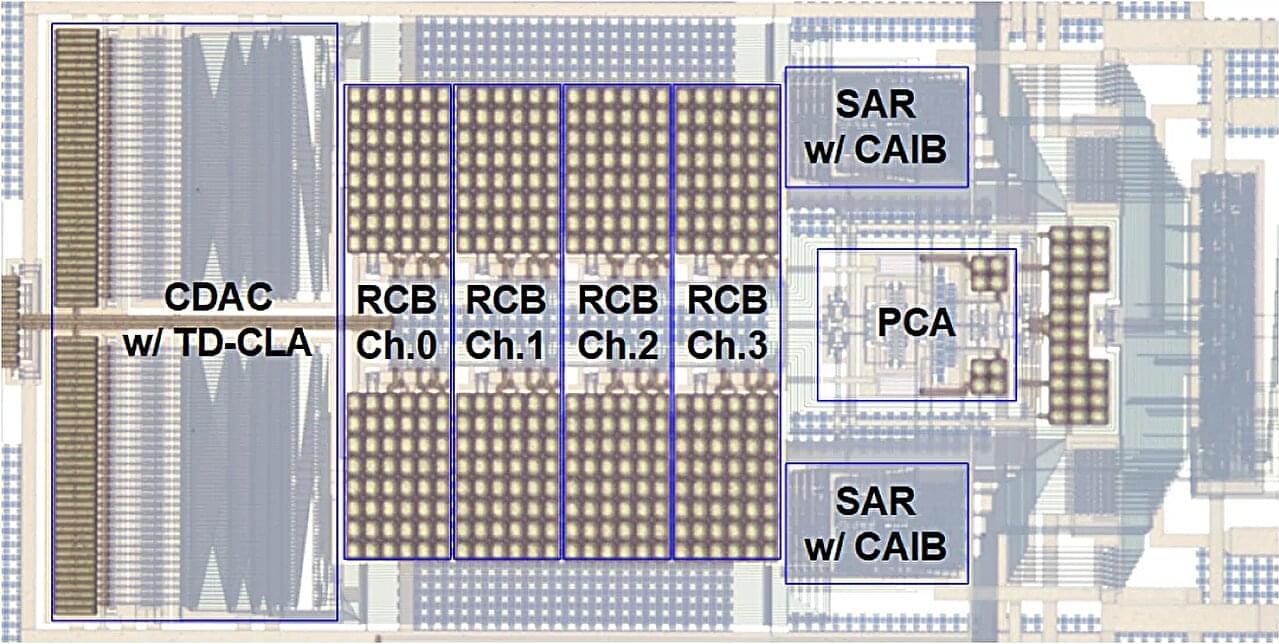
A research team led by Prof. Junghyup Lee of the Department of Electrical Engineering and Computer Science at DGIST has become the first in the world to develop a “time-interleaved noise-shaping SAR ADC (analog-to-digital converter)” semiconductor chip capable of simultaneously measuring multiple biosignals, including electrocardiograms (ECG) and electromyograms (EMG). The team developed this technology in an actual semiconductor chip and successfully completed functional validation. Their findings were presented at the IEEE Symposium on VLSI Technology & Circuits (VLSI 2026), held in Honolulu, June 14–18.
Accurately measuring multiple biosignals using wearable devices such as smartwatches requires meeting several demanding conditions. These include “ultra-high input impedance (resistance)” to prevent signal loss even when no sweat is present on the skin or when contact is loose (dry or non-contact electrodes), a “wide input range” to prevent signal distortion caused by vigorous movement, and “ultra-low power consumption” for long-term operation. However, conventional measurement approaches have struggled to satisfy all these requirements simultaneously within a single chip.
Lee’s research team addressed this challenge by proposing a novel “time-interleaved third-order noise-shaping SAR ADC” architecture in which circuit blocks that consume significant power and chip area are shared across multiple channels, while only essential components (the residual capacitor banks) are allocated separately to each channel. This approach dramatically reduced the circuit area and power consumption required for multichannel systems, enabling an ultra-compact, ultra-low-power chip.
Sign up on Freecash using my link: https://bit.ly/4eDWh6q to get $10 bonus for your first offer!
Quantum computing is supposed to be one of the most exciting new technologies that humanity is working on, with companies promising it can be used in chemistry, material science, logistics, and finance. Over the years, those use cases have been slowly eroded, but investment in quantum tech has only increased. Why? Let’s take a look.
👕T-shirts, mugs, posters and more: ➜ https://sabines-store.dashery.com/
💌 Support me on Donorbox ➜ https://donorbox.org/swtg.
👉 Transcript with links to references on Patreon ➜ / sabine.
📝 Transcripts and written news on Substack ➜ https://sciencewtg.substack.com/
📩 Free weekly science newsletter ➜ https://sabinehossenfelder.com/newsle…
👂 Audio only podcast ➜ https://open.spotify.com/show/0MkNfXl…
🔗 Join this channel to get access to perks ➜
/ @sabinehossenfelder.
📚 Buy my book ➜ https://amzn.to/3HSAWJW
#science #sciencenews #quantum

The current version moves that screening to the operator’s server, so the exact rules are hidden. Either way, visitors outside Spain or Portugal get a Spanish “access denied” notice instead of malware.
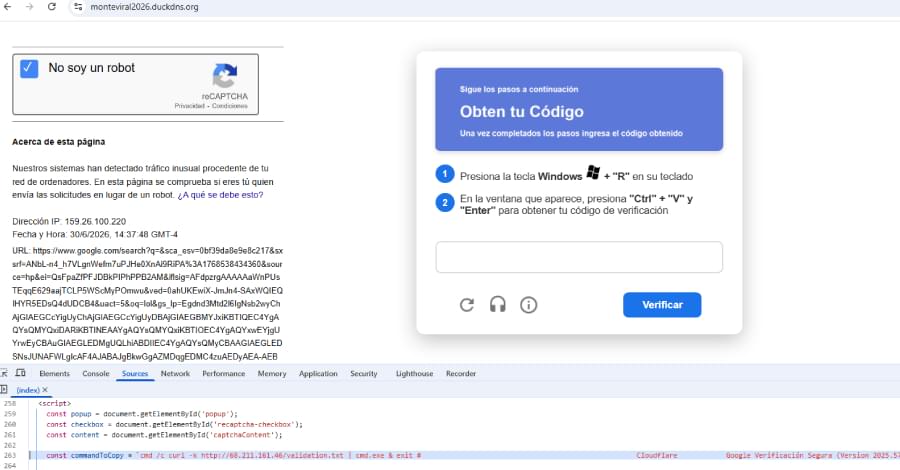
Clear the check, and the download starts. A script downloads an image that looks like a PDF icon but hides a ZIP file inside, a trick called steganography. The script unpacks Ousaban from that ZIP, runs it, then deletes the image, the ZIP, and itself to leave less behind. Once running, Ousaban adds a registry entry named Financeiro (Portuguese for “finance”) so it starts up with Windows.
Ousaban’s command server, the machine that controls it, is deliberately hard to find. It carries a Pastebin link that points to one server address, but Fortinet says that address is a decoy.
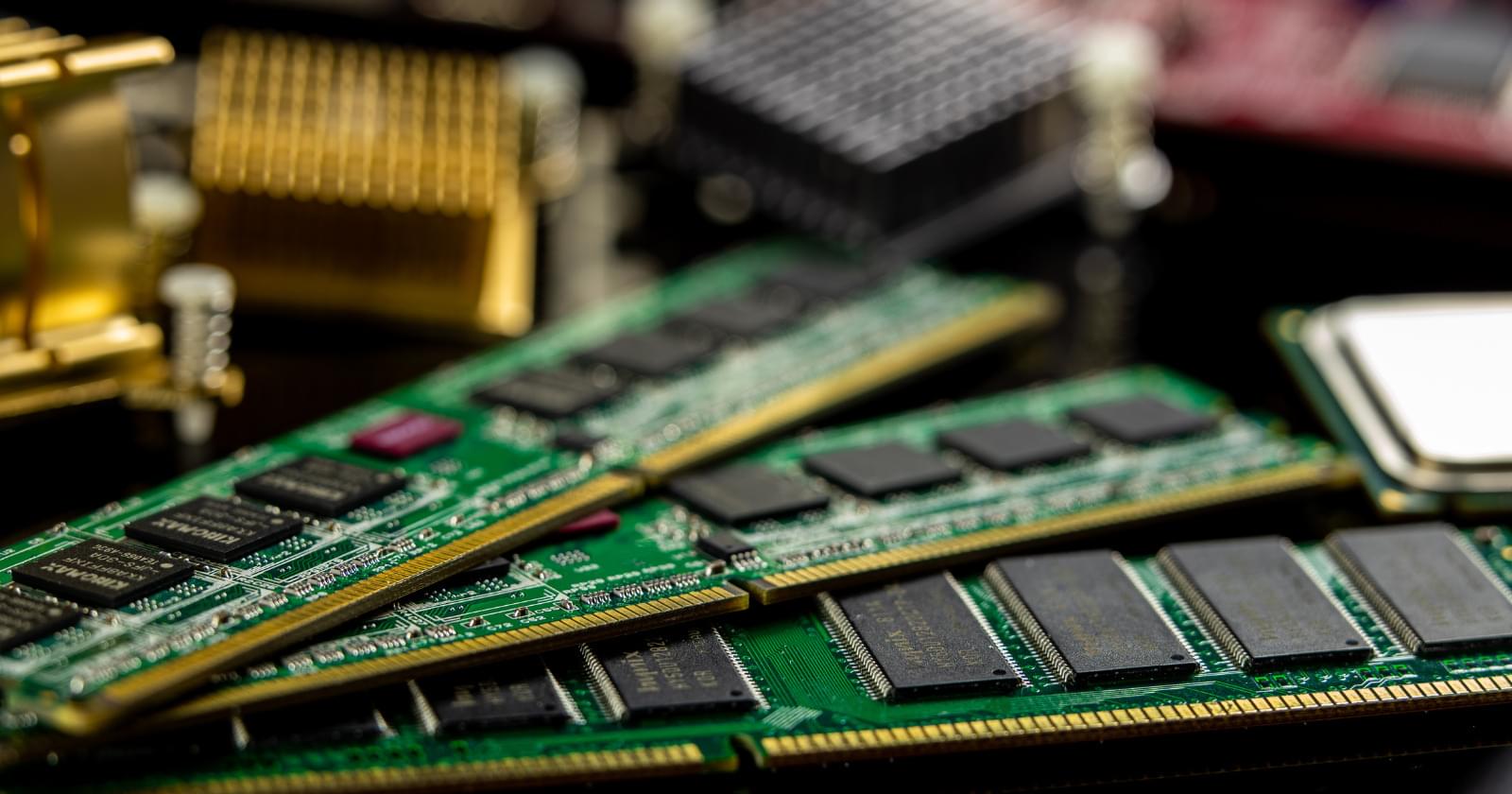
Open any device built in the past five years, look inside its memory subsystem, and the chips you find were almost certainly fabricated in one of three South Korean industrial cities — Hwaseong, Pyeongtaek, or Icheon — by one of two companies whose combined market capitalisation now exceeds $700 billion. The historical improbability of this situation is not a matter of degree but of category. Korea in 1953 did not have a semiconductor industry, a precision manufacturing tradition, an advanced engineering workforce, or the kind of capital markets that could finance industrial development. It had a per-capita income lower than essentially every other country whose subsequent economic trajectory has been studied by development economists, a primarily agricultural economy substantially destroyed by three years of active warfare, and a small population (~20 million) whose adult literacy rate stood at approximately 20 percent. The proposition that, 72 years later, two companies headquartered in the same country would manufacture the memory chips inside Apple’s iPhones, Google’s Pixel devices, Microsoft’s data centres, Nvidia’s AI accelerators, Tesla’s autonomous-driving computers, and essentially every other major piece of digital hardware sold globally — would have been considered, by any reasonable observer in 1953, structurally impossible.
But there is a vast difference between launching satellites and operating an industrial-scale computing infrastructure in orbit. Space is unforgiving. Radiation damages electronics. The electronics generate enormous amounts of heat, and getting rid of that heat is surprisingly difficult in space. Repairs are extraordinarily expensive, and every pound launched into orbit still carries a significant cost.
We are engineering professors who study data-center design and space systems engineering. Building a space-based data center will involve considerations from both sides.
First off, consider what goes into an Earth-based data center, like those that you’ve probably begun to see pop up everywhere. These facilities power cloud computing, video streaming, online banking, scientific computing, and increasingly, artificial intelligence. But a data center is much more than a room full of servers.
The race toward an imminent intelligence explosion has escalated from a sci-fi thought experiment into a high-stakes global debate.
Accelerating progress across model reasoning and compute infrastructure forces a critical question: is Artificial General Intelligence already arriving?
Silicon Valley insiders frequently claim human-level AI has passed us by, though critics warn these declarations are heavily warped by financial incentives.
If an AI system successfully achieves recursive self-improvement, the resulting technological singularity could compress centuries of human progress into mere hours.
A best-case takeoff promises staggering rewards like clean fusion energy, automated economic abundance, and radical medical breakthroughs that extend human lifespans indefinitely.