Toggle light / dark theme

Singularity? Reality? Humanity? Are there sophisticated Barbarians in Silicon Valley? Linking the Human Brain to the Computer — Exciting, or Frightening?

Quoted: “Once you really solve a problem like direct brain-computer interface … when brains and computers can interact directly, to take just one example, that’s it, that’s the end of history, that’s the end of biology as we know it. Nobody has a clue what will happen once you solve this. If life can basically break out of the organic realm into the vastness of the inorganic realm, you cannot even begin to imagine what the consequences will be, because your imagination at present is organic. So if there is a point of Singularity, as it’s often referred to, by definition, we have no way of even starting to imagine what’s happening beyond that.”

Read the article here > http://www.theamericanconservative.com/dreher/silicon-valley-mordor/

A Brain-Computer Interface That Works Wirelessly

By Antonio Regalado — MIT Technology Review

A few paralyzed patients could soon be using a wireless brain-computer interface able to stream their thought commands as quickly as a home Internet connection.

After more than a decade of engineering work, researchers at Brown University and a Utah company, Blackrock Microsystems, have commercialized a wireless device that can be attached to a person’s skull and transmit via radio thought commands collected from a brain implant. Blackrock says it will seek clearance for the system from the U.S. Food and Drug Administration, so that the mental remote control can be tested in volunteers, possibly as soon as this year.

The device was developed by a consortium, called BrainGate, which is based at Brown and was among the first to place implants in the brains of paralyzed people and show that electrical signals emitted by neurons inside the cortex could be recorded, then used to steer a wheelchair or direct a robotic arm (see “Implanting Hope”).

Read more

Cyborg Superpower: Man Can Hear the Internet

By — Singulariy Hub

Television, cellphones, radio, WiFi—modern civilization converses in radio waves.

Most of us need some kind of device to translate the signals into something we can consume on a screen or through a speaker. But in the television show, Alphas, one of the characters, Gary Bell, can literally see and read electromagnetic waves.

In the show, Bell’s ability is a fictional superpower—but the larger point? The world is brimming with information invisible to our fairly limited senses. A new project, Phantom Terrains aims to make us all a little bit more like Gary Bell.

Read more

New Book: An Irreverent Singularity Funcyclopedia, by Mondo 2000’s R.U. Sirius.

Quoted: “Legendary cyberculture icon (and iconoclast) R.U. Sirius and Jay Cornell have written a delicious funcyclopedia of the Singularity, transhumanism, and radical futurism, just published on January 1.” And: “The book, “Transcendence – The Disinformation Encyclopedia of Transhumanism and the Singularity,” is a collection of alphabetically-ordered short chapters about artificial intelligence, cognitive science, genomics, information technology, nanotechnology, neuroscience, space exploration, synthetic biology, robotics, and virtual worlds. Entries range from Cloning and Cyborg Feminism to Designer Babies and Memory-Editing Drugs.” And: “If you are young and don’t remember the 1980s you should know that, before Wired magazine, the cyberculture magazine Mondo 2000 edited by R.U. Sirius covered dangerous hacking, new media and cyberpunk topics such as virtual reality and smart drugs, with an anarchic and subversive slant. As it often happens the more sedate Wired, a watered-down later version of Mondo 2000, was much more successful and went mainstream.”

Read the article here >https://hacked.com/irreverent-singularity-funcyclopedia-mondo-2000s-r-u-sirius/

The Blockchain is the New Database, Get Ready to Rewrite Everything

Quoted: “If you understand the core innovations around the blockchain idea, you’ll realize that the technology concept behind it is similar to that of a database, except that the way you interact with that database is very different.

The blockchain concept represents a paradigm shift in how software engineers will write software applications in the future, and it is one of the key concepts behind the Bitcoin revolution that need to be well understood. In this post, I’d like to explain 5 of these concepts, and how they interrelate to one another in the context of this new computing paradigm that is unravelling in front of us. They are: the blockchain, decentralized consensus, trusted computing, smart contracts and proof of work / stake. This computing paradigm is important, because it is a catalyst for the creation of decentralized applications, a next-step evolution from distributed computing architectural constructs.

Read the article here > http://startupmanagement.org/2014/12/27/the-blockchain-is-th…verything/

Corporate Reconnoitering?

Corporate Reconnoitering?


ABSOLUTE END.

Authored By Copyright Mr. Andres Agostini

White Swan Book Author (Source of this Article)

http://www.LINKEDIN.com/in/andresagostini

http://www.AMAZON.com/author/agostini

https://www.FACEBOOK.com/heldenceo (Other Publications)

http://LIFEBOAT.com/ex/bios.andres.agostini

http://ThisSUCCESS.wordpress.com

https://www.FACEBOOK.com/agostiniandres

http://www.appearoo.com/aagostini

http://connect.FORWARDMETRICS.com/profile/1649/Andres-Agostini.html

https://www.FACEBOOK.com/amazonauthor

http://FUTURE-OBSERVATORY.blogspot.com

http://ANDRES-AGOSTINI-on.blogspot.com

http://AGOSTINI-SOLVES.blogspot.com

@AndresAgostini

@ThisSuccess

@SciCzar

Kaizen and Six Sigma Vs. White Swan “…Transformative and Integrative Risk Management …” [Pictorial] — Andres Agostini

Kaizen and Six Sigma Vs. White Swan “…Transformative and Integrative Risk Management …”

ABSOLUTE END.

Authored By Copyright Mr. Andres Agostini

White Swan Book Author (Source of this Article)

http://www.LINKEDIN.com/in/andresagostini

http://www.AMAZON.com/author/agostini

http://LIFEBOAT.com/ex/bios.andres.agostini

https://www.FACEBOOK.com/agostiniandres

http://www.appearoo.com/aagostini

http://connect.FORWARDMETRICS.com/profile/1649/Andres-Agostini.html

https://www.FACEBOOK.com/amazonauthor

@AndresAgostini

@ThisSuccess

@SciCzar

What if your memories could live past your mortal shelf life?

Would you have your brain preserved? Do you believe your brain is the essence of you?

To noted American PhD Neuroscientist and Futurist, Ken Hayworth, the answer is an emphatic, “Yes.” He is currently developing machines and techniques to map brain tissue at the nanometer scale — the key to encoding our individual identities.

A self-described transhumanist and President of the Brain Preservation Foundation, Hayworth’s goal is to perfect existing preservation techniques, like cryonics, as well as explore and push evolving opportunities to effect a change on the status quo. Currently there is no brain preservation option that offers systematic, scientific evidence as to how much human brain tissue is actually preserved when undergoing today’s experimental preservation methods. Such methods include vitrification, the procedure used in cryonics to try and prevent human organs from freezing and being destroyed when tissue is cooled for cryopreservation.

Hayworth believes we can achieve his vision of preserving an entire human brain at an accepted and proven standard within the next decade. If Hayworth is right, is there a countdown to immortality?

To find out more, please take a look at the Galactic Public Archives’ newest video. We’d love to hear your thoughts.

Cheers!

Why Superintelligence May Not Help Us Think about Existential Risks — or Transhumanism

Among transhumanists, Nick Bostrom is well-known for promoting the idea of ‘existential risks’, potential harms which, were they come to pass, would annihilate the human condition altogether. Their probability may be relatively small, but the expected magnitude of their effects are so great, so Bostrom claims, that it is rational to devote some significant resources to safeguarding against them. (Indeed, there are now institutes for the study of existential risks on both sides of the Atlantic.) Moreover, because existential risks are intimately tied to the advancement of science and technology, their probability is likely to grow in the coming years.

Contrary to expectations, Bostrom is much less concerned with ecological suicide from humanity’s excessive carbon emissions than with the emergence of a superior brand of artificial intelligence – a ‘superintelligence’. This creature would be a human artefact, or at least descended from one. However, its self-programming capacity would have run amok in positive feedback, resulting in a maniacal, even self-destructive mission to rearrange the world in the image of its objectives. Such a superintelligence may appear to be quite ruthless in its dealings with humans, but that would only reflect the obstacles that we place, perhaps unwittingly, in the way of the realization of its objectives. Thus, this being would not conform to the science fiction stereotype of robots deliberately revolting against creators who are now seen as their inferiors.

I must confess that I find this conceptualisation of ‘existential risk’ rather un-transhumanist in spirit. Bostrom treats risk as a threat rather than as an opportunity. His risk horizon is precautionary rather than proactionary: He focuses on preventing the worst consequences rather than considering the prospects that are opened up by whatever radical changes might be inflicted by the superintelligence. This may be because in Bostrom’s key thought experiment, the superintelligence turns out to be the ultimate paper-clip collecting machine that ends up subsuming the entire planet to its task, destroying humanity along the way, almost as an afterthought.

But is this really a good starting point for thinking about existential risk? Much more likely than total human annihilation is that a substantial portion of humanity – but not everyone – is eliminated. (Certainly this captures the worst case scenarios surrounding climate change.) The Cold War remains the gold standard for this line of thought. In the US, the RAND Corporation’s chief analyst, Herman Kahn — the model for Stanley Kubrick’s Dr Strangelove – routinely, if not casually, tossed off scenarios of how, say, a US-USSR nuclear confrontation would serve to increase the tolerance for human biological diversity, due to the resulting proliferation of genetic mutations. Put in more general terms, a severe social disruption provides a unique opportunity for pursuing ideals that might otherwise be thwarted by a ‘business as usual’ policy orientation.

Here it is worth recalling that the Cold War succeeded on its own terms: None of the worst case scenarios were ever realized, even though many people were mentally prepared to make the most of the projected adversities. This is one way to think about how the internet itself arose, courtesy the US Defense Department’s interest in maintaining scientific communications in the face of attack. In other words, rather than trying to prevent every possible catastrophe, the way to deal with ‘unknown unknowns’ is to imagine that some of them have already come to pass and redesign the world accordingly so that you can carry on regardless. Thus, Herman Kahn’s projection of a thermonuclear future provided grounds in the 1960s for the promotion of, say, racially mixed marriages, disability-friendly environments, and the ‘do more with less’ mentality that came to characterize the ecology movement.

Kahn was a true proactionary thinker. For him, the threat of global nuclear war raised Joseph Schumpeter’s idea of ‘creative destruction’ to a higher plane, inspiring social innovations that would be otherwise difficult to achieve by conventional politics. Historians have long noted that modern warfare has promoted spikes in innovation that in times of peace are then subject to diffusion, as the relevant industries redeploy for civilian purposes. We might think of this tendency, in mechanical terms, as system ‘overdesign’ (i.e. preparing for the worst but benefitting even if the worst doesn’t happen) or, more organically, as a vaccine that converts a potential liability into an actual benefit.

In either case, existential risk is regarded in broadly positive terms, specifically as an unprecedented opportunity to extend the range of human capability, even under radically changed circumstances. This sense of ‘antifragility’, as the great ‘black swan’ detector Nicholas Taleb would put it, is the hallmark of our ‘risk intelligence’, the phrase that the British philosopher Dylan Evans has coined for a demonstrated capacity that people have to make step change improvements in their lives in the face of radical uncertainty. From this standpoint, Bostrom’s superintelligence concept severely underestimates the adaptive capacity of human intelligence.

Perhaps the best way to see just how much Bostrom shortchanges humanity is to note that his crucial thought experiment requires a strong ontological distinction between humans and superintelligent artefacts. Where are the cyborgs in this doomsday scenario? Reading Bostrom reminds me that science fiction did indeed make progress in the twentieth century, from the world of Karl Čapek’s Rossum’s Universal Robots in 1920 to the much subtler blending of human and computer futures in the works of William Gibson and others in more recent times.

Bostrom’s superintelligence scenario began to be handled in more sophisticated fashion after the end of the First World War, popularly under the guise of ‘runaway technology’, a topic that received its canonical formulation in Langdon Winner’s 1977 Autonomous Technology: Technics out of Control, a classic in the field of science and technology of studies. Back then the main problem with superintelligent machines was that they would ‘dehumanize’ us, less because they might dominate us but more because we might become like them – perhaps because we feel that we have invested our best qualities in them, very much like Ludwig Feuerbach’s aetiology of the Judaeo-Christian God. Marxists gave the term ‘alienation’ a popular spin to capture this sentiment in the 1960s.

Nowadays, of course, matters have been complicated by the prospect of human and machine identities merging together. This goes beyond simply implanting silicon chips in one’s brain. Rather, it involves the complex migration and enhancement of human selves in cyberspace. (Sherry Turkle has been the premier ethnographer of this process in children.) That such developments are even possible points to a prospect that Bostrom refuses to consider, namely, that to be ‘human’ is to be only contingently located in the body of Homo sapiens. The name of our species – Homo sapiens – already gives away the game, because our distinguishing feature (so claimed Linnaeus) had nothing to do with our physical morphology but with the character of our minds. And might not such a ‘sapient’ mind better exist somewhere other than in the upright ape from which we have descended?

The prospects for transhumanism hang on the answer to this question. Aubrey de Grey’s indefinite life extension project is about Homo sapiens in its normal biological form. In contrast, Ray Kurzweil’s ‘singularity’ talk of uploading our consciousness into indefinitely powerful computers suggests a complete abandonment of the ordinary human body. The lesson taught by Langdon Winner’s historical account is that our primary existential risk does not come from alien annihilation but from what social psychologists call ‘adaptive preference formation’. In other words, we come to want the sort of world that we think is most likely, simply because that offers us the greatest sense of security. Thus, the history of technology is full of cases in which humans have radically changed their lives to adjust to an innovation whose benefits they reckon outweigh the costs, even when both remain fundamentally incalculable. Success in the face such ‘existential risk’ is then largely a matter of whether people – perhaps of the following generation – have made the value shifts necessary to see the changes as positive overall. But of course, it does not follow that those who fail to survive the transition or have acquired their values before this transition would draw a similar conclusion.

What Else Could Smart Contact Lenses Do?

By Suzanne Jacobs — MIT Technology Review

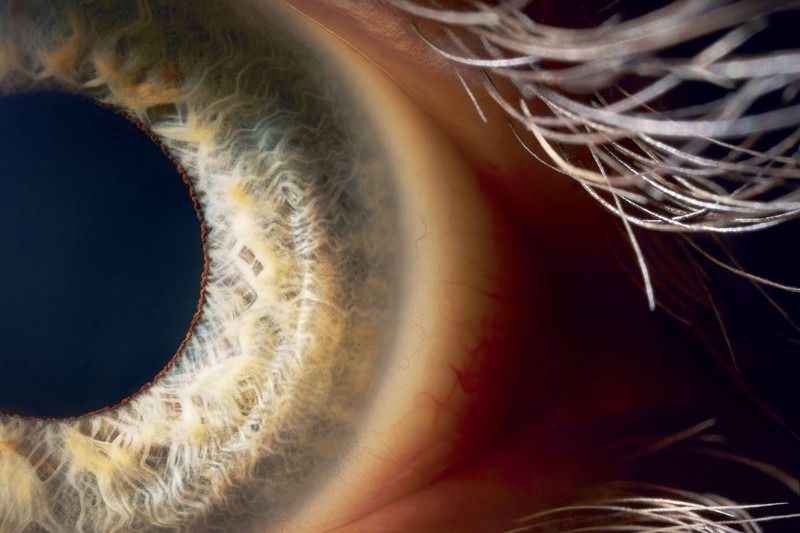
Last week Google and Novartis announced that they’re teaming up to develop contact lenses that monitor glucose levels and automatically adjust their focus. But these could be just the start of a clever new product category. From cancer detection and drug delivery to reality augmentation and night vision, our eyes offer unique opportunities for both health monitoring and enhancement.

“Now is the time to put a little computer and a lot of miniaturized technologies in the contact lens,” says Franck Leveiller, head of research and development in the Novartis eye care division.

Read more

/* */